Retirement Portfolio Construction
Investment Basics
What Is Investing?
Think of your money like a seed. You can either keep it in a jar, where it will stay just a seed, or you can plant it. Investing is like planting that seed. You put your money to work, hoping it will grow into a much larger tree over time. Instead of soil, you're using financial markets. The goal is to grow your initial sum, known as the principal, into a larger amount for the future.
Why is this so important for retirement? Two words: time and inflation. Over long periods, even small amounts of money can grow significantly thanks to compounding, which is when your earnings start generating their own earnings. More importantly, investing helps your money outpace inflation. Inflation is the slow, steady increase in the price of goods and services, which reduces the purchasing power of your cash over time. Money sitting in a simple savings account often loses value relative to inflation.
Inflation
noun
The rate at which the general level of prices for goods and services is rising, and subsequently, purchasing power is falling.
Your Investment Options
When you invest, you're buying assets—things you expect to increase in value. There are many types of assets, but most retirement portfolios are built from a few core components. Let's look at the basic building blocks.
Stocks
Buying a stock means you're buying a small piece of ownership in a public company. If you own stock in a company that makes popular sneakers, you're a part-owner of that business. If the company does well and its profits grow, the value of your stock may increase. People buy stocks for their high growth potential, but they also come with higher risk. If the company performs poorly, the value of your stock can go down.
Bonds
When you buy a bond, you are essentially lending money to a government or a company. In return, they promise to pay you back the full amount on a specific date, and along the way, they pay you interest. Think of it as an IOU. Bonds are generally considered safer than stocks because their returns are more predictable. However, because the risk is lower, the potential rewards are typically lower as well.
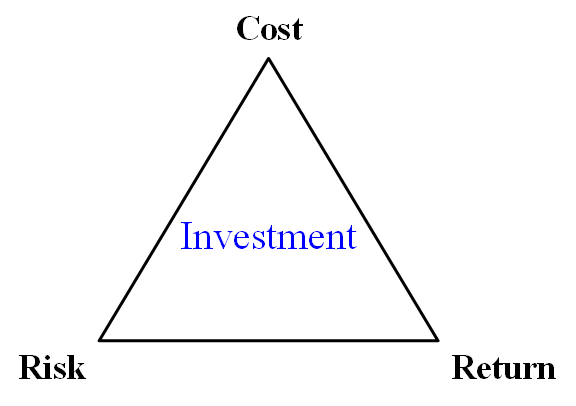
Picking individual stocks and bonds can be time-consuming and requires a lot of research. For most people, a simpler approach is to buy a collection of investments all at once. This is where funds come in.
Mutual Funds and ETFs
Mutual funds and Exchange-Traded Funds (ETFs) are professionally managed collections of stocks, bonds, and other assets. Instead of buying one company's stock, you can buy a share of a fund that holds stocks from hundreds of different companies. This immediately diversifies your investment, spreading your risk across many different assets.
The core idea is diversification. You wouldn't bet your entire life savings on a single horse, and the same logic applies to investing.
While both offer diversification, mutual funds and ETFs have a few key differences in how they operate.
| Feature | Mutual Fund | Exchange-Traded Fund (ETF) |
|---|---|---|
| How it's Traded | Priced and purchased once per day, after the market closes. | Traded throughout the day on an exchange, like a stock. |
| Management | Often actively managed, with a fund manager picking investments. | Usually passively managed, tracking a specific market index (like the S&P 500). |
| Minimum Investment | May require a higher initial investment (e.g., $1,000 or more). | Can be bought for the price of a single share, which can be much lower. |
Understanding these basic options is the first step toward building a portfolio that can help you reach your retirement goals. Now, let's review what we've learned.
What is the primary goal of investing for retirement, according to the text?
When you buy a stock, you are purchasing a small piece of ownership in a company.
With these fundamentals in place, you're ready to think about how to combine these building blocks into a strategy that works for you.