Retirement Portfolio Construction
Investment Basics
Putting Your Money to Work
Think of an investment as a way to make your money work for you. Instead of just sitting in a bank account, your money can be used to purchase something that has the potential to grow in value over time. It's like planting a seed. With some time and the right conditions, that seed can grow into a tree that produces fruit year after year.
Investment
noun
An asset or item acquired with the goal of generating income or appreciation. Appreciation refers to the increase in the value of an asset over time.
Know Your Destination
Before you start investing, it's crucial to know why you're doing it. Are you saving for retirement in 30 years? A down payment on a house in five years? Or maybe a new car next year? Your financial goals are your destination.
Knowing your destination helps determine your timeline. A long-term goal like retirement gives your investments more time to grow and recover from any dips in the market. A short-term goal requires a more cautious approach because you'll need the money sooner and can't afford to risk a major loss.

The Risk and Return Trade-off
Every investment comes with a certain level of risk and a potential for return. These two concepts are intrinsically linked. Generally, the higher the potential return, the higher the risk involved.
Imagine investing in a brand-new tech startup versus a large, established utility company. The startup has the potential for explosive growth, meaning a very high return. But it could also fail completely, meaning you lose your entire investment. The utility company, on the other hand, is unlikely to grow as quickly, but it provides a steady, reliable service, making it a much safer bet. The risk is lower, and so is the potential for a massive return.
Understanding your personal comfort level with risk is essential. It's about finding a balance you can live with while still working toward your financial goals.
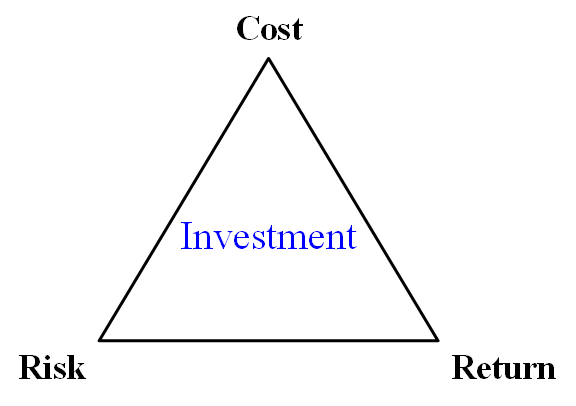
One of the keys to successful investing is learning how to balance your comfort level with risk against your time horizon.
Your Investment Building Blocks
Investments are often grouped into categories called asset classes. Each class has its own characteristics, risk level, and potential for return. Spreading your money across different asset classes is a core strategy called diversification. Let's look at the main building blocks.
Stocks: When you buy a stock, you're buying a small piece of ownership in a company. If the company does well, the value of your stock can go up. Stocks offer the potential for high growth but come with higher risk because their value can fluctuate significantly.
Bonds: Buying a bond is like lending money to a government or a corporation. In return, they promise to pay you back the full amount on a specific date, with regular interest payments along the way. Bonds are generally considered safer than stocks, but they typically offer lower returns.
Real Estate: This involves buying physical property, such as a house, apartment building, or land. You can earn money through rental income or by selling the property for a profit later. Real estate can be a good long-term investment but requires a significant amount of capital and is less easy to sell quickly compared to stocks or bonds.
Commodities: These are raw materials or agricultural products. Think gold, oil, wheat, or coffee. The value of commodities can be very volatile, fluctuating based on global supply and demand. Some investors use them to hedge against inflation.
| Asset Class | Typical Risk Level | Potential Return |
|---|---|---|
| Stocks | High | High |
| Bonds | Low | Low |
| Real Estate | Medium | Medium |
| Commodities | High | High |
Understanding these basic asset classes is the first step. By combining them thoughtfully, you can build a portfolio that aligns with your goals and risk tolerance.
What is the primary goal of investing?
The relationship between risk and potential return in investing is best described as:
With these fundamentals in mind, you're ready to start thinking more deeply about how to build an investment strategy that's right for you.