Retirement Portfolio Construction
Investment Basics
The Building Blocks of a Portfolio
Think of building an investment portfolio like cooking a meal. You need different ingredients to create a balanced dish. In investing, these ingredients are called asset classes. An asset class is simply a group of investments that behave similarly in the market.
Asset Class
noun
A grouping of investments with similar characteristics and market behaviors.
Let's look at the three most common ones.
Stocks When you buy a stock, you're buying a small piece of a company, also known as a share or equity. If the company does well, the value of your share can go up. If it does poorly, the value can go down. The main goal of owning stocks is growth, hoping the company's value increases over time.
Bonds A bond is essentially a loan you make to a government or a corporation. In return for your money, they promise to pay you back the full amount on a specific date, plus regular interest payments along the way. Bonds are generally considered less risky than stocks and are often used to generate a steady income stream.
Real Estate This includes physical property like land and buildings. You can invest directly by buying a property, or indirectly through Real Estate Investment Trusts (REITs). REITs are companies that own or finance income-producing real estate, and you can buy shares in them just like stocks. Real estate can provide both growth (as property values increase) and income (from rent).
The Risk and Return Trade-off
A core principle of investing is that risk and potential return are linked. Generally, to get a higher potential return, you have to take on more risk. To have lower risk, you must usually accept lower potential returns. It's a trade-off.
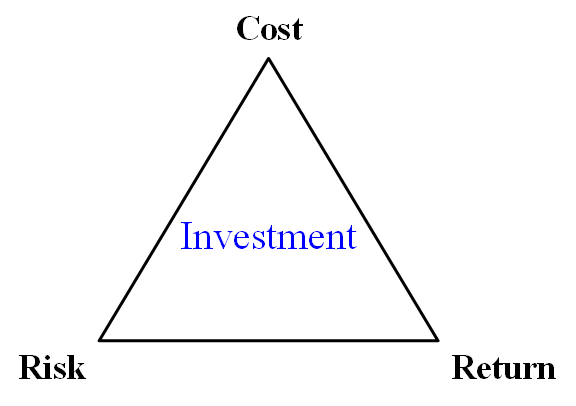
Stocks are a good example. They have the potential for high growth, but they also carry a higher risk of losing value, especially in the short term. The stock market can be volatile. Bonds, on the other hand, offer more stability and predictable income, but their potential for high returns is much lower. Real estate falls somewhere in between, offering a mix of potential growth and income, but it can also be illiquid, meaning it's not always easy to sell quickly.
Don't Put All Eggs in One Basket
You’ve probably heard this saying before, and it’s the perfect way to understand diversification.
Diversification is the investing equivalent of not putting all your eggs in one basket.
Diversification means spreading your money across different investments to reduce your overall risk. The idea is that if one part of your portfolio is performing poorly, another part might be doing well, which helps to balance things out. It’s a strategy to smooth out the inevitable ups and downs of the market.
You can diversify by investing in a mix of different asset classes, like stocks, bonds, and real estate. You can also diversify within an asset class. For example, instead of buying stock in just one company, you could buy stocks in several companies across different industries, like technology, healthcare, and energy.
By spreading your investments, you avoid being overly exposed to the fate of a single company or sector. This simple principle is one of the most effective ways to manage risk.
In the context of investing, what is the best definition of an 'asset class'?
An investor's primary goal is to achieve high growth over the long term, and they are willing to accept a higher level of risk to do so. Which asset class is most aligned with this objective?
Understanding asset classes, risk, return, and diversification provides the foundation for building a sound investment strategy. These are the core concepts you'll rely on as you begin to construct your own retirement portfolio.