Retirement Portfolio Construction
Understanding Investment Basics
Why Invest for Retirement?
Saving money is a great start, but it's often not enough to fund a comfortable retirement. That's where investing comes in. When you invest, you're putting your money to work, giving it the potential to grow faster than it would in a savings account. The goal is to outpace inflation—the rate at which the cost of living increases—and build a nest egg that can support you for decades.
Think of it this way: money in a savings account might earn a little interest, but inflation often eats away at its value over time. Investing gives your money a fighting chance to not just keep up, but to grow significantly. This growth is supercharged by something called compound interest, where your earnings start generating their own earnings. Over many years, this effect can be dramatic.

Risk and Return
Every investment carries some level of risk, which is the chance that you could lose money. At the same time, every investment has a potential for return, which is the money you could make. These two concepts are fundamentally linked.
Generally, the higher the potential return, the higher the risk. A safe investment, like a government bond, will offer modest, predictable returns. A riskier investment, like a stock in a brand-new company, has the potential for huge gains but also for significant losses. The key is finding a balance that you're comfortable with and that aligns with your retirement timeline.
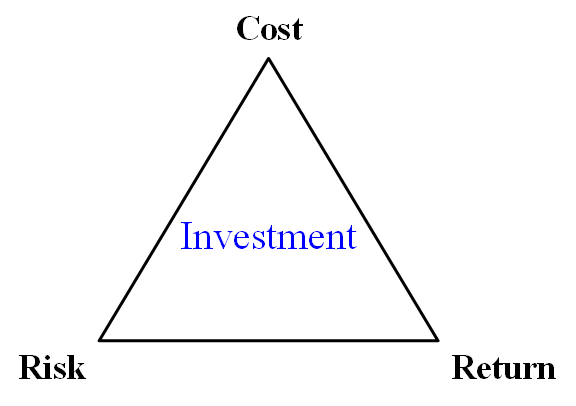
As you get closer to retirement, you might prefer lower-risk investments to protect the money you've already accumulated. When you're younger and have more time to recover from potential downturns, you might take on more risk for the chance of greater growth.
Common Investment Types
You don't need to be an expert to get started. Most retirement investors use a few common types of investments, often bundled together.
Stock
noun
A type of security that signifies ownership in a corporation and represents a claim on part of the corporation's assets and earnings.
When you buy a stock, you're buying a small piece of a company. If the company does well, the value of your piece can go up. If it does poorly, the value can go down. Stocks are considered higher-risk because their prices can be volatile, but they have historically offered the highest long-term returns.
Bond
noun
A loan made by an investor to a borrower, which could be a corporation or a government.
Essentially, you're lending money in exchange for periodic interest payments. At the end of the bond's term, you get your original investment back. Bonds are generally safer than stocks, making them a good option for balancing out the risk in a portfolio.
Stocks represent ownership, while bonds represent a loan. This simple difference is key to their risk and return profiles.
What if you want to own many stocks or bonds without buying them one by one? That's where funds come in.
Mutual Fund
noun
An investment vehicle made up of a pool of money collected from many investors to invest in a diversified portfolio of stocks, bonds, or other assets.
Mutual funds are managed by professionals who make the investment decisions for you. They offer instant diversification, which means you're spreading your risk across many different investments. This is the essence of not putting all your eggs in one basket.
Diversification is one of the most important principles in investing.
ETF
noun
An Exchange-Traded Fund is a type of investment fund that is traded on stock exchanges, much like stocks.
ETFs are similar to mutual funds because they also hold a basket of assets like stocks or bonds. A key difference is that ETFs can be bought and sold throughout the day on an exchange, just like individual stocks. Both mutual funds and ETFs are popular choices for retirement savers because they make it easy to build a diversified portfolio.
Now, let's test your understanding of these core concepts.
What is the primary reason to invest your money for retirement rather than keeping it all in a traditional savings account?
In the world of investing, what is the typical relationship between risk and potential return?
Understanding these basic building blocks—stocks, bonds, and funds—is the first step toward building a sound financial future. With this foundation, you can start thinking about how to combine them to meet your personal retirement goals.