Retirement Portfolio Construction
Understanding Investment Basics
What Is Investing?
Investing is the process of using your money to buy things that have the potential to grow in value. Think of it as putting your money to work for you. While saving is about storing money safely for future use, investing is about actively trying to increase its amount over time.
The main goal is to build wealth. Whether you're planning for retirement, a down payment on a house, or your kids' education, investing can help you reach your financial targets faster than saving alone. This is because a good investment should grow at a rate that outpaces inflation, the slow rise in the cost of goods and services. If your money isn't growing, it's actually losing purchasing power year after year.
Saving protects your money. Investing grows your money.
The Building Blocks of a Portfolio
When you start investing, you'll encounter a few common types of investments. Understanding them is the first step to building a solid financial future. Let's look at the three most basic building blocks.
Stock
noun
A share of ownership in a single public company. When you buy a stock, you become a part-owner of that business.
If the company does well, the value of your stock can increase, and you can sell it for a profit. Some companies also share a portion of their profits with shareholders through payments called dividends. Stocks offer the potential for high growth, but they also come with higher risk because their value can fluctuate significantly based on the company's performance and market conditions.
Bond
noun
A loan made to an entity, such as a corporation or government. In return for the loan, the issuer promises to pay you interest over a set period and return the original loan amount at the end.
Bonds are generally considered safer than stocks. They provide a predictable stream of income through interest payments, making them a stabilizing force in an investment portfolio. However, their potential for high returns is lower compared to stocks.
Mutual Fund
noun
A professionally managed investment that pools money from many investors to purchase a diversified collection of stocks, bonds, or other assets.
Mutual funds are a popular choice, especially for beginners. With a single purchase, you can own small pieces of dozens or even hundreds of different companies. This built-in diversification helps spread out your risk. If one company in the fund performs poorly, the impact on your overall investment is cushioned by the others.
The Risk and Return Trade-Off
Every investment involves a fundamental trade-off between risk and return. Risk is the chance that you could lose some or all of the money you've invested. Return is the money you make on your investment.
Generally, the higher the potential return, the higher the risk involved. Stocks, for example, have historically offered higher returns than bonds over the long term, but they also experience more volatility. Their value can swing up and down more dramatically. Bonds, on the other hand, offer lower potential returns but with much less risk.
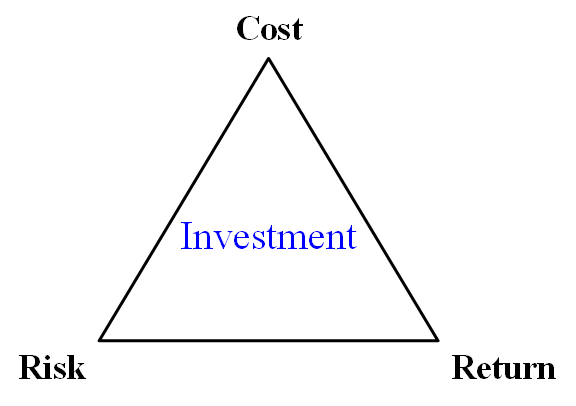
Finding the right balance depends on your personal financial goals, how much time you have to invest (your time horizon), and your comfort level with market ups and downs. A younger investor with decades until retirement might be willing to take on more risk for the chance of higher growth. Someone nearing retirement may prefer to protect their capital with lower-risk investments.
One of the keys to successful investing is learning how to balance your comfort level with risk against your time horizon.
Understanding these basic concepts is the first step on your investment journey. By knowing what investments are, why they're crucial for retirement, and how they relate to risk, you're building a strong foundation for making smart financial decisions.
What is the primary goal of investing?
If you buy a share of stock, what do you own?