Retirement Portfolio Construction
Investment Basics
The Building Blocks of Your Portfolio
Think of building a retirement portfolio like building a house. You wouldn't use just one material. You need a strong foundation, sturdy walls, and a protective roof. In investing, these different materials are called asset classes.
Asset Class
noun
A group of investments that have similar characteristics and behave similarly in the marketplace.
For now, let's focus on three foundational asset classes:
-
Stocks: When you buy a stock, you're buying a small piece of ownership in a company. If the company does well, the value of your piece can go up. The main goal of owning stocks is growth. Over long periods, they have historically offered the highest potential returns, but they also come with more bumps along the way.
-
Bonds: A bond is essentially a loan you make to a government or a company. In return, they promise to pay you back the loan amount on a specific date, and along the way, they pay you interest. Bonds are generally considered safer than stocks and are often used to provide stability and income to a portfolio.
-
Cash Equivalents: This includes things like money market funds or short-term government bills. They are very safe and can be converted into cash quickly. Their purpose is to preserve your capital and provide a safe harbor during uncertain times. The trade-off is that they offer very low returns, sometimes not even enough to keep up with inflation.
| Asset Class | Primary Goal | Typical Risk | Potential Return |
|---|---|---|---|
| Stocks | Growth | High | High |
| Bonds | Stability & Income | Low to Medium | Low to Medium |
| Cash Equivalents | Safety & Liquidity | Very Low | Very Low |
The Risk and Return Trade-Off
There's a fundamental relationship in investing: the potential for higher returns usually comes with higher risk. It's a trade-off you can't escape. You have to decide how much risk you're comfortable taking to achieve your financial goals.
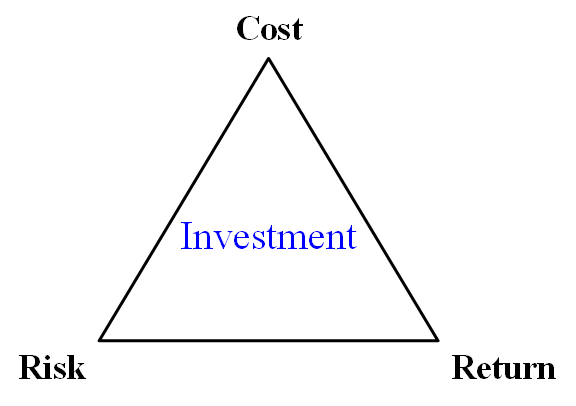
Imagine stocks as a speedboat. They can get you to your destination quickly (high return), but the ride can be choppy and there's a greater chance of something going wrong (high risk). Bonds are like a sturdy ferry. The journey is slower and less exciting (lower return), but it's much more stable and predictable (lower risk). Cash equivalents are like having your money safely in your pocket at the dock. It's not going anywhere, but it's not growing either.
Higher potential reward requires taking on greater risk. There is no such thing as a free lunch in investing.
Don't Put All Your Eggs in One Basket
This leads us to one of the most important concepts in investing: diversification. Simply put, it means spreading your money across different investments instead of concentrating it in one place.
Diversification is a cornerstone of investment risk management, embodying the timeless wisdom of “don’t put all your eggs in one basket”.
Why is this so important? Because different asset classes often react differently to the same economic events. When stocks are having a bad year, bonds might be doing just fine, or vice-versa. By owning a mix of assets, you smooth out the ride. The gains in one area can help offset the losses in another, making your overall portfolio less volatile.
This doesn't mean you'll never lose money. Diversification is about managing risk, not eliminating it completely. It's a strategy to protect you from the catastrophic losses that can happen if your single investment goes south.
By understanding these three core ideas—asset classes, risk and return, and diversification—you have the foundational knowledge needed to start thinking about how to build a sensible, long-term investment plan.
What does buying a stock primarily represent?
In the world of investing, higher potential returns are typically associated with...