Restoring the Classic Jaguar E-Type
Introduction to Jaguar E-Type Restoration
A Legend Reborn
When the Jaguar E-Type debuted at the 1961 Geneva Motor Show, it caused a sensation. With its stunning long hood, sleek lines, and impressive performance, it was an instant icon. Even Enzo Ferrari, a man not easily impressed by competitors, reportedly called it "the most beautiful car ever made."
But the E-Type wasn't just beautiful. It was a technical marvel. It featured a monocoque construction, disc brakes, and independent rear suspension, technologies borrowed from Jaguar's Le Mans-winning D-Type race car. Best of all, it delivered supercar performance for a fraction of the price of an Aston Martin or Ferrari. This combination of beauty, speed, and relative affordability cemented its place in automotive history.
Know Your Cat
Before starting any restoration, it's crucial to understand what you're working with. The E-Type was produced for 14 years, and it evolved significantly during that time. Production is generally broken down into three main series.
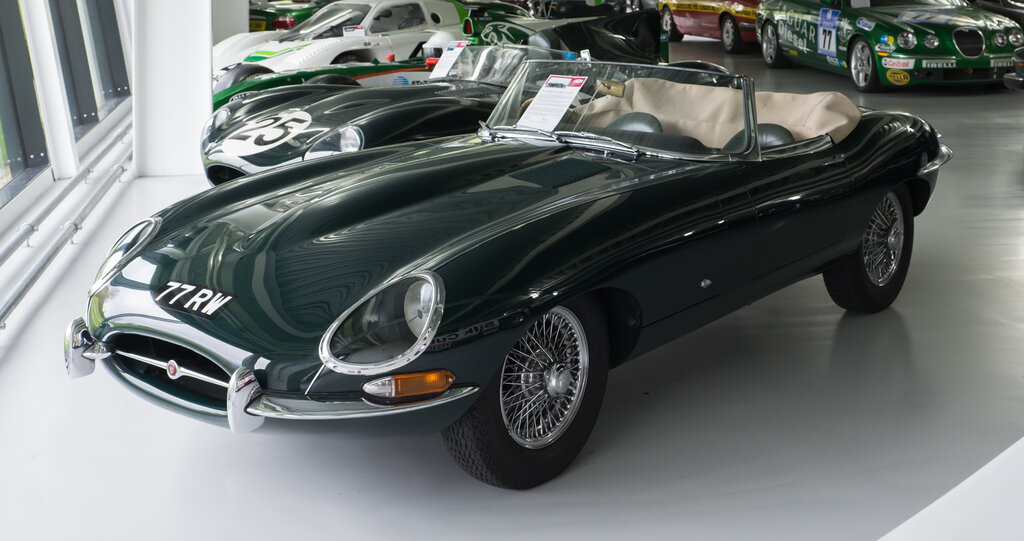
- Series 1 (1961-1968): Considered the purest form of the design. These cars are the most valuable and sought-after. Early models had a 3.8-liter straight-six engine and a less user-friendly gearbox. Later models got an upgraded 4.2-liter engine with more torque and a fully synchromesh gearbox, making them much nicer to drive.
- Series 2 (1968-1971): These cars were adapted to meet new U.S. safety and emissions regulations. The most obvious changes are the lack of glass headlight covers, larger, repositioned signal lights, and a bigger grille opening for better cooling.
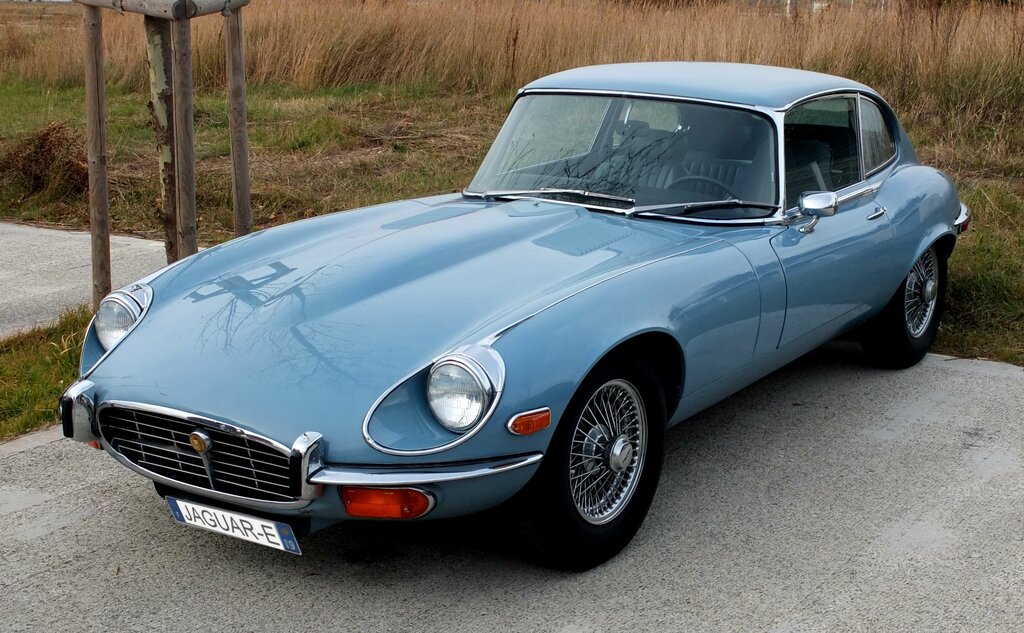
- Series 3 (1971-1975): The final evolution saw the biggest change: a new 5.3-liter V12 engine. These cars are easily identified by their flared wheel arches, cross-slatted front grille, and a "V12" badge on the trunk.
| Series | Production Years | Engine(s) | Key Features |
|---|---|---|---|
| Series 1 | 1961-1968 | 3.8L or 4.2L I6 | Glass headlight covers, small grille, toggle switches |
| Series 2 | 1968-1971 | 4.2L I6 | Open headlights, larger grille, rocker switches |
| Series 3 | 1971-1975 | 5.3L V12 | Flared wheel arches, cross-slatted grille, V12 engine |
Beyond the series, E-Types came in different body styles. The original two were the Fixed Head Coupé (FHC), a sleek fastback, and the Open Two Seater (OTS), a classic roadster. Later, a 2+2 version was added, which stretched the wheelbase to accommodate a small back seat, making it a more practical grand tourer.
The Restoration Gauntlet
Restoring an E-Type is a rewarding journey, but it's filled with challenges. The biggest and most notorious enemy is rust. These cars were not well protected from the elements when new, and decades of exposure can wreak havoc on the complex body shell. Sills, floors, and wheel arches are common problem areas.
Bodywork is almost always the most expensive part of an E-Type restoration. What you can see on the surface is often just the tip of the iceberg.
Mechanically, the cars are robust, but they have their quirks. The straight-six engines are legendary, but the V12 in the Series 3 is a far more complex beast to rebuild. The independent rear suspension, while brilliant for its time, is intricate and must be removed as a complete subframe for major work. Sourcing correct parts, especially for early Series 1 cars, can also be a time-consuming and expensive hunt.
Plan Your Attack
A successful restoration begins long before you pick up a single tool. It starts with research and planning. The first step is to define your goal. Are you building a perfect, factory-correct car for concours shows? A reliable and fun driver for weekend trips? Or a modified "restomod" with modern upgrades?
Each path has different requirements for parts, techniques, and budget. Once you have a goal, you can create a realistic plan. Join owners' clubs and online forums. Read books and manuals. Talk to specialists and other owners. The more you know upfront, the fewer expensive surprises you'll face later.
A detailed budget is non-negotiable. Factor in the cost of the car, parts, tools, and any specialist labor you might need for tasks like bodywork, engine rebuilding, or paint. Always add a healthy contingency fund—restorations rarely go exactly as planned.
Let's review some of the key terms we've covered.
Now, test your knowledge on the different E-Type models and the restoration process.
What was the most significant mechanical change introduced with the Series 3 E-Type?
A potential buyer inspects an E-Type and notes that it lacks the iconic glass headlight covers and has larger, repositioned signal lights below the front bumper. Which series is this car most likely to be?
With a clear understanding of the E-Type's history and a solid plan, the path to restoring one of these automotive icons becomes much clearer.