REST API Engineering for AI Solutions
HTTP and REST Mechanics
The Client-Server Handshake
When an AI agent needs to interact with the outside world, like fetching a weather forecast or updating a user's profile in a database, it engages in a fundamental conversation. This conversation follows a client-server model. The agent acts as the client, initiating a request for information or an action. The server is the system holding the data or capability, which processes the request and sends back a response.
Think of it like ordering a coffee. You (the client) go to the counter and make a specific request to the barista (the server). The barista takes your request, prepares the coffee, and then gives it to you (the response). The agent's world is full of these interactions, constantly requesting and receiving information to achieve its goals.
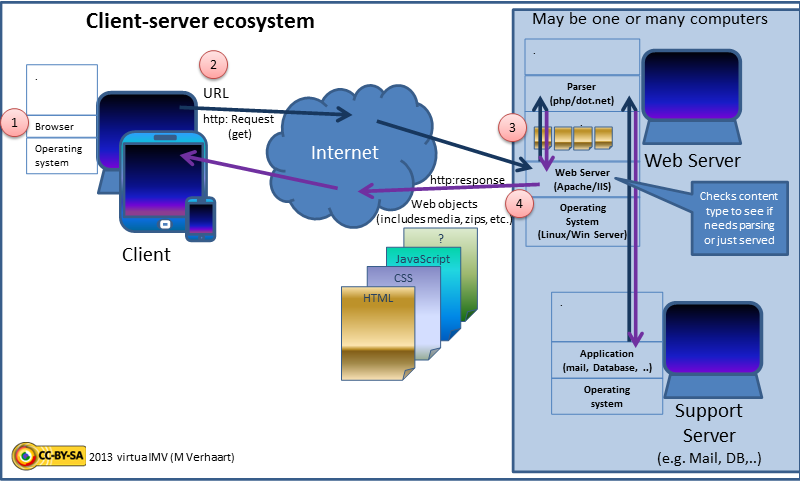
The Language of the Web
This digital conversation needs a shared language. For web services, that language is the Hypertext Transfer Protocol, or HTTP. It's a set of rules that dictates how requests and responses should be formatted so both the client and server can understand each other perfectly. For an AI agent, mastering this language is key to interacting with almost any external tool or API.
An agent doesn't just say, "Get me data." It constructs a formal HTTP request. This request contains two crucial pieces of information: the address of the server it wants to talk to (the URL) and the specific action it wants to perform (the HTTP Method).
Anatomy of a Request
The URL, or Uniform Resource Locator, is the precise address for the piece of information or service the agent needs. It's not just a website address; it's a path to a specific resource. A typical URL for an API might look like https://api.weather.com/v1/forecast.
https://api.weather.comis the base URL. It points to the server./v1/forecastis the resource path. It specifies what the agent is interested in.
Combined with an HTTP method, this tells the server exactly what to do. Most modern APIs follow a design pattern called REST, which uses these standard methods to represent common actions. This predictability is what allows an agent to learn how to use one API and then apply that knowledge to others.
| AI Intent | HTTP Method | Action |
|---|---|---|
| "Find the user with ID 123." | GET | Retrieve data |
| "Add a new contact to my address book." | POST | Create a new resource |
| "Change this user's email address." | PUT | Update an entire resource |
| "Remove this item from the cart." | DELETE | Delete a resource |
By mapping its goal to the correct HTTP method, the agent translates intent into action. If it needs to read information without changing anything, it uses GET. If it needs to create something new, it uses POST.
This system is designed to be , meaning each request is a self-contained event. The server doesn't remember previous requests from the agent. Every time the agent sends a request, it must include all the information the server needs to fulfill it, like authentication keys. This makes the system robust and scalable, as any server can handle any request without needing context from past interactions.
Understanding the Reply
After the server processes the request, it sends back a response. This response contains the data the agent asked for (if any) and, just as importantly, an HTTP status code. This three-digit code is a quick summary of what happened. Was the request successful? Was there an error? The agent needs to read this code to know if its task succeeded and how to proceed.
An agent doesn't need to memorise every code, but it must understand the categories. Codes in the 200s mean success. Codes in the 400s mean the agent made a mistake (like a typo in the URL or a bad API key). Codes in the 500s mean the server had a problem. Knowing how to interpret these is crucial for building resilient agents that can handle errors gracefully. This information is always available in the service's which acts as the instruction manual for the agent.
| Status Code | Meaning | What it Means for the Agent |
|---|---|---|
200 OK | Success | The request worked. The requested data is in the response. |
201 Created | Success | The POST request worked and a new item was created. |
400 Bad Request | Client Error | The agent sent a malformed or incomplete request. Review and fix. |
401 Unauthorized | Client Error | The agent's API key is missing, invalid, or expired. |
404 Not Found | Client Error | The resource path doesn't exist. Check the URL for typos. |
500 Internal Server Error | Server Error | The server failed. The agent should pause and try again later. |
By understanding the structure of HTTP requests and responses, an AI agent can reliably interact with the vast world of web APIs. It can translate an abstract goal into a specific GET or POST request, send it to the right URL, and then interpret the status code to confirm success or diagnose failure. This is the fundamental mechanism that turns a language model into a capable agent that can act in the digital world.
In the client-server model described, what role does the AI agent play when it needs to fetch a weather forecast?
An AI agent sends a request to an API and receives a 404 Not Found status code. What is the most likely cause of this error?