Responsible AI Use and Ethics
Introduction to AI Ethics
Why AI Needs a Conscience
Artificial intelligence is no longer science fiction. It's woven into our daily lives, from recommending movies to helping doctors diagnose illnesses. But just because a system is intelligent doesn't mean it's wise or fair. That's where AI ethics comes in. It's the field dedicated to making sure the AI we build is helpful, not harmful.
Think of it like raising a child. You don't just teach them facts and skills; you teach them values like honesty and kindness. AI ethics provides a moral compass for machines, guiding their development and behavior to align with human values. Without these guidelines, we risk creating systems that amplify our worst biases or make critical errors without anyone being held responsible.
AI ethics is about embedding human values into the code and systems that are reshaping our world.
The Five Pillars of Trustworthy AI
To build AI we can trust, developers and policymakers focus on a set of core principles. These aren't just abstract ideas; they are practical goals that shape how AI systems are designed, trained, and used. Understanding them helps us see what makes an AI system good or bad for society.
Fairness: An AI system used to screen job applicants shouldn't favor candidates from a particular gender or background. It must judge everyone on their skills and qualifications alone.
Accountability: If an autonomous vehicle causes an accident, who is responsible? The owner, the manufacturer, the software developer? Accountability means creating clear lines of responsibility for an AI's actions.
Transparency: A doctor using an AI to detect cancer needs to understand why the AI reached its conclusion. A black box that just gives an answer with no explanation isn't trustworthy. This is often called explainability.
Privacy: AI systems often require vast amounts of data to learn. The principle of privacy ensures that our personal information is handled securely and used only for its intended purpose.
Safety: A factory robot powered by AI must be safe for the humans working alongside it. It needs to be reliable, predictable, and have safeguards to prevent accidents.
The Roots of AI Ethics
The conversation about machine ethics began long before we had the technology to build AI. Science fiction writers were among the first to explore the idea. In the 1940s, Isaac Asimov introduced his famous "Three Laws of Robotics," a simple ethical code for intelligent machines. While not a practical guide for engineers, these stories sparked public imagination and raised fundamental questions about our relationship with intelligent creations.
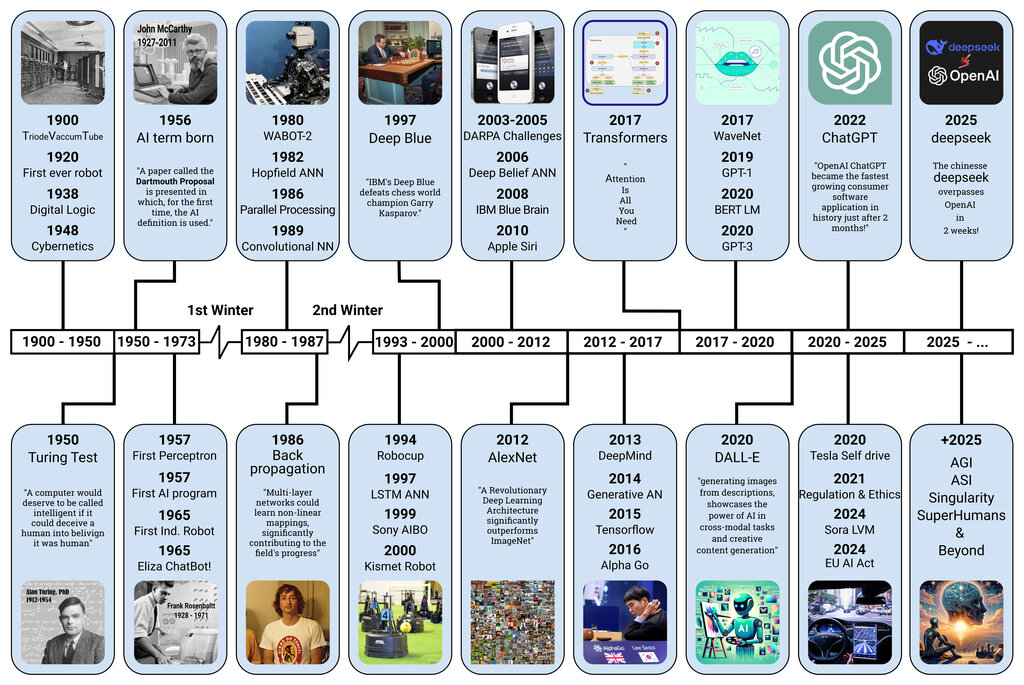
As AI moved from fiction to reality, the discussion became more formal. Early computer scientists and philosophers began to consider the societal impact of their work. Over the decades, as AI capabilities grew, so did the urgency of these ethical debates, leading to the establishment of research institutes, conferences, and principles by companies and governments.
Ethics in Action
Ethical principles are crucial in fields where AI decisions have high stakes. Let's look at a few examples.
In healthcare, AI helps analyze medical images to find diseases earlier than the human eye can. An ethical AI must be trained on diverse datasets so it's equally effective for people of all ethnicities. It also needs to be safe, ensuring its recommendations are reliable and don't lead to misdiagnosis.
In finance, banks use AI to decide who gets a loan. A fair algorithm will base its decision on financial factors, not on proxies for race or neighborhood that could perpetuate historical discrimination. Transparency is also key, so that if someone is denied, they can understand why.
In the legal system, AI can quickly sort through thousands of documents for evidence in a case. For this to be ethical, the process must be accountable. Lawyers need to be sure the AI isn't overlooking crucial evidence or misinterpreting information, and they must be able to verify its results.
AI ethics focuses on principles such as fairness, transparency, accountability, and privacy to guide responsible AI development and deployment.
Now that you understand the core principles, let's test your knowledge.
What is the primary goal of AI ethics?
An AI model used for medical diagnosis provides a conclusion but cannot explain the factors it used to arrive at that decision. Which core ethical principle is most directly being violated?
Building AI that is powerful, effective, and ethically sound is one of the most important challenges of our time. It requires not just technical skill but also careful thought about the kind of world we want to create.