Responsible AI Use
Introduction to AI Ethics
What Is AI Ethics?
Artificial intelligence is no longer science fiction. It's in our phones, our cars, and our hospitals. As these systems become more powerful, we have to ask a critical question: how do we ensure they do good and not harm? This is the core of AI ethics.
AI ethics refers to a set of values, principles, and techniques that outline widely accepted standards of right and wrong.
Think of it as a guide for building and using AI responsibly. It's not just about preventing dystopian robot takeovers. More often, it deals with immediate, real-world problems. Is an AI hiring tool biased against certain groups? How does a social media algorithm handle misinformation? Who is responsible when an autonomous car makes a mistake?
AI ethics gives us a framework to tackle these questions. It covers fairness, accountability, transparency, and the impact of AI on society. The goal is to align the rapid progress of technology with fundamental human values.
Ethics Through the Ages of AI
The dream of creating intelligent machines is old, but the field of artificial intelligence formally began in the mid-20th century. From the very beginning, questions of ethics were woven into the conversation. Early pioneers and science fiction writers alike wondered what would happen if we succeeded.
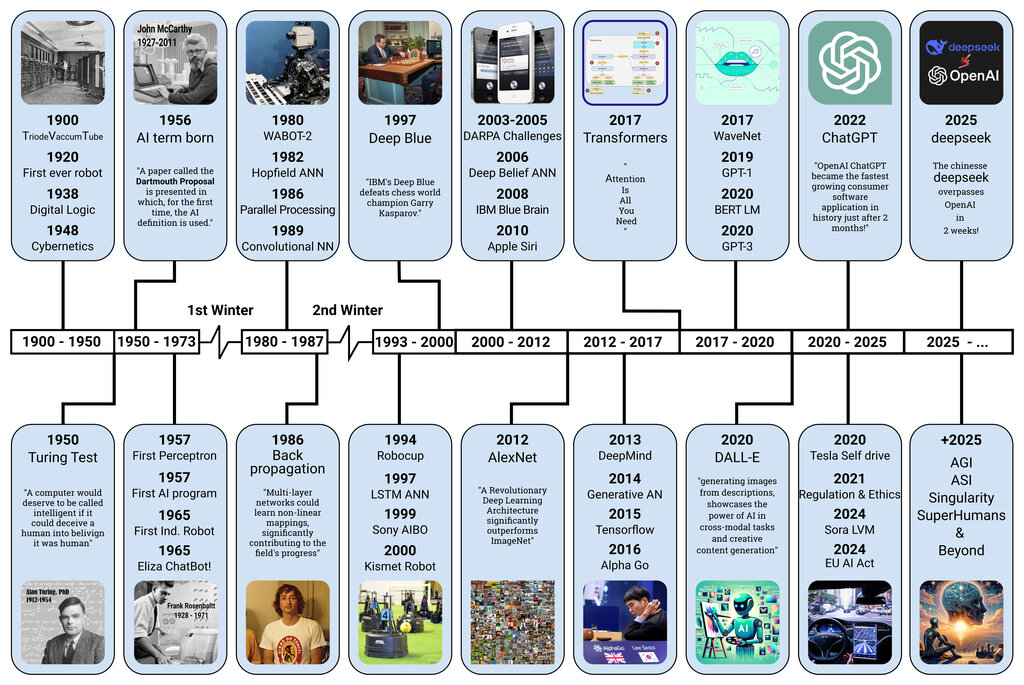
For decades, these were mostly theoretical discussions. AI was limited to specific, narrow tasks. But as technology accelerated, so did the ethical stakes. The rise of the internet created massive datasets, which became the fuel for machine learning. Suddenly, AI could learn from real-world data, inheriting all of its hidden biases and imperfections.
More recently, the development of large language models (LLMs) and generative AI has brought these issues to everyone's attention. We now have systems that can create text, images, and code that is nearly indistinguishable from human work, raising profound questions about creativity, truth, and employment.
Frameworks for Moral Decisions
When we say an AI should be "ethical," what do we actually mean? Philosophers have debated for centuries about how to determine right from wrong. There isn't one simple answer, but there are several major theories that provide useful lenses for thinking about AI.
Let's look at three common approaches:
| Ethical Theory | Core Idea | Example in AI |
|---|---|---|
| Utilitarianism | The best action is the one that maximizes overall happiness and minimizes suffering. | An AI system for managing a city's traffic grid tries to optimize for the shortest total commute time for everyone. |
| Deontology | Morality is about following universal rules, regardless of the consequences. Certain actions are inherently right or wrong. | An AI is programmed to never deceive a user, even if a lie might lead to a better outcome in a specific situation. |
| Virtue Ethics | This approach focuses on the character of the moral agent, asking what a virtuous person would do. | We might ask what traits a "responsible" or "trustworthy" AI should have, such as honesty, fairness, and transparency. |
None of these theories is perfect, and they can sometimes lead to conflicting conclusions. For example, what happens when a rule designed to protect privacy (a deontological principle) prevents an AI from sharing data that could save lives (a utilitarian goal)?
These frameworks don't give us easy answers. Instead, they give us a vocabulary and a structure for debating the complex trade-offs involved in designing and deploying AI systems.
Why We Can't Ignore Ethics
Building ethics into AI isn't an optional extra or an academic exercise. It's a necessity. AI systems are making decisions that affect people's lives, from loan applications and medical diagnoses to job opportunities and legal outcomes.
Without conscious effort, we risk building systems that amplify human biases, create unfair outcomes, and erode trust. Ethical considerations aren't a brake on innovation; they are the steering wheel that directs it toward beneficial goals.
By thinking about ethics from the very beginning of the development process, we can build AI that is not only powerful but also fair, transparent, and accountable. It's about ensuring that the technology we create serves humanity as a whole, reflecting our best values and aspirations.