Responsible AI Use
Introduction to AI Ethics
What Is AI Ethics?
Artificial intelligence is no longer science fiction. It helps recommend movies, diagnose diseases, and even screen job applicants. As these systems become more powerful and woven into our lives, we have to ask a critical question: how do we ensure they do good and not harm? This is the core of AI ethics.
AI ethics is the field of study that explores how to design, build, and use AI systems in a way that is morally right and benefits humanity.
It’s not just about preventing a robot apocalypse. It's about the real-world impact of algorithms today. It covers everything from the data used to train an AI to the decisions that AI makes about people. The goal is to guide this powerful technology toward positive outcomes and away from creating or amplifying societal problems like bias, inequality, and privacy violations.
Ethics
noun
Moral principles that govern a person's or a group's behavior. In the context of AI, it involves applying human values to the conduct of machines and the people who build them.
Essentially, we're trying to imbue our technology with a sense of responsibility. We want systems that are not only intelligent but also fair, transparent, and accountable.
A Brief History
Concerns about artificial beings are as old as stories of golems and automatons. In the 20th century, science fiction author Isaac Asimov famously proposed his "Three Laws of Robotics," an early attempt to codify ethical rules for intelligent machines. While these were fictional, they sparked a wider conversation.
For decades, AI ethics remained a mostly theoretical topic for computer scientists and philosophers. But as AI moved from university labs into the real world, the conversation became urgent. The rapid progress in machine learning in the 2010s meant that algorithms were suddenly making high-stakes decisions.
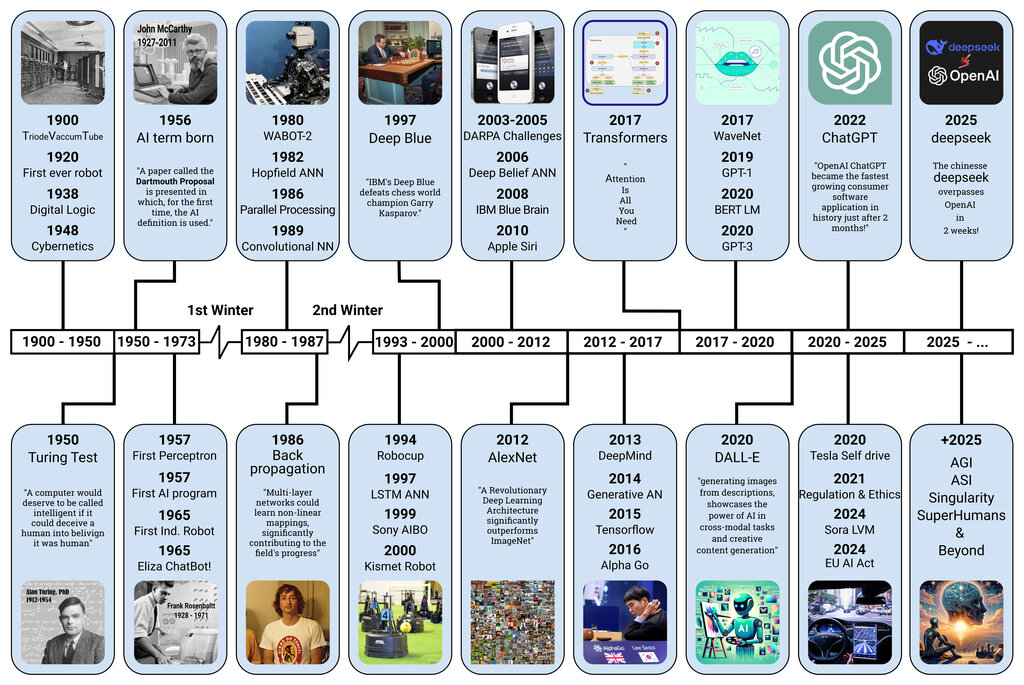
Suddenly, the questions were no longer abstract. If an AI system denies someone a loan, how do we know if the decision was fair? If a self-driving car gets into an accident, who is responsible? These practical dilemmas pushed AI ethics from a niche academic field to a critical area of global importance.
How We Think About 'Right' and 'Wrong'
There’s no single, universally agreed-upon way to determine what is ethical. Philosophers have debated this for centuries. When we apply these ideas to AI, we often draw from a few key ethical frameworks to guide our thinking. Understanding them helps clarify the choices we make when designing AI.
| Theory | Core Idea | Application to AI |
|---|---|---|
| Utilitarianism | The best action is the one that maximizes overall happiness and well-being for the greatest number of people. | Should a self-driving car prioritize saving its passenger or a larger group of pedestrians? |
| Deontology | Certain actions are inherently right or wrong, regardless of their consequences. It's about following moral rules or duties. | An AI should never deceive a user, even if the lie might lead to a positive outcome. |
| Virtue Ethics | Focuses on the character of the moral agent, rather than specific actions or consequences. It asks, "What would a virtuous person do?" | We should design AI systems to exhibit qualities we admire, such as fairness, compassion, and reliability. |
These frameworks don't always give easy answers, and they can sometimes conflict with one another. A utilitarian AI might sacrifice one person to save five, while a deontological AI might refuse to take any action that intentionally harms someone. Navigating these trade-offs is a central challenge in AI ethics.
Why It Matters
Ignoring ethics in AI isn't a neutral choice; it’s a decision to accept potentially harmful consequences. When ethical considerations are an afterthought, the results can be damaging.
Consider an AI tool designed to screen job resumes. If it's trained on historical data from a company that predominantly hired men for technical roles, the AI might learn to associate male-sounding names and activities with successful candidates. It could then systematically penalize resumes from qualified women, reinforcing existing biases and making inequality worse.
In another case, a predictive policing algorithm was found to disproportionately target minority neighborhoods for increased police presence. Because the AI was trained on biased arrest data, it created a feedback loop: more police in an area led to more arrests, which the AI interpreted as confirmation that the area was a high-crime zone.
These aren't hypothetical problems. They are real-world examples of how AI systems, built without careful ethical oversight, can cause significant harm. They underscore the importance of integrating ethics into every stage of AI development, from the initial concept to the final deployment.
AI ethics focuses on principles such as fairness, transparency, accountability, and privacy to guide responsible AI development and deployment.
Building ethical AI is not just about avoiding bad press or legal trouble. It's about building a future where technology serves all of humanity, not just a select few. It's a responsibility shared by developers, companies, policymakers, and all of us who use and interact with these powerful tools.
What is the primary goal of AI ethics?
An AI tool designed to screen resumes is found to penalize qualified female applicants. Based on the provided text, what is the most likely reason for this biased outcome?
By understanding the foundations of AI ethics, we can start asking the right questions and demand better, more responsible technology.