Responsible AI and ChatGPT Use
Introduction to AI Ethics
Why AI Needs a Conscience
Artificial intelligence isn't just about code and data; it's about creating systems that make decisions. Sometimes these decisions are small, like recommending a movie. Other times, they can affect someone's ability to get a loan, receive medical care, or even interact with the justice system. That's where AI ethics comes in. It's the field dedicated to ensuring that these powerful tools are built and used responsibly, safely, and for the benefit of humanity.
Think of it this way: when we build AI, we are embedding our values into its logic. The rules and priorities we give it shape its behavior. AI ethics forces us to ask tough questions before a single line of code is written. What values are we programming in? Who benefits from this technology, and who might be harmed? It's less about creating a perfectly moral machine and more about being intentional and accountable for the technology we unleash on the world.
AI ethics is about teaching machines to make good choices, which first requires us to agree on what 'good' means.
To navigate these complex questions, developers and ethicists often turn to frameworks that philosophers have been debating for centuries. These aren't new ideas, but they're being applied in a radically new context. By understanding them, we can better analyze the choices an AI might make.
Three Ways to Judge a Machine
When we judge whether an action is right or wrong, we usually do it from one of three perspectives. These same perspectives can be used to guide and evaluate AI behavior.
Consequentialism
noun
An ethical framework that judges an action based on its results. The best choice is the one that produces the greatest good for the greatest number of people.
For an AI, this means programming it to always choose the option that maximizes a positive outcome, like efficiency or safety. A self-driving car programmed with consequentialist ethics might be instructed to swerve and hit one person to avoid hitting five, because that minimizes the total harm.
Deontology
noun
An ethical framework focused on duties and rules. It holds that certain actions are inherently right or wrong, regardless of their consequences.
An AI built on deontological principles would follow a strict set of rules. For example, a medical AI might be forbidden from sharing patient data without consent under any circumstances, even if sharing it could lead to a medical breakthrough. The rule is what matters, not the potential outcome.
Virtue Ethics
noun
An ethical framework that emphasizes the character of the moral agent rather than rules or consequences. It asks what a virtuous person would do in a given situation.
This is a bit trickier for AI. It involves programming an AI to embody certain desirable traits or virtues. Instead of focusing on a single decision, it looks at the AI's overall purpose and behavior. An AI tutor for children might be designed to be patient, encouraging, and fair, embodying the virtues of a good teacher.
Core Principles for AI
While philosophical frameworks provide a lens for analysis, the field of AI ethics has developed its own set of practical principles. These are the guideposts that developers, policymakers, and users rely on to build and deploy trustworthy AI.
| Principle | Description |
|---|---|
| Transparency | We should be able to understand how an AI system makes its decisions. It shouldn't be a mysterious "black box." |
| Fairness | An AI should not create or reinforce unfair bias. It must treat all individuals and groups equitably. |
| Accountability | When an AI system causes harm, someone must be responsible. We need clear lines of accountability for its actions. |
| Privacy | AI systems must respect user privacy and handle personal data securely and responsibly. |
These principles are not just abstract ideals. They are meant to address the real-world challenges that arise when AI systems are deployed. A hiring algorithm that shows bias against a certain demographic violates the principle of fairness. A chatbot that collects sensitive personal information without consent violates the principle of privacy.
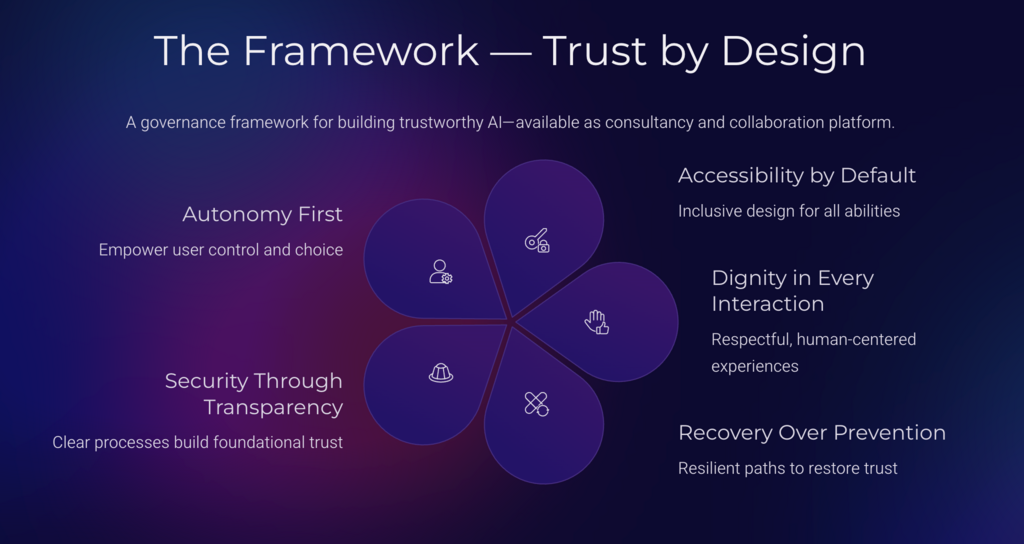
The conversation around AI ethics is constantly evolving as the technology itself develops. Early discussions in the mid-20th century were often theoretical, exploring the idea of machine intelligence. Today, the conversation is urgent and practical, driven by the rapid integration of AI into our daily lives.
As AI becomes more integrated into society, ensuring its ethical use is crucial to prevent harm, bias, and misuse.
Let's test your understanding of these core concepts.
What is the primary goal of the field of AI ethics?
A self-driving car's programming prioritizes minimizing the total number of injuries in any potential accident, even if it means swerving to hit one person to avoid hitting five. This decision-making logic is an example of which ethical framework?
Building responsible AI is a collective challenge. It requires not just technical skill but also careful thought about the kind of world we want to create with these powerful new tools.