Residential Plumbing Essentials
Plumbing System Basics
The Two Halves of Your Plumbing
Think of your home's plumbing not as one big network, but as two distinct systems working in tandem. One system brings clean water in, and the other takes used water and waste out. They run side-by-side throughout your house but never mix.
The first is the water supply system. It's a pressurized system that delivers clean water to your faucets, toilets, and appliances. The pressure is what makes water spray out when you turn on a tap.
The second is the drain-waste-vent (DWV) system. Its job is to safely carry away used water and waste. Unlike the supply system, it's not pressurized. It relies completely on gravity, with pipes carefully sloped to let gravity do the work.
Fresh Water on Demand
Your water supply starts its journey from a municipal main line or a private well. The first thing it encounters inside your house is the main shut-off valve. This is the master switch for all the water in your home, and it's critical to know where it is in case of an emergency.
From there, the cold water line splits. One set of pipes delivers cold water directly to your faucets, toilets, and appliances. The other branch feeds into your water heater. After being heated, that hot water travels through a separate set of pipes, running parallel to the cold water lines, to the same fixtures.
This entire network of pipes is under pressure, typically between 40 and 60 pounds per square inch (psi). This ensures a strong, steady flow whether you're taking a shower on the second floor or watering plants in the backyard.
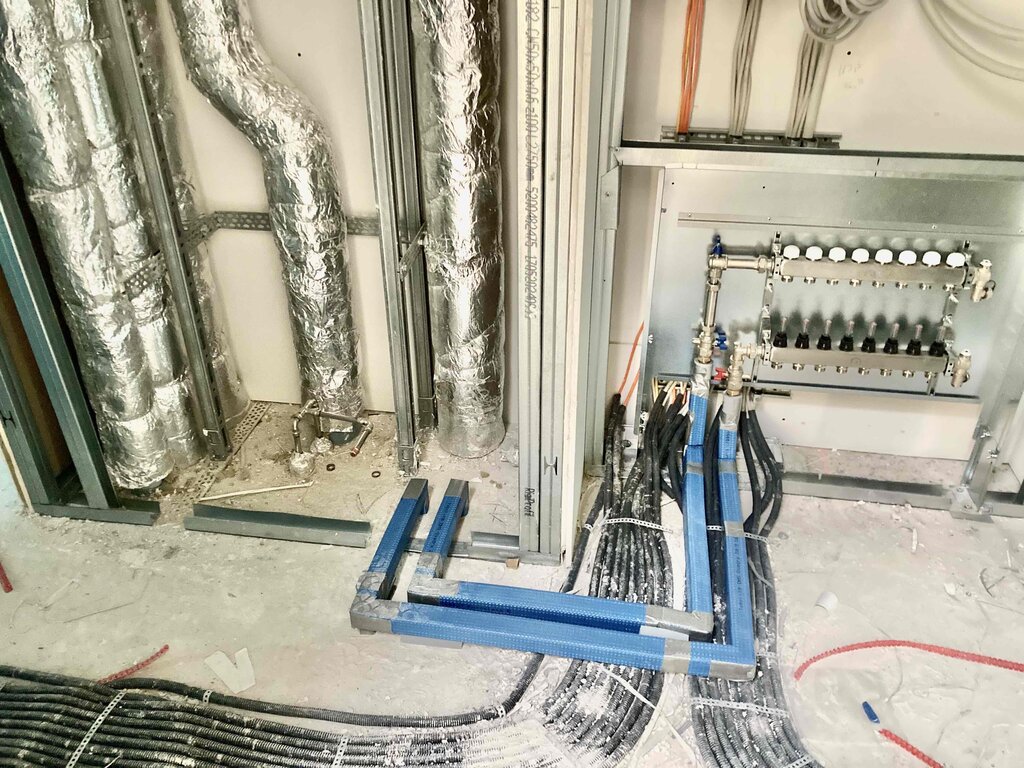
You'll see different materials used for supply lines, including traditional copper pipes and flexible PEX (cross-linked polyethylene) tubing, which has become very popular in new construction.
Draining It All Away
Once water goes down the drain, it enters the DWV system. This system is simpler in concept but just as important. Since it relies on gravity, all horizontal drain pipes must be angled slightly downwards, usually at a slope of about a quarter-inch per foot. This gentle incline keeps waste moving without being so steep that liquids outrun the solids.
Every fixture has a drain that connects to this system. You've probably noticed the curved pipe under your kitchen and bathroom sinks. This is called a P-trap.
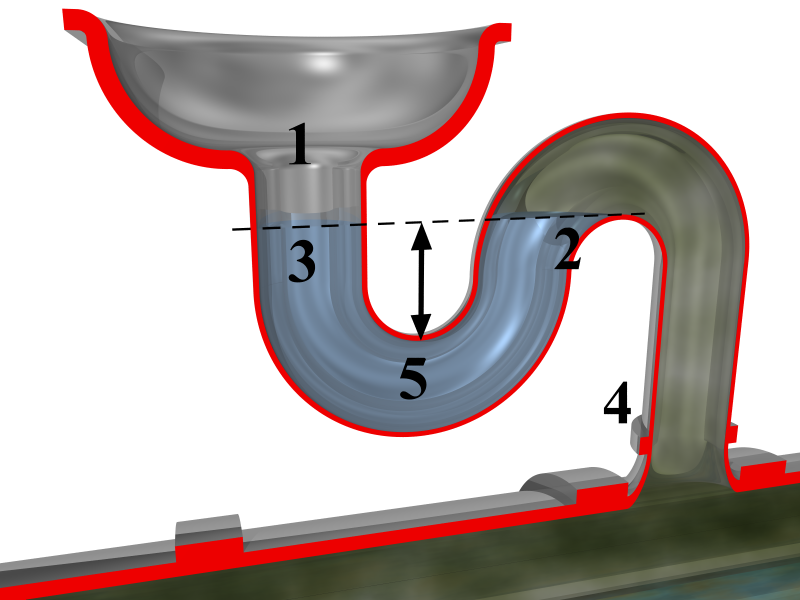
Its clever U-shape holds a small amount of water at all times. This plug of water acts as a barrier, preventing unpleasant and potentially harmful sewer gases from rising up through the drain and into your home. All fixtures, including toilets, showers, and tubs, have some form of trap.
These individual drains feed into larger pipes, which in turn connect to a vertical waste-and-vent stack. This main stack runs down through your house and out to the municipal sewer line or a septic tank.
The Importance of Air
The 'V' in DWV stands for vent, and it's the unseen hero of your plumbing system. Vents are pipes that introduce air into the drain lines. They don't carry water; their only job is to equalize the pressure in the system.
To understand why this is crucial, try pouring water out of a can with only one small hole. The liquid will glug and pour unevenly because a vacuum is being created. Now, punch a second hole. The water flows smoothly because air can enter to replace the liquid.
That's exactly what a vent pipe does for your drains. When a large volume of water rushes down a drain, it can create a vacuum behind it. Without a vent to let air in, this vacuum could be strong enough to siphon the water right out of a fixture's P-trap. If the trap is empty, there’s nothing to stop sewer gas from seeping into your home.
Vent pipes typically run vertically and connect to the drain lines, eventually terminating above your roof. This allows them to draw in fresh air and safely release any sewer gases high away from windows and living spaces.
So, while you may never see them, the supply, drain, and vent systems are all working together every time you turn on a faucet or flush a toilet.
Time to check your understanding of the basics.
What is the fundamental difference between a home's water supply system and its drain-waste-vent (DWV) system?
The U-shaped pipe under a sink, known as a P-trap, holds a small amount of water primarily to...
Together, these systems provide the convenience and sanitation we rely on every day.