Residential Acoustic Engineering in Modern Homes
Material Performance Physics
The Frame as a Sound Bridge
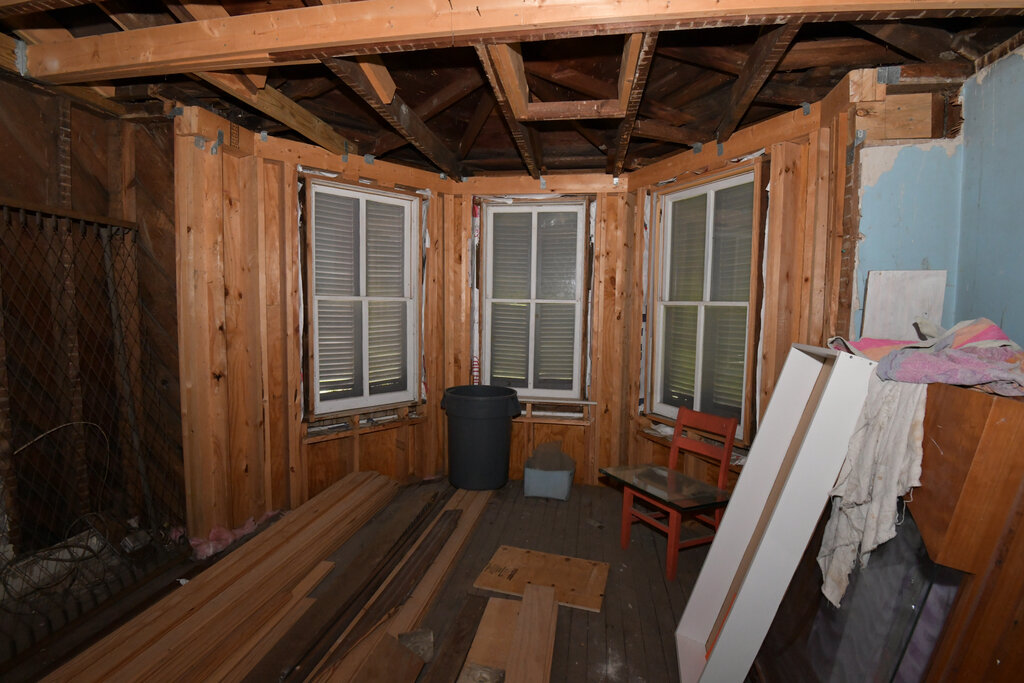
Every wall in a home has a skeleton. This framing, whether wood or steel, provides structural support. It also creates a direct path for sound vibrations to travel from one room to the next. The physical rigidity of the framing material acts as a bridge, efficiently conducting vibrational energy.
Traditional wood studs, typically 2x4s or 2x6s, are dense and stiff. This makes them excellent structural components but also highly effective sound conductors. Think of a string telephone. The tight string carries the vibration of your voice. A rigid wood frame does the same for the noise from a television or a conversation, connecting the drywall on one side to the drywall on the other.
Light-gauge steel studs offer an alternative. Because they are less massive and more flexible than wood, they are less efficient at transferring vibrations. The inherent flex of the steel helps to decouple one side of the wall from the other, dampening the sound energy as it tries to pass through. This doesn't mean steel is always better, but in certain assemblies, its flexibility provides a distinct acoustic advantage.
To quantify how well a wall assembly blocks airborne sound, we use a rating system. These ratings aren't just single numbers; they represent performance across a range of frequencies that are important for speech.
Sound Transmission Class
noun
A single-number rating of how well a building partition attenuates airborne sound. It is widely used to rate interior partitions, ceilings, floors, doors, windows, and exterior wall configurations.
An STC rating is derived by comparing the measured sound transmission loss of a partition across 16 standard frequency bands (from 125 Hz to 4000 Hz) to a standard reference curve. The rating is assigned based on where the measured performance curve fits the reference contour. A higher STC value indicates better sound insulation.
Similarly, the Impact Insulation Class (IIC) measures how well a floor assembly blocks impact sounds, like footsteps or dropped objects. Both ratings are critical, but STC is the primary concern for walls.
Anatomy of a Quiet Wall
Achieving a high STC rating, like the minimum of 50 required by the International Building Code (IBC) for new multifamily construction, involves more than just the studs. The entire wall assembly works as a system.
The most important principle is 'mass-air-mass'. This describes a partition with two solid, massive layers (like drywall) separated by an air cavity. Each layer independently resists sound, but the air gap is key. It helps to decouple the two sides, making it much harder for vibrations to travel through the entire assembly. However, this system has a weakness: resonance.
At a specific frequency, the mass-air-mass system can resonate, like a drum, significantly reducing its ability to block sound. This frequency is determined by the mass of the panels and the depth of the air cavity.
To combat resonance and improve overall performance, we introduce sound-absorbing material into the stud cavity. This is where insulation comes in.
| Insulation Type | Density | Primary Acoustic Function |
|---|---|---|
| Fiberglass Batts | Low | Absorbs high-frequency sound; minimal effect on resonance |
| Mineral Wool Batts | High | Absorbs a broader frequency range; adds damping to the cavity |
Standard fiberglass insulation is effective at absorbing high-frequency sound, but its low density does little to control the mass-air-mass resonance. Mineral wool, being much denser, is more effective. It not only absorbs sound but also acts as a damper within the cavity, interrupting the standing waves that cause resonance.
Finally, the 'mass' component itself is crucial. Heavier materials block more sound. Standard 1/2-inch drywall can be replaced with 5/8-inch Type X gypsum board. While primarily designed for fire resistance, its increased density provides a noticeable acoustic benefit. Applying two layers of 5/8-inch drywall, sometimes with a viscoelastic damping compound sandwiched between them, adds significant mass and further improves the STC rating.
A 2X2 basement finish wall may be adequate for sheetrock or paneling in a family room or game room, but a 2X6 frame wall may be necessary to provide extra wall thickness for soundproofing insulation in a home theatre.
By combining these elements, a simple stud wall can be transformed into a high-performance acoustic barrier. Techniques like using staggered-stud or double-stud walls create a larger, more effective air gap, further decoupling the two sides and pushing STC ratings well above the minimum requirements.
Why can light-gauge steel studs sometimes offer better sound insulation than traditional wood studs?
The 'mass-air-mass' principle is key to sound insulation, but its primary weakness is its susceptibility to __________, which can be dampened by adding insulation to the wall cavity.