Reproduction and Heredity Essentials
Introduction to Reproduction
The Blueprint of Life
At its core, life has one primary goal: to continue. Every living organism, from the smallest bacterium to the largest whale, participates in a process to ensure its species doesn't just vanish. This process is called reproduction.
reproduction
noun
The biological process by which new individual organisms, or offspring, are produced from their parent or parents.
Think of it as life making copies of itself. It's not just about creating more individuals; it's about passing on the genetic instructions that define a species. Without it, any form of life would have a lifespan of just one generation.
One Parent, Many Copies
Some organisms take a direct approach to reproduction. They do it all by themselves. This method, called asexual reproduction, involves only one parent. The parent organism produces offspring that are genetically identical to itself. There is no mixing of genetic material, resulting in clones.
This strategy is very efficient. An organism doesn't need to find a mate, and it can create many offspring in a short amount of time. Bacteria, for instance, can reproduce asexually by simply splitting in two. Some plants can sprout new individuals from their roots or stems.
In asexual reproduction, offspring are exact genetic copies of a single parent.
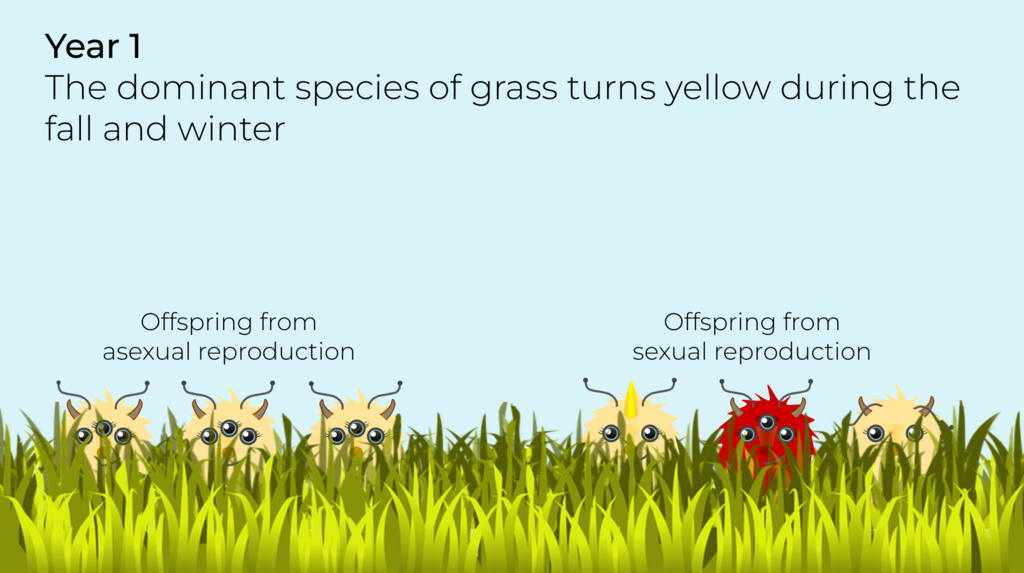
The main advantage here is speed and simplicity. If an organism is perfectly suited to its environment, making identical copies ensures that the successful genetic blueprint is passed on unchanged.
Two Parents, Unique Offspring
The other major strategy is sexual reproduction. This process requires two parents, each contributing genetic information to create a new, unique individual. Most animals, including humans, and many plants reproduce this way.
Each parent produces specialized reproductive cells called gametes, like sperm and eggs. When these gametes combine, they form an offspring that inherits a mix of traits from both parents. This is why you might have your mother's eyes and your father's nose. You're a completely new combination of their genetic material.
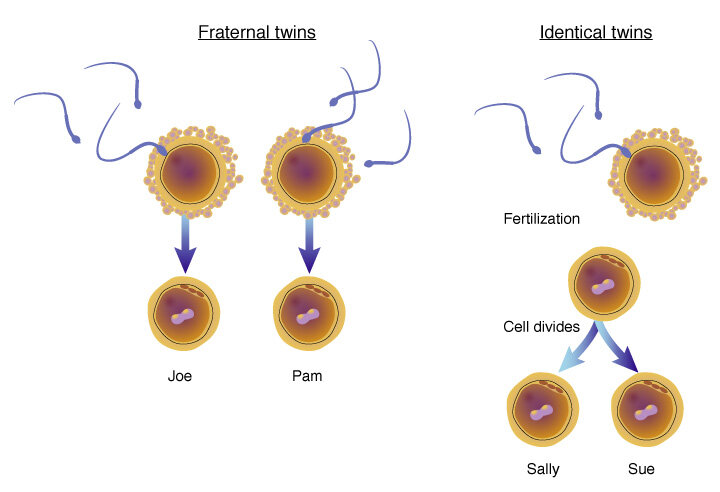
The result of this genetic shuffling is variation. Unlike the clones produced asexually, the offspring of sexual reproduction are all different from each other and from their parents. This diversity is the key strength of sexual reproduction.
Why It Matters
So, why do two different methods exist? Each has its benefits. Asexual reproduction is a fantastic strategy in a stable, unchanging environment. It’s fast, requires less energy, and reliably passes on successful genes. However, its lack of genetic variation can be a major disadvantage if conditions change. A single disease or environmental shift could wipe out an entire population of identical organisms.
Sexual reproduction, on the other hand, creates a population with a wide range of traits. This genetic diversity acts as an insurance policy for the species. When the environment changes, some individuals will likely have traits that allow them to survive and continue the species. It's a slower, more complex process, but it builds resilience.
| Feature | Asexual Reproduction | Sexual Reproduction |
|---|---|---|
| Number of Parents | One | Two |
| Genetic Makeup | Identical to parent | Unique combination |
| Genetic Variation | Very low | Very high |
| Relative Speed | Fast | Slow |
Both asexual and sexual reproduction are powerful strategies that have allowed life to thrive and adapt on Earth for billions of years. They are two different answers to the fundamental challenge of persistence.
What is the fundamental purpose of reproduction for a species?
Offspring created through asexual reproduction are genetically identical to the parent.