Reliable Multi-Agent AI Systems
Introduction to Multi-Agent AI Systems
Beyond a Single Brain
Most complex problems aren't solved by one person. They require a team of specialists, each bringing their own skills to the table. An architect, an engineer, and a construction manager all work together to build a skyscraper. Each has a different role, but they coordinate to achieve a common goal.
Multi-agent AI systems operate on the same principle. Instead of relying on a single, monolithic AI model to do everything, a multi-agent system (MAS) is a collection of autonomous AI agents that interact with each other and their environment to solve a problem.
Think of it as a digital team. Each agent is a team member with a specific job, and the system's intelligence comes from their collaboration.
These systems have a few key characteristics:
- Autonomy: Each agent has its own internal state and can make decisions on its own without direct instruction from a human or another agent.
- Local Views: No single agent has a complete picture of the entire problem. Each agent perceives only a part of the environment, much like a single player on a soccer field.
- Decentralization: There's usually no single point of control. The overall behavior of the system emerges from the local interactions between agents.
Strength in Numbers
Why go to the trouble of building a team of agents instead of one powerful AI? The multi-agent approach offers several key advantages, especially for large, dynamic problems.
Multi-agent architecture presents a scalable, resilient, and future-ready foundation for building enterprise-grade AI systems.
First, these systems are highly scalable and efficient. A complex task, like planning a large-scale event, can be broken down into smaller sub-tasks. One agent can handle venue booking, another can manage marketing, and a third can coordinate with vendors. They can work in parallel, getting the job done faster than a single agent trying to juggle everything.
They are also more robust and reliable. In a system with a single agent, one failure can bring everything to a halt. In a multi-agent system, if one agent goes offline or makes a mistake, the others can often adapt and continue working, sometimes even taking over the failed agent's responsibilities.
Finally, they offer flexibility and modularity. It's much easier to add new capabilities to the system by introducing a new agent with a new skill set. You can upgrade the 'marketing' agent with the latest tools without having to rebuild the 'venue booking' agent from scratch.
The Coordination Challenge
Of course, managing a team of agents isn't without its challenges. The biggest hurdle is coordination. How do you ensure that all these autonomous agents work together cohesively instead of getting in each other's way?
This is where communication mechanisms come in. Agents need a way to share information, request help, and report their progress. This could be as simple as sending direct messages or as complex as a shared knowledge base that all agents can read from and write to. The goal is to give agents the information they need to make smart decisions that align with the team's overall objective.
Without effective communication, a team of powerful agents is just a collection of individuals working in isolation.
Another challenge is avoiding conflict. What happens when two agents want to use the same resource at the same time? Or when one agent's plan interferes with another's? Multi-agent systems need rules or negotiation protocols to resolve these conflicts and ensure the group's success.
Blueprints for Collaboration
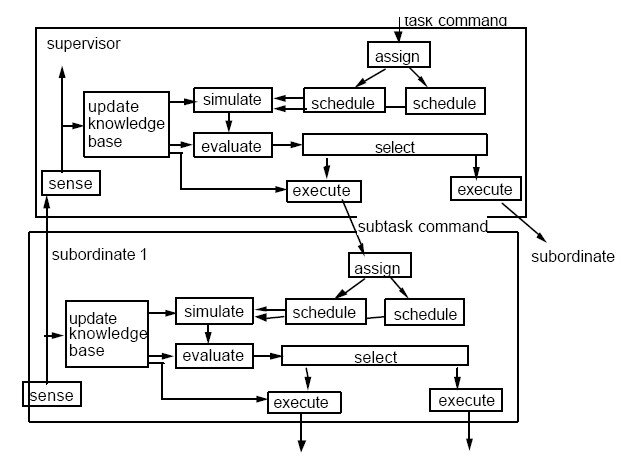
To solve these coordination problems, developers rely on established design patterns. These are like blueprints for organizing agent interactions. While the specifics can get complex, most patterns fall into a few general categories.
Some systems use a hierarchical pattern, with a 'manager' agent that decomposes a large task and assigns smaller pieces to 'worker' agents. Others might use a market-based approach, where agents bid on tasks they are best suited to perform.
In a federation or 'team' pattern, agents are peers that coordinate among themselves, negotiating and collaborating to solve problems. And in a pipeline structure, data flows through a series of specialized agents, each one performing a specific transformation before passing the result to the next in line.
The right pattern depends entirely on the problem you're trying to solve. By understanding these fundamental concepts, we can start to design and build intelligent systems that are more powerful, flexible, and resilient than any single agent could be.
Now that you understand the basics of multi-agent systems, let's test your knowledge.
What is the fundamental principle of a multi-agent AI system?
In the context of multi-agent systems, the fact that no single agent has a complete picture of the entire problem is known as:
By breaking down complex problems and enabling specialized agents to collaborate, multi-agent systems offer a powerful framework for building the next generation of AI.