Release Tight Hamstrings
Hamstring Anatomy
Meet Your Hamstrings
The hamstrings are not a single muscle, but a group of three powerful muscles that run along the back of your thigh. They are the engine for many of our most basic movements. Understanding them is the first step to keeping them healthy and functional.
The three muscles are:
- Biceps femoris: This muscle is on the outer part of your posterior thigh.
- Semitendinosus: This is one of the two muscles on the inner part of the posterior thigh.
- Semimembranosus: This muscle lies underneath the semitendinosus, also on the inner side.
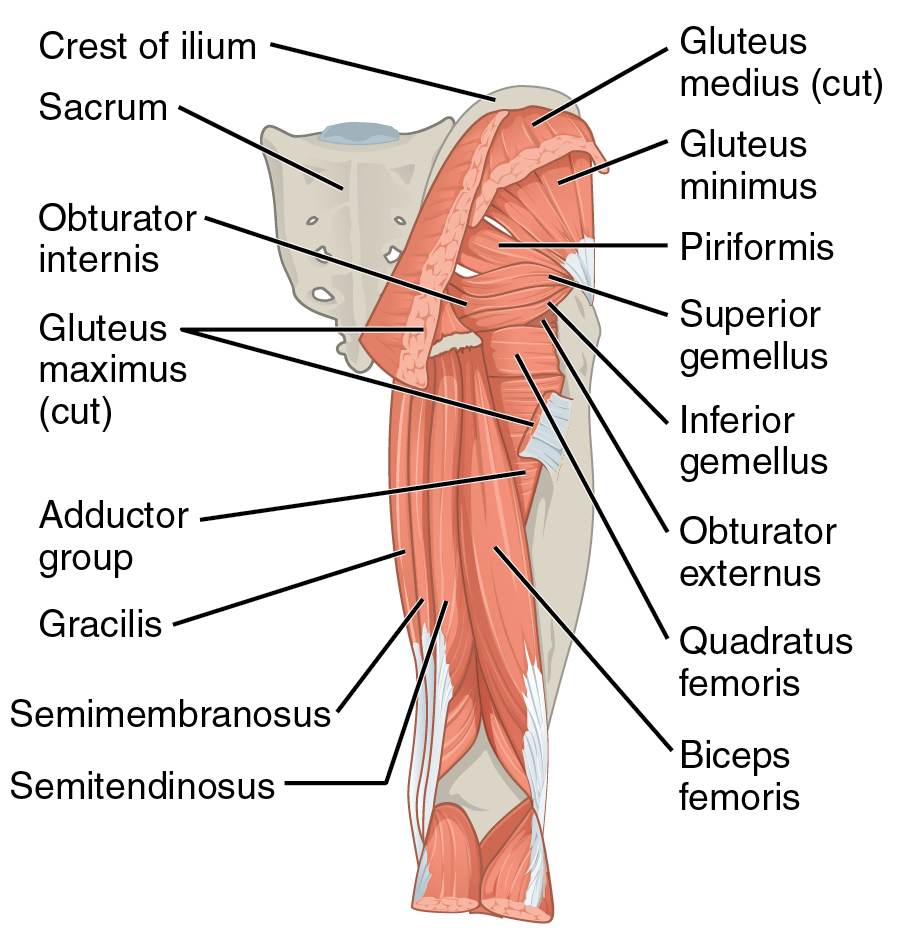
All three of these muscles share a common starting point. They originate from a bony landmark on your pelvis called the ischial tuberosity. You might know this area as your “sit bone,” the part you feel pressing into a chair when you sit upright.
From the pelvis, they travel down the back of the leg and attach to the bones of the lower leg. The biceps femoris inserts on the fibula (the outer bone), while the semitendinosus and semimembranosus insert on the tibia (the main shin bone). Because they cross both the hip and knee joints, they can act on both.
What Hamstrings Do
The hamstrings have two primary jobs, both crucial for movement. Their first main role is knee flexion, which is the action of bending your knee. Think about bringing your heel up toward your glutes. That movement is powered by your hamstrings contracting.
Every time you walk and your back leg pushes off the ground, your hamstring is working to bend your knee and prepare for the next step.
Their second major function is hip extension. This is the motion of moving your thigh backward from your hip. When you stand up from a squat, push off the blocks in a sprint, or climb a flight of stairs, your hamstrings and glutes work together to extend your hips and propel you forward and upward. This powerful action is fundamental to running, jumping, and even just walking.
The Posture Connection
Beyond active movements, your hamstrings play a quiet but vital role in maintaining your posture. They provide stability to the pelvis from behind. The tension in your hamstrings helps to hold your pelvis in a neutral position, preventing it from tilting too far forward.
A stable pelvis is the foundation of a healthy spine. By anchoring the pelvis, the hamstrings help support the natural curves of your lower back, contributing to an upright and balanced posture whether you are standing still or on the move.
Let's review the key terms we've covered.
Now, test your understanding of the hamstring muscles.
Which of the following is NOT one of the three muscles that make up the hamstring group?
What is the common origin point for all three hamstring muscles?
Knowing the anatomy of these muscles is the foundation for understanding how they impact your body's movement and stability.