Relational Data Mastery with SQL
Advanced Join Strategies
Beyond the Inner Join
You already know how to use INNER JOIN to find matching records between two tables. It's the workhorse of SQL. But what happens when the data doesn't line up perfectly? Real-world datasets are often messy. You might have customers who haven't made a purchase, or employees without an assigned department. In these cases, an INNER JOIN would simply exclude them, hiding part of the story.
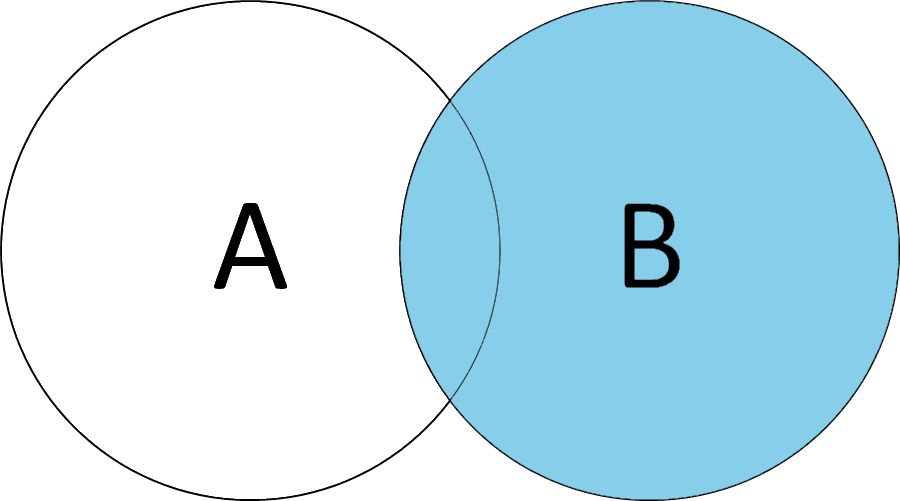
To get the full picture, you need outer joins. These are your tools for finding not just the matches, but the mismatches, too. A LEFT JOIN keeps every record from the left table and adds matching data from the right. If there's no match, it fills the columns from the right table with NULL.
Think of it this way: a
LEFT JOINsays, "Give me everything from the left table, and bring along whatever you can find from the right."
A RIGHT JOIN does the exact opposite, keeping everything from the right table. A FULL OUTER JOIN is the most inclusive of all. It keeps every record from both tables, filling in the gaps with NULL wherever a match doesn't exist. This is incredibly useful for comparing two lists to see what's in one but not the other.
Handling NULLs and Hierarchies
Outer joins are powerful, but they introduce NULL values into your results, which can be messy. Imagine you're joining a Products table with a Discounts table. A FULL OUTER JOIN might show a product's price from one table but a NULL discount from the other. Instead of showing a blank, you might want to display a zero or a message like 'No Discount'. That's where COALESCE comes in.
SELECT
    p.ProductName,
    COALESCE(d.DiscountAmount, 0) AS Discount
FROM
    Products p
LEFT JOIN
    Discounts d ON p.ProductID = d.ProductID;
The COALESCE function scans through its arguments and returns the first non-NULL value it finds. In this query, if d.DiscountAmount is NULL, the function will return 0 instead, cleaning up your final output.
Another common challenge is dealing with hierarchical data stored in a single table. A classic example is an Employees table where each employee has a ManagerID that points to another employee's EmployeeID in the same table. To see who reports to whom, you need to join the table to itself. This is called a SELF JOIN.
SELECT
    e.EmployeeName AS Employee,
    m.EmployeeName AS Manager
FROM
    Employees e
LEFT JOIN
    Employees m ON e.ManagerID = m.EmployeeID;
The key is using table aliases (e for employee and m for manager) to treat the single table as two distinct entities. We use a LEFT JOIN here to ensure that even the top-level employee (who has no manager) is included in the results.
Special Cases and Performance
Sometimes you need to generate every possible combination of rows from two tables. Imagine a clothing store with a TShirts table (Color) and a Sizes table (Size). To create a list of all possible inventory items, you'd use a CROSS JOIN which produces a Cartesian product.
SELECT
    t.Color,
    s.Size
FROM
    TShirts t
CROSS JOIN
    Sizes s;
This query matches every color with every size. It's powerful but dangerous. A CROSS JOIN on two large tables can generate an enormous number of rows and bring your database to a crawl. Use it with caution.
Finally, think about performance. Joins are computationally expensive, especially on large datasets. The database's query optimizer usually does a good job of figuring out the most efficient way to execute a join. It considers factors like table size, available indexes, and the type of join.
A good rule of thumb: the more you can filter your data before joining, the better. Applying a
WHEREclause to each table to reduce the number of rows that need to be compared will almost always speed things up.
While you don't always need to specify the join order, understanding that the optimizer is making these decisions helps you write smarter, more efficient queries.
You have a Customers table and an Orders table. You want to generate a list of all customers, including those who have never placed an order. Which type of join should you use?
What is the primary purpose of the COALESCE function in a SQL query, especially when used with outer joins?
Mastering these join strategies allows you to handle complex data relationships with confidence, ensuring you capture the full story your data has to tell.