Regenerative Farming and Permaculture Fundamentals
Introduction to Regenerative Farming
Farming That Gives Back
Most of us think of farming as a process of taking from the land. We plant seeds, add water and fertilizer, and harvest crops. Regenerative agriculture flips this idea on its head. Instead of just taking, it focuses on giving back to the soil and improving the entire ecosystem.
At its core, regenerative farming is a collection of practices designed to restore and enhance the land. The goal is to work with nature, not against it. This means disturbing the soil as little as possible, keeping it covered with plants year-round, increasing crop diversity, and bringing animals back onto the land to graze and fertilize naturally. The farm is treated as a living, interconnected system.
This holistic approach integrates ecological principles into agricultural practices by mimicking natural ecosystems—building soil health through organic matter additions, encouraging beneficial insect populations, and maintaining a balanced ecosystem that minimizes reliance on external inputs like synthetic fertilizers or pesticides.
This approach stands in sharp contrast to many conventional farming methods that have become common over the last century.
A Different Approach
Conventional agriculture often relies on intensive tilling, which breaks up the soil structure and releases carbon into the atmosphere. It typically favors planting vast fields of a single crop, known as monoculture, which can deplete specific soil nutrients and make crops vulnerable to pests.
To manage these issues, chemical fertilizers and pesticides are often used heavily. While effective in the short term, this approach can lead to soil degradation, water pollution, and a loss of biodiversity over time. Regenerative farming offers a different path.
| Practice | Conventional Farming | Regenerative Farming |
|---|---|---|
| Soil Tillage | Frequent and intensive | Minimal or no-till |
| Crop Diversity | Often single-crop (monoculture) | Diverse crops, often rotated |
| Soil Cover | Bare soil between seasons | Covered with "cover crops" |
| Fertilization | Synthetic chemical fertilizers | Natural inputs, compost, animal manure |
By shifting these fundamental practices, regenerative agriculture produces a cascade of positive effects, starting from the ground up.
From the Ground Up
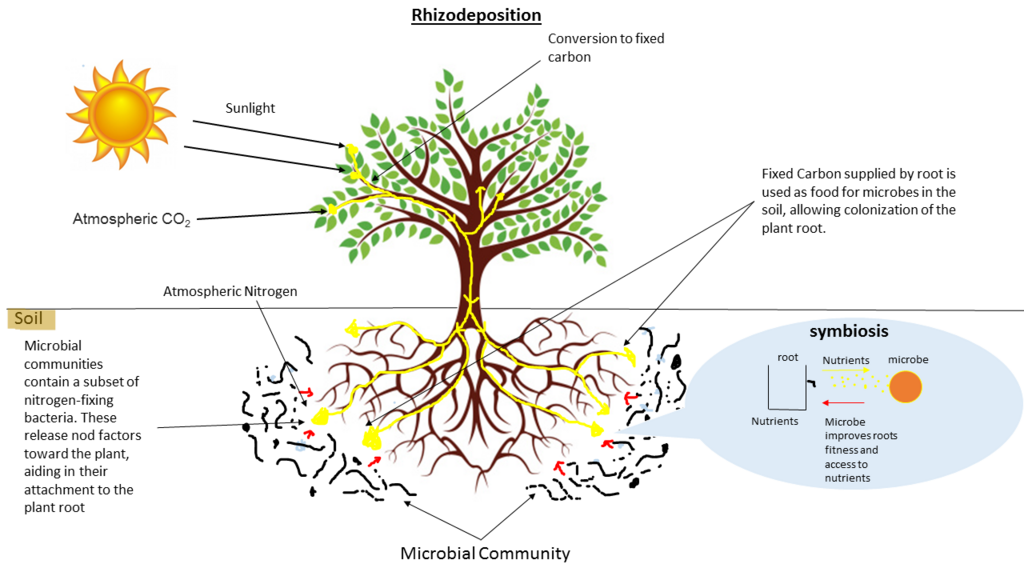
Healthy soil is the foundation of a healthy farm. Regenerative practices directly build soil health by increasing organic matter. When farmers stop tilling and start planting cover crops like clover or rye, they protect the soil from erosion and provide food for a rich community of underground life, from earthworms to microbes.
This living soil acts like a sponge, dramatically improving the water cycle. It absorbs more rainwater, reducing runoff and making farms more resilient to both droughts and floods. This also means cleaner water, as healthy soil is a powerful natural filter.
Above ground, the benefits multiply. The diversity of plants provides habitats for a wider range of insects, birds, and other animals. This increased biodiversity helps with natural pest control, as beneficial insects can keep harmful ones in check, reducing the need for chemical pesticides.
The environmental impact extends beyond the farm gate. By improving how nutrients are used and stored, regenerative farming helps solve one of agriculture's biggest challenges.
A Climate Solution
One of the most powerful aspects of regenerative agriculture is its role in fighting climate change. Plants naturally pull carbon dioxide () out of the atmosphere through photosynthesis. In conventional systems, much of this carbon is released back into the air when the soil is tilled or left bare.
Regenerative practices focus on keeping that carbon in the ground. By fostering healthy, undisturbed soils rich in organic matter, farmers can effectively lock carbon away for the long term. This process is called biosequestration.
Simultaneously, these methods improve nutrient cycling. Instead of adding large amounts of synthetic nitrogen fertilizer, which requires fossil fuels to produce and can pollute waterways, regenerative farms use natural processes to build fertility. Cover crops can pull nitrogen from the air and fix it in the soil, while rotating livestock provides natural fertilizer. This creates a closed-loop system that is far more sustainable.
By drawing down atmospheric carbon and reducing reliance on fossil fuel-based inputs, regenerative farming is a key strategy for creating a more sustainable and resilient food system.
Ready to check your understanding of these foundational concepts?
What is the primary goal of regenerative agriculture that distinguishes it from conventional farming?
Which of the following practices is characteristic of conventional agriculture, NOT regenerative agriculture?
Regenerative agriculture is more than just a set of techniques; it's a shift in mindset. It's about seeing farms not as factories, but as ecosystems that can be healed and strengthened, producing healthy food while restoring the planet.