Regenerative Development and Design
Introduction to Regenerative Development
Thinking Like an Ecosystem
Imagine a system that doesn't just sustain itself, but actively improves its environment. That's the core idea behind regenerative development. It's a way of thinking and designing that aims to create systems—whether they're farms, buildings, or entire communities—that restore and enhance the world around them. Instead of just trying to do less harm, regenerative design seeks to have a net positive impact.
The goal is to shift from human systems that degrade the planet to ones that co-evolve with nature, making both stronger and more resilient.
This approach is built on a simple but profound observation: natural ecosystems are inherently regenerative. A forest, for example, doesn't just survive; it builds soil, purifies water, and supports a complex web of life. Regenerative development asks, "How can our human systems mimic this process?" It challenges us to see ourselves not as separate from nature, but as a vital part of it, capable of contributing to the health of the whole.
Beyond 'Sustainable'
You've likely heard the word "sustainable" a lot. While sustainability is a crucial goal, regenerative thinking pushes us to go a step further. Let's break down the difference.
- Conventional Design: Often operates by taking resources without considering long-term consequences, leading to degradation.
- Sustainable Design: Aims to maintain a neutral balance, or "net-zero." The goal is to not make things worse and to continue current practices indefinitely.
- Restorative Design: Focuses on healing specific damage. It's like performing first aid on an injured ecosystem, bringing it back to a previous state of health.
- Regenerative Design: This is the most ambitious. It seeks to create new systems that are fully integrated with their environment. These systems are designed to evolve and increase their own capacity for health, vitality, and resilience over time.
In essence, sustainability is about achieving balance. Regeneration is about creating the potential for new life and continuous improvement.
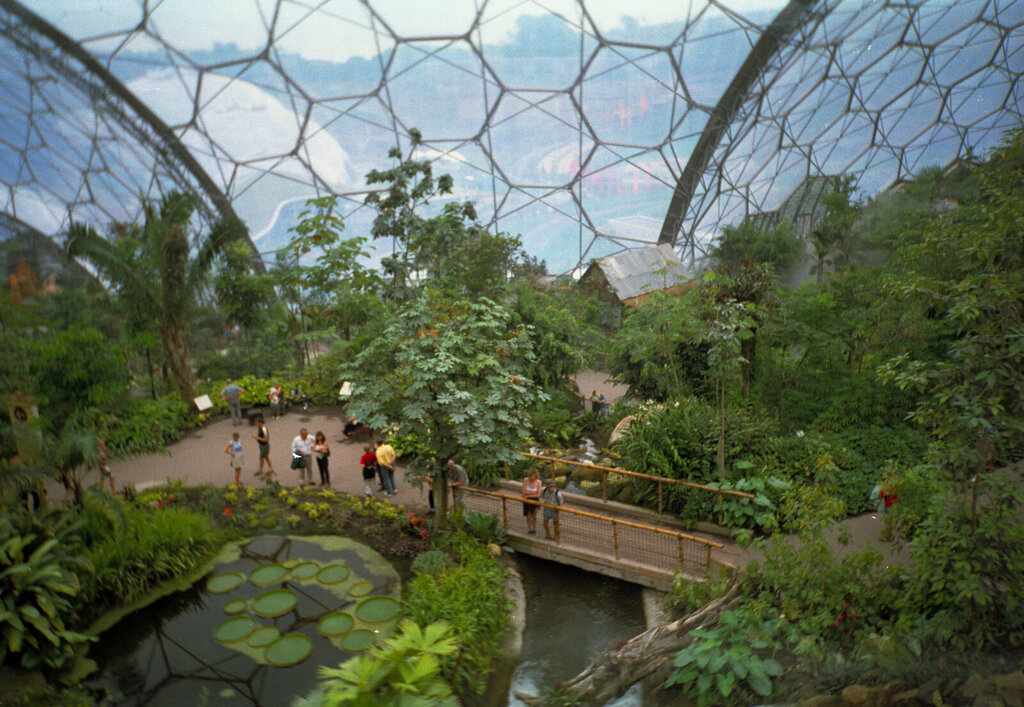
Regenerative landscapes deepen the alignment between people and nature, generating yields and restoring ecosystems while providing surplus resources for all forms of life.
Core Principles
Regenerative development is guided by a few key principles that help designers see the world differently.
systems thinking
noun
A way of understanding how different parts of a system influence one another within a whole. Instead of looking at individual components in isolation, it focuses on the relationships and interactions that connect them.
With systems thinking, a farm isn't just a collection of crops; it's an ecosystem of soil, water, insects, plants, and people. A building isn't just a structure; it's a component of a neighborhood that affects energy use, social interaction, and local ecology. By understanding these connections, we can design interventions that create positive ripple effects across the entire system.
Co-evolution of human and natural systems: This principle recognizes that humans and nature are not separate. We are constantly shaping each other. Regenerative design aims to make this relationship mutually beneficial, where healthy ecosystems support thriving communities, and thriving communities act as responsible stewards of their environment.
Finally, regenerative development is deeply rooted in its location. Place-based design means that solutions are tailored to the unique character of a specific place: its climate, ecology, culture, and history. What works in a desert won't work in a rainforest. By honoring the distinct identity of a place, we can create solutions that are not only more effective but also more meaningful to the people who live there.
Now, let's test your understanding of these foundational ideas.
What is the primary goal of regenerative development?
A developer is designing a new community. Instead of just installing standard drainage, they create a series of interconnected rain gardens and wetlands that filter stormwater, create wildlife habitat, and become a park for residents. This approach is best described as an example of what?
Understanding these core concepts provides a foundation for exploring how we can design systems that don't just sustain, but actively regenerate the world we all share.