Regenerative Design Consulting for SMEs
Understanding Regenerative Development
What Is Regenerative Development?
Most businesses think about sustainability. They aim to reduce their negative impact, use fewer resources, and essentially do less harm. Regenerative development asks a different question: How can a business actively improve the world around it?
Instead of just sustaining the current state, regeneration focuses on restoring and revitalizing the systems it's part of. Think of it like gardening. A sustainable garden might use just enough water and fertilizer to keep the plants alive. A regenerative garden, on the other hand, focuses on improving the soil, attracting beneficial insects, and creating a healthier, more resilient ecosystem that thrives year after year.
Regeneration isn't about bouncing back to normal. It's about bouncing forward to a new, healthier state.
This approach is built on a few core ideas. It recognizes that businesses are connected to communities and environments. It aims to create value for all stakeholders, not just shareholders. And it focuses on building capacity and potential, helping entire systems evolve and grow stronger.
Beyond Sustainability
The shift from sustainability to regeneration is a move from a 'net zero' mindset to a 'net positive' one. Sustainability aims to neutralize a business's footprint, reaching a point where it does no further damage. While this is a worthy goal, it sets the bar at simply not making things worse.
Regenerative development aims higher. It challenges businesses to be a force for good, actively contributing to the health of the environment and the well-being of society. It's the difference between plugging a leak and building a better boat.
| Feature | Sustainability | Regenerative Development |
|---|---|---|
| Goal | Do less harm (Minimize footprint) | Do more good (Create positive impact) |
| Mindset | Efficiency, conservation | Restoration, revitalization |
| Focus | Reducing negatives | Increasing positives |
| Outcome | Neutral impact (Net Zero) | Positive impact (Net Positive) |
Businesses as Living Systems
To practice regenerative development, it helps to see your business as a living system, much like a forest or a coral reef. In an ecosystem, every element is interconnected. The health of the soil affects the plants, which affects the insects, which affects the birds. Everything influences everything else.
A business works the same way. Your employees, customers, suppliers, local community, and physical environment are all part of one interconnected system. A decision that benefits one area, like cutting supplier costs, might negatively impact another by reducing quality or harming a local partner. Living systems thinking encourages you to consider the health of the whole system in every decision.
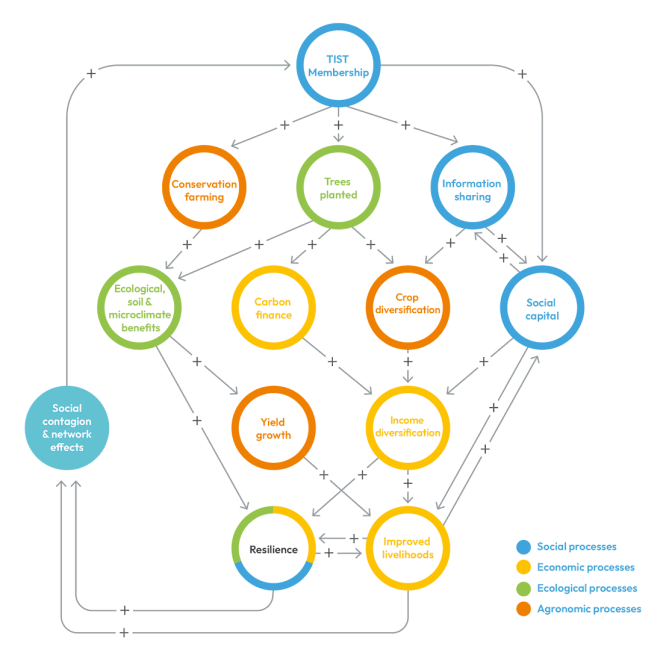
This perspective helps you spot opportunities to create positive feedback loops. For example, by paying employees a living wage, you improve their well-being, which can lead to better customer service and lower turnover. By sourcing materials locally, you strengthen the local economy, creating more prosperous customers and a more stable community for your business to operate in.
Why This Matters for SMEs
This might sound complex, but regenerative principles are especially powerful for Small and Medium Enterprises (SMEs). Because SMEs are deeply embedded in their communities, they are perfectly positioned to create these positive loops.
Adopting regenerative practices can lead to tangible benefits:
Increased Resilience: Businesses that support their local ecosystems and communities are better insulated from supply chain disruptions and economic downturns. Stronger Brand Loyalty: Customers and employees are increasingly drawn to businesses that reflect their values and contribute positively to society. Innovation: Thinking in terms of systems and cycles sparks new ideas for products, services, and business models that create more value.
Implementing sustainable practices into your business isn’t just about recycling, going paperless, or minimizing plastic usage (although those things are great) — it means developing a strategy that improves the environment and drives value across multiple areas of the business.
Ready to test what you've learned about these foundational ideas?
What is the primary goal of regenerative development, as opposed to sustainability?
The concept of 'living systems thinking' encourages a business to view itself as...
Shifting from a sustainable to a regenerative mindset is about moving from being a neutral participant to an active, positive force in the world. It’s a powerful way to build a business that not only succeeds, but also helps the systems around it to thrive.