Redesign Your Career Path
Introduction to Design Thinking
A New Way to Solve Problems
Design thinking isn't just for designers. It's a creative, human-centered approach to solving complex problems. Instead of jumping to solutions, it starts by deeply understanding the people you're trying to help. This method moves beyond assumptions to uncover what people truly need.
The core idea is simple: Solve problems for people, with people.
This approach is built on a few key principles. It's collaborative, bringing together diverse perspectives to tackle a challenge. It's also experimental, encouraging you to build, test, and learn from failures quickly. At its heart, design thinking is about empathy—placing yourself in someone else's shoes to see the world from their point of view.
The Design Thinking Process
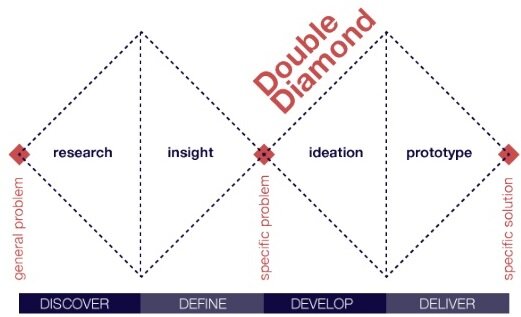
The process is often broken down into five distinct, yet flexible, stages. Think of it less as a strict recipe and more as a guide for your creative journey.
1. Empathize: This is the foundation. You start by observing, engaging, and immersing yourself in the user's world to understand their experiences and motivations on a deeper level. It's about gathering stories and insights, not just data.
2. Define: With a rich understanding of your user, you now define the core problem you want to solve. This isn't about your company's needs; it's a clear, actionable problem statement framed from the user's perspective.
3. Ideate: Now it's time for ideas. The goal is to generate as many potential solutions as possible. This is a judgment-free zone where you challenge assumptions and explore wild, creative possibilities. Brainstorming is a classic technique used here.
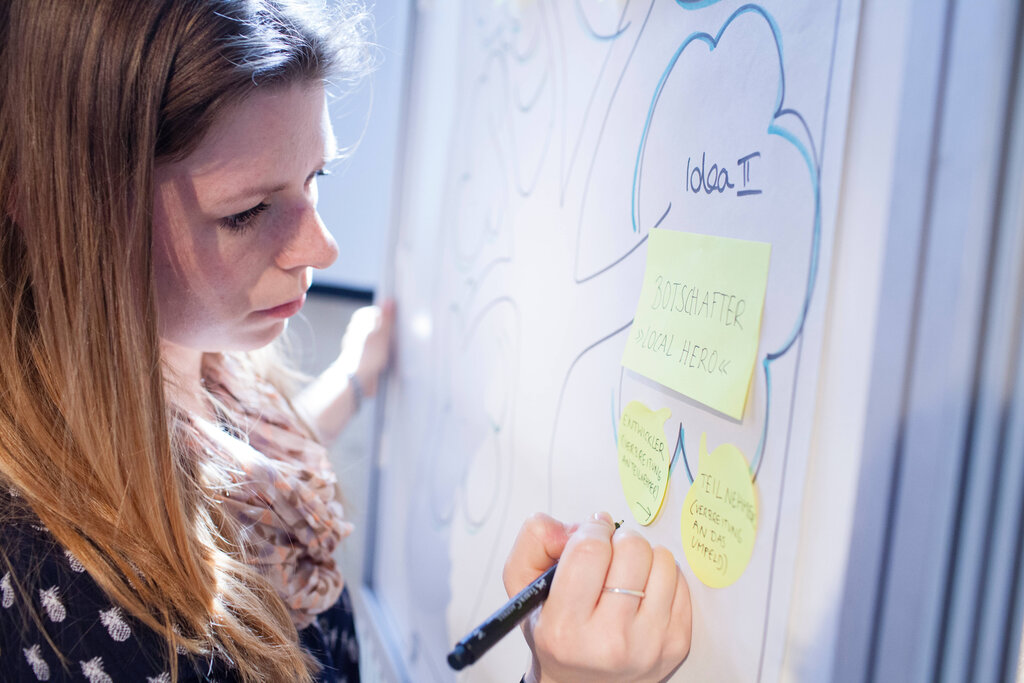
4. Prototype: You don't build a full-fledged product right away. Instead, you create inexpensive, scaled-down versions of your best ideas. A prototype can be anything from a series of sketches to a physical model made of cardboard. It's about making your ideas tangible.
5. Test: Share your prototypes with actual users. Watch how they interact with them and listen to their feedback. This stage reveals what works and what doesn't, allowing you to refine your solution or even go back to the drawing board.
The process isn't always a straight line. It's iterative. Insights from the testing phase might lead you back to the define or ideate stage. This cycle of thinking and doing helps you arrive at more innovative and effective solutions.
Beyond Products and Apps
While design thinking is famous for creating user-friendly technology, its applications are incredibly broad. Hospitals use it to improve the patient experience, schools use it to redesign learning spaces, and cities use it to make public services more accessible.
Adopting a design thinking mindset means becoming more curious, more open to ambiguity, and more willing to experiment. It's about seeing problems as opportunities for innovation. This way of thinking can be applied to almost any challenge, from launching a business to planning your own personal growth.
Now, let's check your understanding of these core concepts.
What is the fundamental starting point of the design thinking process?
In which stage of design thinking do you create an actionable problem statement from the user's perspective?