Red Californian Earthworm Farming
Red Worm Biology
Meet the Red Wiggler
The red wiggler, or Eisenia fetida, is a small but mighty creature. Unlike the common garden earthworms that burrow deep into the soil, red wigglers are surface-dwellers. They thrive in the top layers of decaying organic matter, like leaf litter, manure piles, and compost bins. This preference makes them perfect for composting.
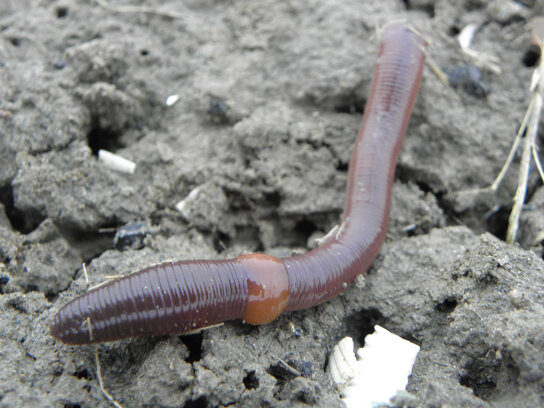
Physically, they are reddish-brown and often have yellowish stripes between their segments. The most noticeable feature is a raised, glandular band called the clitellum. This band is crucial for reproduction. When a worm is mature, the clitellum becomes prominent and often looks a bit swollen.
clitellum
noun
A raised band on certain segmented worms that contains reproductive organs and secretes a cocoon for the eggs.
Anatomy of a Recycler
A worm's body is a simple, effective machine for processing waste. It's made of segments, and on most of these segments are tiny, bristle-like hairs called setae. These setae grip surfaces, allowing the worm to pull itself along. The fleshy lobe over its mouth, called the prostomium, acts like a sensitive lip, pushing food into the mouth and sensing its environment.
Worms don't have lungs. Instead, they breathe directly through their moist skin. Oxygen diffuses into their bodies, and carbon dioxide diffuses out. This is why keeping their environment damp, but not flooded, is essential for survival. Their circulatory system is driven by five pairs of muscular blood vessels known as aortic arches, which function like simple hearts to pump blood.
Food travels through a straightforward digestive system. The muscular pharynx sucks in decaying matter. It moves down the esophagus to the crop for storage, then to the gizzard. The gizzard is powerful, using tiny grains of grit to grind the food into smaller particles. Finally, the intestine chemically digests the food, absorbs nutrients, and expels the waste as nutrient-rich castings.
This grinding and digesting process is what transforms kitchen scraps into 'black gold' for gardeners.
Reproduction and Lifestyle
Red wigglers are hermaphrodites, meaning each individual worm possesses both male and female reproductive organs. However, they still need a partner to mate.
hermaphrodite
noun
An organism that has complete or partial reproductive organs and produces gametes normally associated with both male and female sexes.
During mating, two worms lie alongside each other, facing opposite directions, and are held together by mucus secreted by their clitella. They exchange sperm, which is stored in special sacs. After they separate, the clitellum secretes a slimy tube that slides forward over the worm's body. As it passes, it picks up eggs and the stored sperm. Once the worm wriggles free, the ends of this tube seal up, forming a lemon-shaped cocoon.
These cocoons are tiny and yellowish at first, darkening as they mature. In ideal conditions, a single cocoon can hatch between two and twenty baby worms in about three to four weeks. This rapid reproductive cycle allows red wiggler populations to grow quickly, making them highly efficient decomposers.
Worms are nature’s recyclers, working quietly to regenerate soil by mixing and aerating it.
In their natural role, red wigglers are detritivores, feeding on dead organic material. As they eat and burrow, they create channels in the soil that improve aeration and water drainage. Their castings are packed with beneficial microbes and nutrients in a form that plants can easily absorb. They are a fundamental part of building healthy, living soil.
What characteristic of red wigglers (Eisenia fetida) makes them particularly well-suited for use in compost bins?
In the digestive system of a red wiggler, what is the primary function of the gizzard?
Understanding how these worms live, eat, and reproduce is the first step toward working with them effectively.