Recursive Language Models Explained
Introduction to Recursive Language Models
Beyond the Sequence
Most Large Language Models (LLMs) treat language like beads on a string. They process words one after another in a straight line, learning patterns from the sequence. This works remarkably well for many tasks, but it has limitations. Language isn't just a flat sequence; it has a deep, nested structure. Phrases fit inside other phrases, creating layers of meaning.
This is where Recursive Language Models (RLMs) come in. Instead of a straight line, an RLM sees a sentence as a tree. It analyzes language by breaking it down into its constituent parts and then combining them recursively to understand the overall meaning. Think of it like parsing a sentence diagram, where the model identifies nouns, verbs, and phrases and understands how they branch together to form a complete thought.
Recursion
noun
A process where a function or procedure calls itself, directly or indirectly. In the context of language, it's about applying the same set of rules to nested structures.
Linear vs. Hierarchical
The fundamental difference between standard LLMs and RLMs lies in how they "see" text. An LLM reads left-to-right, while an RLM builds a structure from the bottom up. This structural approach allows it to grasp complex grammatical relationships that can be lost in a simple sequence.
| Feature | Standard LLM | Recursive Language Model (RLM) |
|---|---|---|
| Processing Style | Sequential (word by word) | Hierarchical (phrase by phrase) |
| Data Structure | Flat sequence | Tree or graph |
| Strength | Capturing local word patterns | Understanding long-range dependencies and syntax |
| Focus | Predicting the next word | Composing meaning from smaller parts |
Consider the sentence, "The cat that the dog chased sat on the mat." A sequential model might struggle to connect "cat" directly to "sat." An RLM, however, would parse this by identifying "that the dog chased" as a clause describing "the cat," making the core sentence easier to understand.
The Advantages of Recursion
Building a structural understanding of language unlocks several key capabilities. RLMs can achieve a deeper sense of context because they don't just see words, they see the relationships between phrases. This helps resolve ambiguity and makes them better at understanding complex sentences with multiple clauses.
By understanding grammar hierarchically, RLMs can produce more coherent and logically structured paragraphs, as the generation process mirrors the way ideas are built upon one another.
This structure is also a natural fit for complex reasoning. Many problems, from math proofs to coding, rely on breaking a large problem down into smaller, nested sub-problems. RLMs are inherently designed to think this way, giving them an edge in tasks that require step-by-step logic.
A Brief History
The idea of representing language with recursive, tree-like structures is not new. It has roots in the field of linguistics, stretching back to the mid-20th century and the work of figures like Noam Chomsky, who proposed that human language has a universal, underlying grammatical structure.
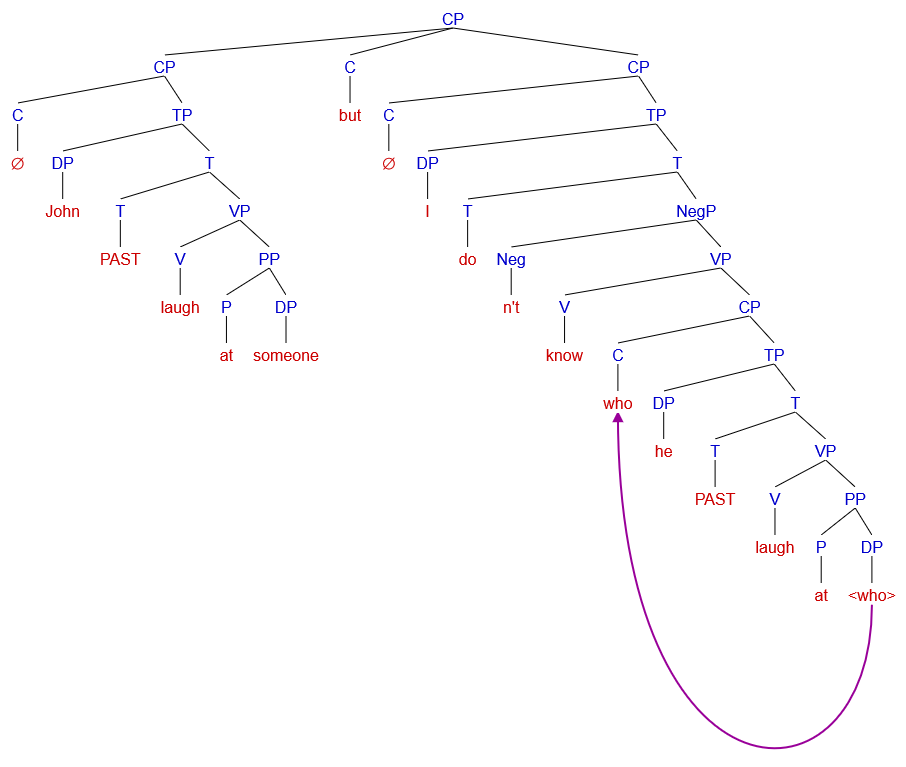
Early computational models tried to implement these ideas, but they were limited by the available computing power and data. The recent explosion in deep learning has revived interest in these structural approaches. Researchers are now combining the power of modern neural networks with these foundational linguistic theories to create a new generation of language models.
RLMs represent a fascinating blend of old and new ideas, pushing AI to understand not just what we say, but how we structure our thoughts.