Recursive Language Models and DSPy Explained
Introduction to NLP
Teaching Computers to Read
Natural Language Processing, or NLP, is a field of artificial intelligence that gives computers the ability to understand, interpret, and generate human language. Think of it as teaching a computer to read and write not just code, but stories, emails, and conversations.
NLP empowers computers to process, understand, and generate human language.
The goal is to bridge the gap between human communication and computer understanding. When you ask a virtual assistant for the weather, use a translation app, or see your email automatically filter spam, you're interacting with NLP. It's the engine behind technologies that process text and speech.
Breaking Language Down
To understand a sentence, a computer first has to break it into smaller pieces. This initial step is one of the most fundamental tasks in NLP.
Tokenization
noun
The process of splitting a text into smaller units, such as words or sentences, called tokens.
Imagine you give a computer this sentence: "The quick brown fox jumps." Tokenization would split this into individual words: "The", "quick", "brown", "fox", "jumps", and the period ".". Each of these is a token. This allows the machine to analyze each word one by one, rather than trying to decipher a long, unbroken string of characters.
Once the text is tokenized, NLP models can perform other tasks. One common task is figuring out what role each word plays in the sentence.
Part-of-Speech (POS) Tagging: This is the process of labeling each word in a sentence with its corresponding part of speech, like noun, verb, or adjective.
Knowing that "jumps" is a verb and "fox" is a noun helps the computer grasp the grammatical structure and meaning of the sentence. It's like diagramming a sentence in English class, but for a machine.
| Token | Part-of-Speech Tag |
|---|---|
| The | Determiner |
| quick | Adjective |
| brown | Adjective |
| fox | Noun |
| jumps | Verb |
Another crucial task is identifying key entities in the text.
Named Entity Recognition (NER): This involves finding and classifying named entities in text into predefined categories such as person names, organizations, locations, and dates.
For example, in the sentence "Marie Curie discovered radium in Paris in 1898," an NER system would identify "Marie Curie" as a person, "Paris" as a location, and "1898" as a date. This helps extract structured information from unstructured text.
The Trouble with Language
Human language is complex and often messy, which presents significant challenges for computers. The biggest hurdle is ambiguity. A single word can have multiple meanings depending on the context. For instance, the word "bat" could refer to a flying mammal or a piece of sporting equipment. Humans use context to figure out the intended meaning, but this is incredibly difficult for a machine.
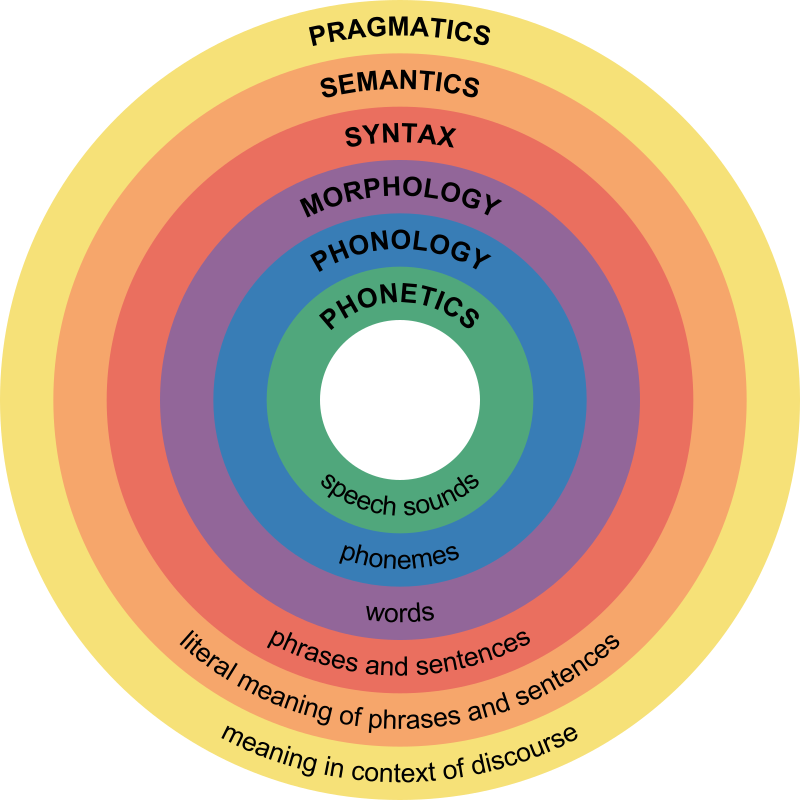
Sarcasm, irony, and idioms are also major stumbling blocks. A computer might take the phrase "It's raining cats and dogs" literally. Teaching a machine to understand the nuances and figurative language that we use effortlessly requires sophisticated models and vast amounts of training data.
Finally, language is always evolving. New words are created, slang changes, and meanings shift over time. An NLP system has to be able to adapt to these changes to remain effective.
Ready to check your understanding?
What is the primary goal of Natural Language Processing (NLP)?
When an NLP system breaks the sentence "The fox jumps." into the pieces "The", "fox", "jumps", and ".", what is this process called?
Understanding these basic building blocks—what NLP is, how it breaks down language, and the challenges it faces—is the first step toward exploring more advanced language models.