Recommendation Systems for Product Managers
Introduction to Recommender Systems
What Are Recommender Systems?
Every time you watch a movie on Netflix, listen to a song on Spotify, or buy a product on Amazon, there's a powerful engine working behind the scenes. This engine is a recommender system, an algorithm designed to suggest relevant items to you. Its main job is to predict what you might like, saving you the effort of searching through millions of options.
Think of it as a personalized curator. Instead of a one-size-fits-all experience, these systems tailor the content specifically for you. For businesses, this is incredibly valuable. Good recommendations keep users engaged, help them discover new products, and can significantly increase sales. A streaming service wants you to find your next favorite show quickly, so you keep subscribing. An e-commerce site wants to show you products you're likely to buy.
The goal is simple: connect people with the things they'll love, before they even know they're looking for them.
Finding Similar Tastes
One of the most common ways to generate recommendations is through collaborative filtering. The core idea is that people with similar tastes in the past will have similar tastes in the future. It's like asking a friend for a movie recommendation. If you both love sci-fi and hated the same romantic comedy, you'd probably trust their suggestion for a new film.
This method doesn't need to know anything about the items themselves. It just looks at user behavior. For example, it might notice that people who bought a specific brand of running shoes also tended to buy a certain type of fitness tracker. If you buy those shoes, the system will likely recommend that tracker to you, assuming your preferences align with the group's.
Focusing on the Content
Another approach is content-based filtering. Instead of looking at other users, this method focuses on the properties of the items themselves. It recommends items that are similar to what you've liked in the past.
If you watch a lot of science fiction movies starring a particular actor, a content-based system will recommend other science fiction movies, or other movies featuring that same actor. It works by creating a profile for you based on the attributes of items you've rated highly. For a movie, these attributes could be genre, director, actors, or even keywords from the plot summary.
This method is great for recommending niche items and doesn't suffer from the "cold start" problem as much. If a new item is added, it can be recommended immediately as long as its attributes are known. However, it can sometimes lead to a filter bubble, where you're only shown things that are very similar to what you already like, limiting discovery.
The Best of Both Worlds
As you might guess, both collaborative and content-based filtering have strengths and weaknesses. That's why many modern recommender systems use a hybrid approach. These systems combine techniques to create more robust and accurate suggestions.
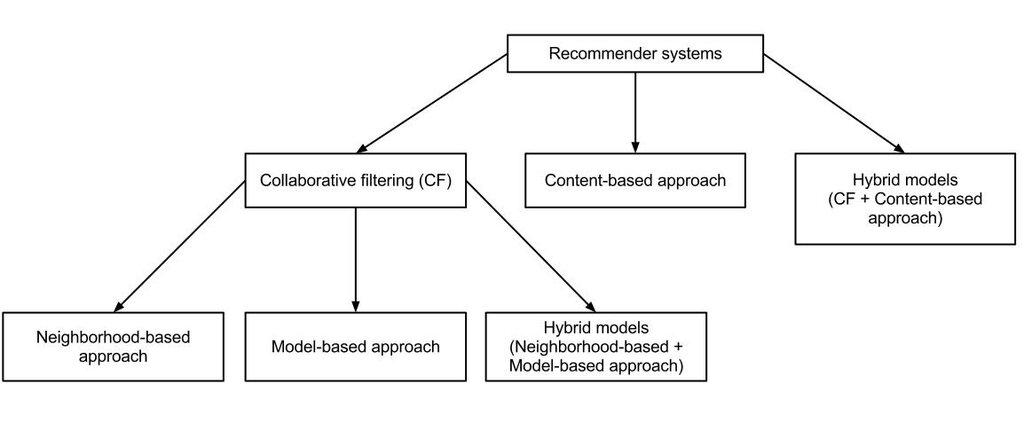
For instance, a system might use collaborative filtering to find a set of similar users, but then use content-based filtering to rank the items those users liked, ensuring the final recommendations are diverse yet relevant. By blending methods, hybrid systems can overcome the limitations of a single approach, providing a better experience for the user.
Now, let's review the main types of recommender systems you've just learned about.
Ready to check your understanding?
What is the primary goal of a recommender system?
An e-commerce website suggests a new brand of coffee to you because other customers who bought your favorite brand of coffee maker also bought this new coffee. Which filtering method is being used?
Understanding these basic types of recommender systems is the first step in seeing how websites and apps curate the world for us, one suggestion at a time.