Recognizing and Navigating Bias
Understanding Bias
What is Bias?
Bias is a tendency to lean in a certain direction, often in a way that is unfair. Think of it as a thumb on the scale of your judgment. It's a systematic pattern that causes us to stray from purely rational, evidence-based conclusions. We end up favoring certain people, ideas, or outcomes over others, not because of logic, but because of some other, often unseen, influence.
Essentially, bias is a mental shortcut that consistently goes in the same direction. It's our brain's default setting for making sense of a complicated world.
These mental shortcuts aren't necessarily malicious. In fact, they’re a core part of how our brains work. We are bombarded with millions of pieces of information every second. To cope, our brains create filters and automatic pathways to make quick judgments. The problem is, these efficient pathways aren't always accurate.
The Brain's Shortcuts
The psychological roots of bias lie in our need for efficiency. Our brains have developed two main ways of thinking, often called System 1 and System 2.
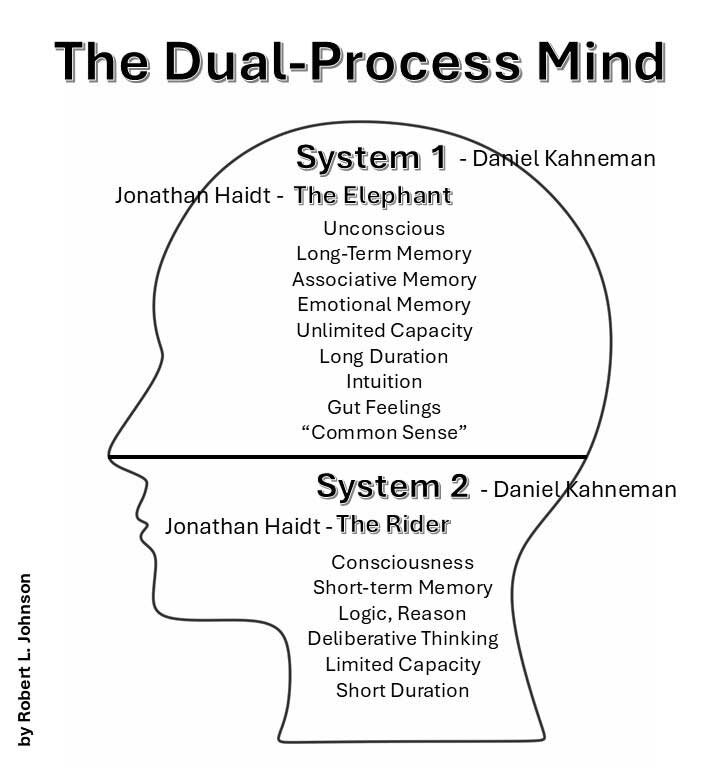
System 1 is the elephant. It's fast, intuitive, and emotional. It handles things like recognizing a friend's face or ducking when a ball is thrown at you. This system is always on, working automatically and subconsciously. Most of our biases live here, baked into our gut reactions and instant impressions.
System 2 is the rider. It's slow, deliberate, and logical. It's the part of your brain you use to solve a math problem or plan a trip. It requires conscious effort and attention, which is why we can't use it for everything. It would be exhausting.
Because we rely so heavily on the fast, automatic elephant, its built-in biases often guide our decisions without us even noticing.
The Impact of Bias
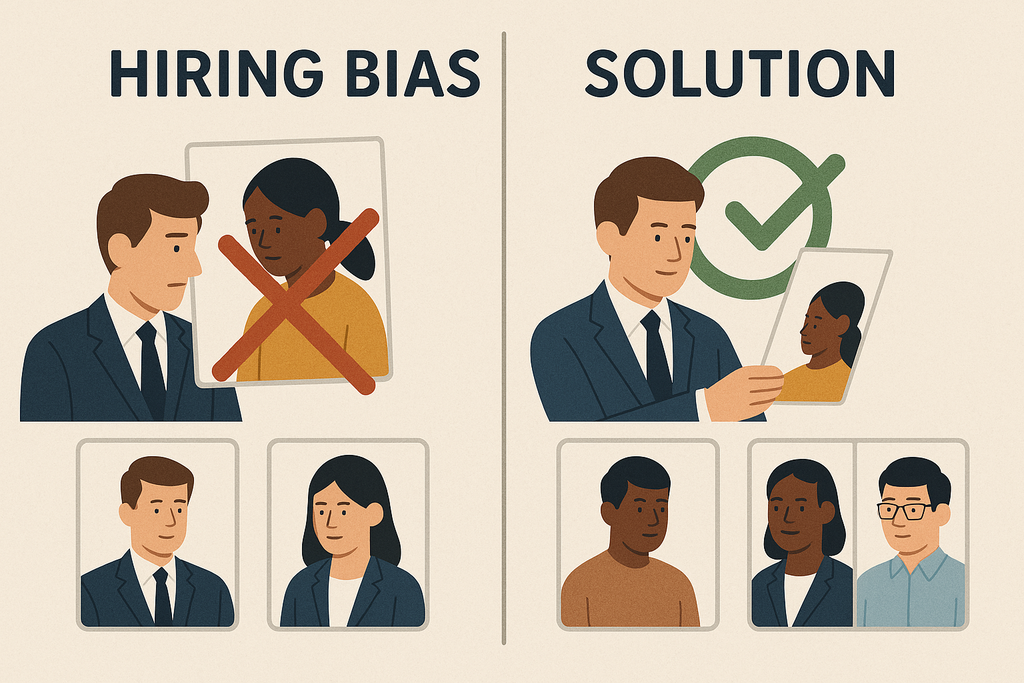
Bias quietly shapes our world by influencing our decisions and our communication. It affects who we hire, what news we believe, and how we interpret everyday events. For example, a hiring manager might feel a natural connection to a candidate who shares their hometown, and unconsciously view them more favorably than other, more qualified applicants.
In communication, bias can cause us to misinterpret what others are saying. If we have a preconceived notion that someone is untrustworthy, we might read suspicion and deceit into their perfectly innocent statements. Our bias filters their words before they even reach our conscious, rational mind.
The first step to managing bias is simply recognizing that it exists in everyone, including yourself. It's a fundamental part of being human.
Start from the premise that everyone carries bias.
Acknowledging our own potential for biased thinking isn't a sign of weakness. It's a sign of self-awareness and a crucial foundation for clearer thinking and more effective decision-making.
According to the text, what is the best definition of bias?
The brain's fast, intuitive, and emotional way of thinking is referred to as: