Real-World AI Applications
Introduction to AI
What Is Artificial Intelligence?
At its core, artificial intelligence is about creating machines that can perform tasks that typically require human intelligence. This could be anything from understanding language to recognizing objects in a photo or making decisions based on complex data.
Artificial Intelligence
noun
A branch of computer science dedicated to creating systems capable of performing tasks that normally require human intelligence, such as visual perception, speech recognition, decision-making, and translation between languages.
Think of it this way: for most of computing history, we've told computers exactly what to do with a precise set of instructions. With AI, we're building systems that can learn and adapt on their own. Instead of programming a computer with rules for every possible situation, we give it a goal and let it figure out the best way to get there.
A Quick Trip Through Time
The dream of intelligent machines is ancient, but the actual field of AI began in the 1950s. Early researchers were incredibly optimistic, believing that human-level intelligence was just a few decades away. They made impressive progress with logic and problem-solving, but the complexity of the real world proved much harder to handle than they expected.
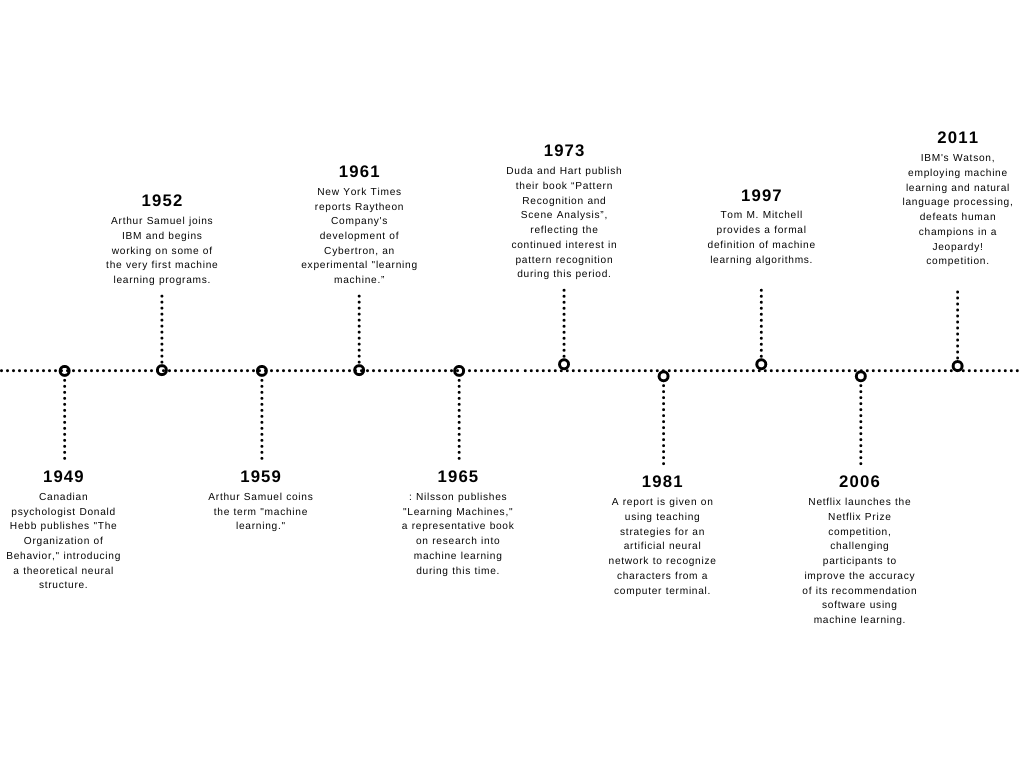
This led to periods known as "AI winters," when funding dried up and progress slowed. The excitement returned with a vengeance in the 21st century, fueled by two things: massive amounts of data from the internet and incredibly powerful computers. This combination unlocked new approaches that have led to the AI boom we see today.
Two Kinds of AI
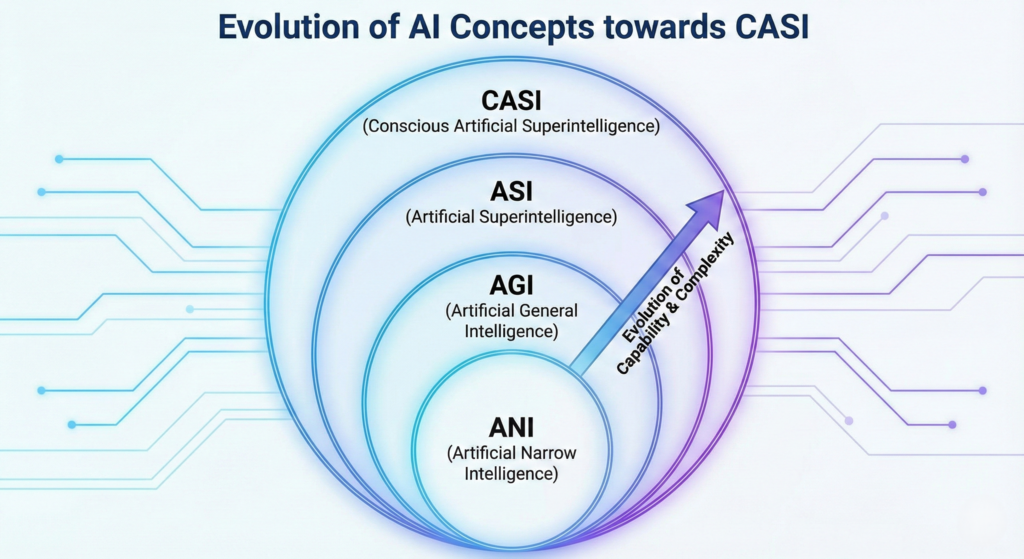
When people talk about AI, they are usually talking about one of two different concepts: Narrow AI or General AI.
Artificial Narrow Intelligence (ANI) is what we have today. This is AI that's designed to perform one specific task very well. Your GPS, a spam filter for your email, or a voice assistant like Siri are all examples of narrow AI. They are experts in their limited domain but can't do anything outside of it.
Artificial General Intelligence (AGI) is the stuff of science fiction—for now. This is a type of AI that would have the ability to understand, learn, and apply its intelligence to solve any problem, just like a human being. AGI doesn't exist yet, and creating it is one of the most significant challenges in computer science.
How AI Learns
Modern AI's secret sauce is machine learning. Instead of being programmed with rules, a machine learning model is trained on data. It learns to recognize patterns and make predictions by analyzing thousands or even millions of examples.
Imagine teaching a child what a cat is. You don't give them a list of rules like "has pointy ears, fur, and a tail." You just show them lots of pictures of cats. Eventually, they learn to recognize a cat on their own. That's the basic idea behind machine learning.
Within machine learning, an even more powerful technique has emerged: deep learning.
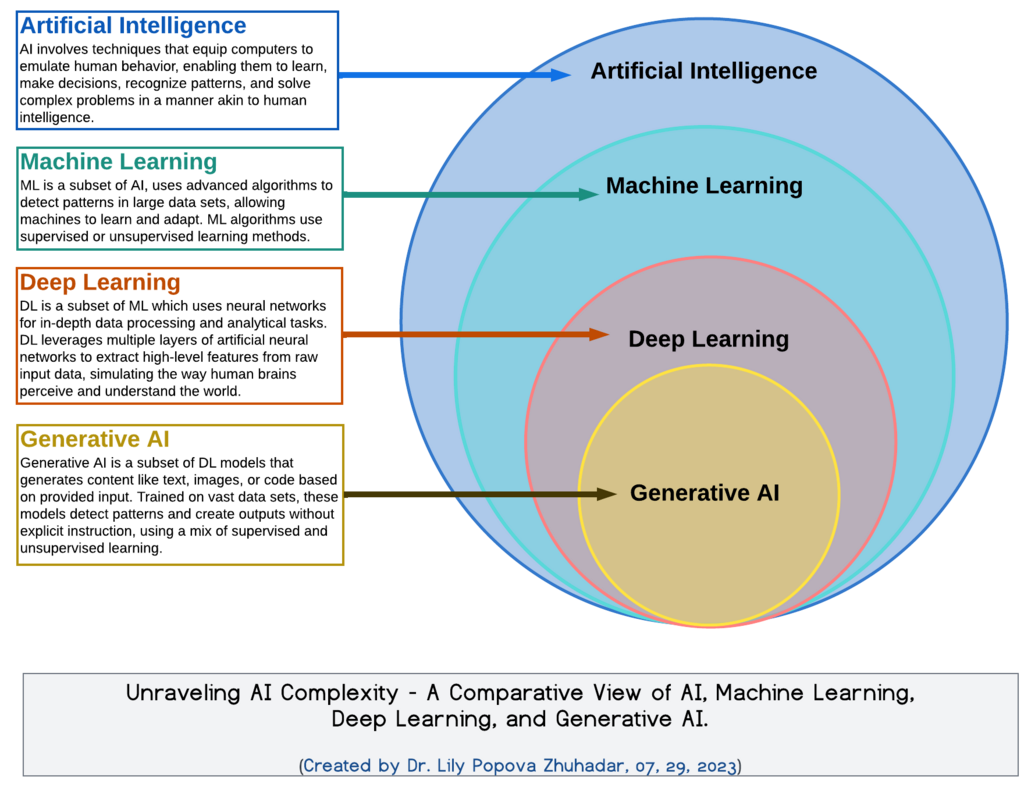
Deep learning uses structures called artificial neural networks, which are inspired by the human brain. These networks have layers of interconnected "neurons." When you feed data into the first layer, it passes its calculations to the next, and so on. Each layer learns to recognize more complex features.
For example, if you're training a network to recognize faces, the first layer might learn to spot simple edges and colors. The next layer might combine those to recognize shapes like eyes and noses. The final layers would combine those features to identify a complete face. This layered approach is what allows deep learning to tackle incredibly complex tasks like generating realistic images or translating languages.
These foundational concepts—AI as a goal, machine learning as the method, and deep learning as a powerful technique—are the building blocks of the intelligent systems that are reshaping our world.