Real-Time Sports Data Sources
Understanding Real-Time Sports Data
Data at the Speed of Sport
When a player scores a goal, you know it instantly. Whether you're watching on TV, following on an app, or checking a website, the information arrives almost as fast as the event happens. This is real-time data: information collected, processed, and delivered with minimal delay.
Real-time data is defined as information that is delivered and processed immediately upon collection, allowing for quick decisions based on events as they happen.
In sports, this immediacy is everything. It powers live scoreboards, updates fantasy leagues, and informs betting odds on the fly. Without it, the way we follow sports would be fundamentally different. It's the engine that drives the modern fan experience.
How the Action Is Captured
Collecting data from a fast-paced game isn't simple. It happens through a combination of human input and advanced technology. At a tennis match, for example, officials log points and faults. But technology is also at play, with cameras and sensors tracking the ball's speed and location.
In other sports, players might wear sensors that track their movement, speed, and even heart rate. In soccer, goal-line technology uses multiple high-speed cameras to determine if the ball has crossed the line, sending a signal to the referee's watch in under a second.
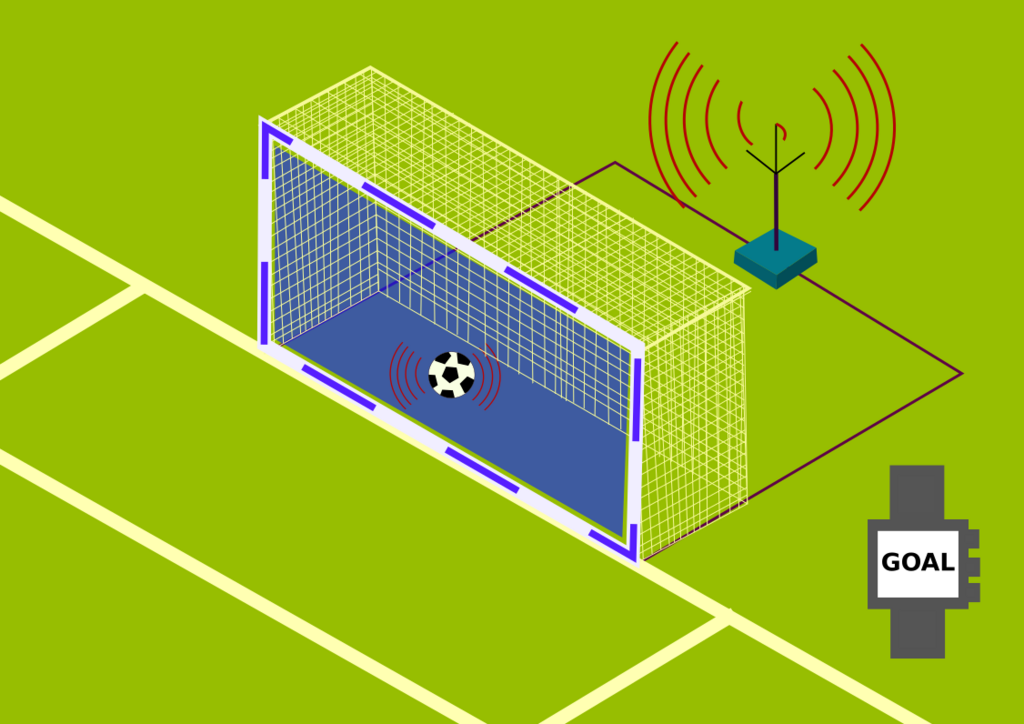
This raw data is captured from dozens of sources simultaneously. Every pitch, every pass, and every point becomes a data point, ready to be sent on the next step of its journey.
From the Field to Your Screen
Once data is captured, it needs to be processed and sent out. This entire pipeline is designed for speed.
First, the raw data is sent to a central system where it's verified. Automated checks look for obvious errors, and in some cases, a human operator confirms the details. The data is then standardized into a consistent format.
Next, it's pushed out through Application Programming Interfaces (APIs). Think of an API as a pipeline that lets different applications—like a sports news website or a fantasy football app—receive the same data feed simultaneously. This distribution has to be incredibly fast and reliable.
Challenges in the Fast Lane
Delivering accurate data in milliseconds is a massive technical challenge. The biggest hurdle is the trade-off between speed and accuracy. Pushing data out instantly increases the risk of errors. A score might be logged incorrectly or a player stat misattributed. Data providers have to build systems that are both lightning-fast and highly resilient to mistakes.
Another challenge is latency, which is the delay between when an event happens and when the data about it appears on your screen. This delay can be caused by network congestion, processing time, or even the distance the data has to travel. Minimizing latency is a constant battle, as even a delay of a few seconds can make a huge difference in applications like live betting.
The goal is to get as close to zero latency as possible without sacrificing the accuracy of the information.
Now that you understand the journey of sports data, let's test your knowledge.
What is the defining characteristic of 'real-time data' as described in the context of sports?
According to the text, how is data collected in a modern, fast-paced sporting event?
The flow of real-time data is a complex but finely tuned process. It combines human expertise with powerful technology to bring the action from the stadium to your screen almost instantly.