Real-Time Project Implementation Mastery
Introduction to Real-Time Project Management
Managing in the Moment
Imagine trying to navigate a busy highway by only looking at a map you printed last week. You wouldn't see the sudden traffic jam right ahead or the clear new shortcut that just opened up. Traditional project management can sometimes feel like that. It relies on plans and reports that are created at set intervals, like daily or weekly. By the time you get the information, it's already a little out of date.
Real-time project management is like using a live GPS. It's an approach where you manage projects using up-to-the-minute information. Decisions are made based on what's happening right now, not what was reported yesterday. This allows teams to be incredibly agile, spotting potential issues and opportunities as they arise.
The core idea is to close the gap between an event happening and the team reacting to it.
In today's fast-moving markets, this is more than a luxury; it's a necessity. Customer needs can shift overnight, competitors can launch unexpected features, and unforeseen roadblocks can appear without warning. A real-time approach gives a team the ability to pivot instantly, ensuring the project stays on track and remains relevant.
The Old Way and the New Way
The shift from traditional to real-time project management is a fundamental change in mindset and process. Traditional methods are often linear and rigid, while real-time methods are fluid and adaptive. Let's break down the key differences.
| Aspect | Traditional Project Management | Real-Time Project Management |
|---|---|---|
| Data Collection | Periodic (e.g., weekly status reports) | Continuous and automated |
| Decision Making | Based on historical data and forecasts | Based on live, current data |
| Planning | Detailed upfront plan, resistant to change | Flexible plan that evolves continuously |
| Communication | Scheduled meetings and formal reports | Constant, informal, and integrated |
| Problem Solving | Reactive, after a problem is reported | Proactive, as issues are detected |
Think of a traditional project as a train on a fixed track. A lot of work goes into laying the track (the plan) perfectly from start to finish. If a boulder falls on the track ahead, the train has to stop and wait for it to be cleared.
A real-time project is more like a fleet of all-terrain vehicles. They have a destination in mind, but they use live satellite imagery to adjust their routes on the fly, navigating around obstacles and finding the most efficient path as they go.
Key Principles
Three principles are the engine of real-time project management. They work together to create a system that is aware, responsive, and data-driven.
1. Continuous Monitoring This means keeping a constant watch on every aspect of the project—from task progress and budget spending to team workload and potential risks. It’s not about checking in once a day; it’s about having a live dashboard that reflects the project's health at any given second.
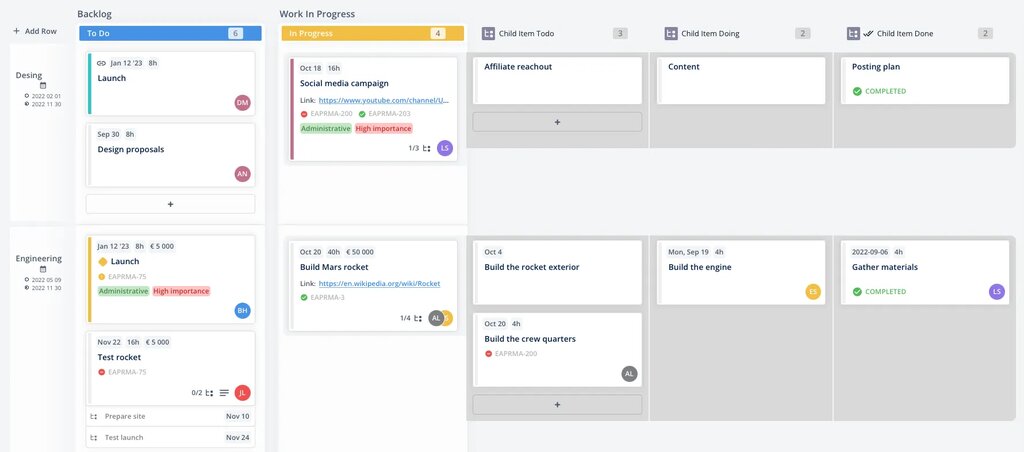
2. Rapid Response Monitoring is only useful if you act on what you see. The principle of rapid response means teams are empowered to make quick, informed decisions as new information comes in. If a task is falling behind, resources can be reallocated instantly. If a customer gives feedback on a new feature, the design can be tweaked in the next development cycle, not next month.
3. Real-Time Data Integration This is the foundation for the other two principles. It involves connecting all the sources of project information—task management systems, code repositories, communication channels, customer feedback forms—into a single, unified view. When data flows freely and instantly across the project ecosystem, everyone has access to the same, completely current information. This eliminates confusion and creates a single source of truth that enables smart, coordinated action.
Today’s professional projects need more than just ‘management.’ They need to be managed with clarity, transparency, agility, and efficiency.
By understanding these core ideas, you can start to see how this modern approach helps teams deliver better results, faster. It's about building a system that can adapt as quickly as the world around it changes.