Real-Time Object Detection with AI
Introduction to Object Detection
What Is Object Detection?
Computer vision gives machines the ability to see and interpret the world. A key part of this is object detection, which involves identifying and locating objects within an image or video. It doesn't just say, "This is a picture of a dog." It says, "Here is a dog, and it's located in this specific area of the picture."
Essentially, object detection answers two main questions: What objects are in the image, and where are they? To pinpoint the location, the model draws a bounding box—a rectangle—around each detected object and assigns it a class label, like 'car', 'person', or 'cat'.
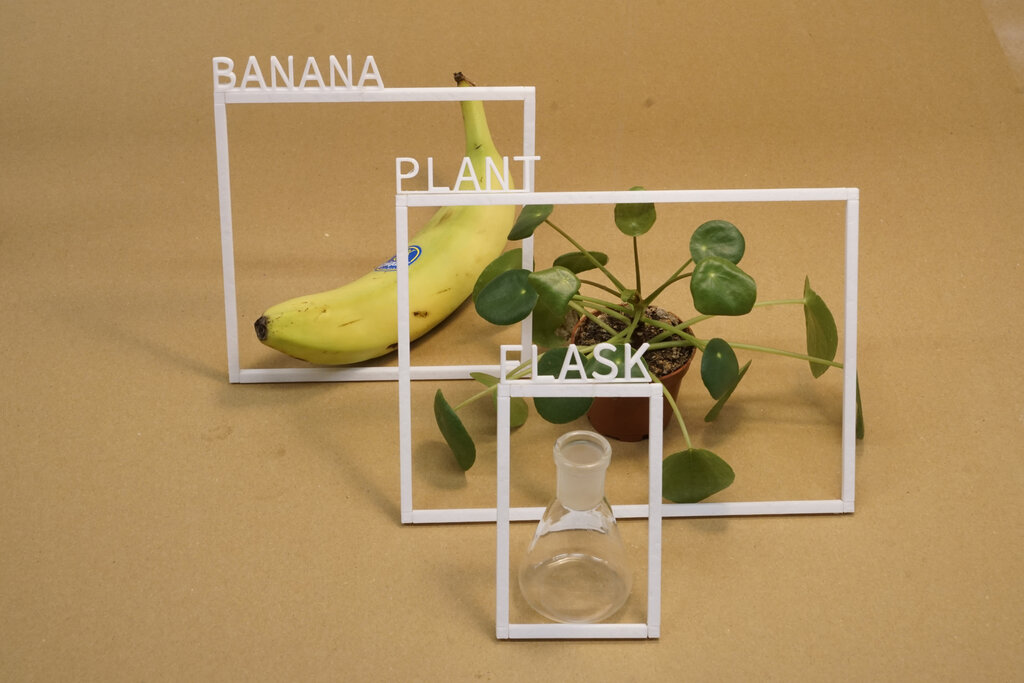
This combination of classification (what it is) and localization (where it is) makes object detection a powerful tool for understanding visual scenes in a more detailed way than other computer vision tasks.
Detection, Classification, and Segmentation
Object detection is often mentioned alongside image classification and segmentation. While related, they each perform a distinct task.
-
Image Classification: This is the simplest of the three. It assigns a single label to an entire image. For example, a classification model would look at a picture and say, "This image contains a cat."
-
Object Detection: This takes it a step further. It finds all instances of an object and draws a bounding box around each one. The model would say, "Here are two cats, located at these coordinates."
-
Image Segmentation: This is the most granular. Instead of just drawing a box, it identifies the exact pixels belonging to each object, creating a precise mask or outline. There are different types, but the goal is always a pixel-level understanding of the scene.
Choosing which technique to use depends on the problem you're trying to solve. If you only need to know if an object is present, classification is enough. If you need to know how many objects there are and where they are, you need detection. If you need to know the exact shape and boundaries of an object, you use segmentation.
Applications in the Real World
Object detection has moved from academic research into our daily lives. Its ability to work in real-time makes it incredibly useful.
- Autonomous Vehicles: Self-driving cars rely heavily on object detection to identify pedestrians, other cars, traffic signs, and obstacles to navigate safely.
- Surveillance and Security: Security cameras use object detection to spot intruders, identify unauthorised vehicles, or monitor crowds for unusual activity.
- Medical Imaging: In healthcare, it can help doctors by automatically detecting and highlighting anomalies in scans, such as tumours in an MRI or nodules in a chest X-ray.
- Retail Analytics: Stores use cameras to track products on shelves, managing inventory automatically. It can also analyze customer traffic patterns to optimize store layouts.
- Manufacturing: On an assembly line, object detection can identify defective parts, ensuring quality control without human intervention.
A Brief History
The journey of object detection has been a long one. Early methods, like the Viola-Jones framework developed in 2001, were revolutionary for face detection. These techniques relied on hand-crafted features, such as Haar-like features, which were simple rectangular patterns that a computer could be trained to look for.
However, the real breakthrough came with the rise of deep learning and convolutional neural networks (CNNs). In the early 2010s, models like R-CNN (Regions with CNN features) changed the game by using neural networks to first propose regions of an image that might contain an object and then classify those regions. This approach was more accurate but slow.
Subsequent innovations led to single-shot detectors like YOLO (You Only Look Once) and SSD (Single Shot MultiBox Detector). These models perform localization and classification in a single pass, making them incredibly fast and suitable for real-time video analysis. This evolution from multi-step, feature-based methods to single-pass, deep learning models is what powers most of the object detection applications we see today.
Now that you understand what object detection is and how it differs from other computer vision tasks, let's test your knowledge.
What are the two main questions that object detection answers about an image?
A self-driving car needs to identify pedestrians, other vehicles, and traffic signs to navigate. Which computer vision technique is most suitable for this task?
Object detection is a foundational pillar of modern computer vision, turning pixels into actionable information about the world around us.