Real-Time Object Detection with AI
Introduction to Real-Time Object Detection
Seeing the World Instantly
Object detection is a computer vision task where a model identifies and locates objects within an image or video. It draws a bounding box around each detected object and assigns it a class label, like 'car' or 'person'. Real-time object detection takes this a step further by performing this process on a live video stream, frame by frame, with minimal delay.
The goal is for the system to process information as quickly as it receives it. For a standard video, that often means processing around 30 frames per second (FPS). This immediacy is crucial. A self-driving car needs to identify a pedestrian the instant they step onto the road, not a second later. This requirement for speed, without sacrificing too much accuracy, is the central challenge.
Real-time video analysis remains a challenging problem in computer vision, requiring efficient processing of both spatial and temporal information while maintaining computational efficiency.
Applications in Plain Sight
Real-time object detection is no longer a futuristic concept; it's embedded in technology we use daily. Here are a few key areas:
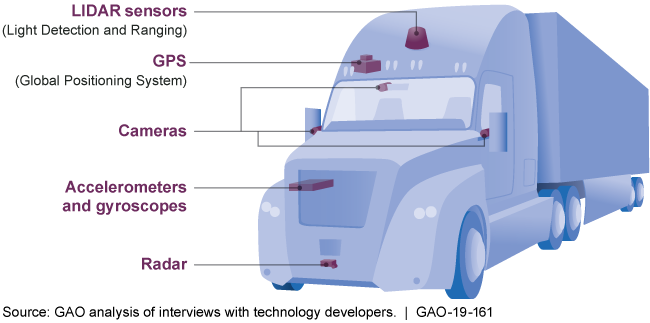
- Autonomous Vehicles: Cars, drones, and robots use a suite of sensors to perceive their surroundings. Real-time detection allows them to identify other vehicles, pedestrians, traffic lights, and obstacles to navigate safely.
- Surveillance and Security: Automated systems can monitor security camera feeds to detect unauthorised entry, identify suspicious behaviour, or count the number of people in a crowd.
- Augmented Reality (AR): AR applications on your phone need to detect surfaces, objects, or faces in real time to overlay digital information onto the physical world.
- Retail Analytics: Stores use cameras to track foot traffic, analyse customer behaviour, and monitor shelf inventory automatically.
The Balancing Act
The core engineering problem in real-time object detection is managing the trade-off between speed and accuracy. An extremely accurate model might analyse every pixel in minute detail, but take too long to process a single frame. This makes it useless for real-time applications. Conversely, a model that's incredibly fast might achieve its speed by simplifying its analysis, causing it to miss objects or misclassify them.
Computational constraints add another layer of complexity. An algorithm might run perfectly on a powerful server with multiple GPUs, but it needs to be efficient enough to run on the limited hardware of a mobile phone, a drone, or a car's onboard computer. This has driven the evolution of object detection algorithms.
Early approaches were often two-stage processes. First, they would propose potential regions in an image where an object might be. Then, they would run a classifier on each region. This was accurate but slow. The breakthrough for real-time detection came with single-stage detectors. These models, like the You Only Look Once (YOLO) family, treat object detection as a single regression problem, directly predicting bounding boxes and class probabilities from the full image in one pass. This innovation dramatically increased processing speed, making real-time detection on consumer devices a reality.
Now, let's test what you've learned about the fundamentals of real-time object detection.
What is the central engineering trade-off that designers of real-time object detection systems must manage?
Which of the following applications is the LEAST likely to require real-time object detection?
Understanding these core concepts—the definition, the applications, and the critical trade-offs—sets the stage for exploring specific algorithms and how they solve these challenges.