Reading Statistics in the USA
Introduction to Literacy Metrics
Measuring Reading
What does it mean to be literate? The answer is more complex than a simple yes or no. Literacy isn't just about whether you can read and write; it's about how well you can use written information to function in society, achieve your goals, and develop your knowledge.
Think of it as a spectrum. On one end, you have the ability to recognize letters and sound out words. On the other end, you have the skill to read a dense legal document, understand its nuances, and make an informed decision based on it. Most people fall somewhere in between.
Proficient literacy skills are the foundation of effective communication.
To understand literacy across a large population like the United States, researchers can't just ask, "Can you read?" Instead, they use standardized assessments to measure specific abilities. These assessments help categorize people into different proficiency levels, giving us a much clearer picture of the nation's skills.
Levels of Literacy
Literacy proficiency is typically broken down into several levels. While different studies might use slightly different names, they generally follow a similar pattern, moving from foundational skills to advanced comprehension and analysis.
| Level | Description |
|---|---|
| Below Basic | Can perform only simple, concrete literacy activities. |
| Basic | Can perform simple, everyday literacy activities. |
| Intermediate | Can perform moderately challenging literacy activities. |
| Proficient | Can perform complex and challenging literacy activities. |
What does this look like in the real world? Someone at the Basic level might be able to read a simple set of instructions. Someone at the Intermediate level could compare ticket prices for two different events and decide which is the better deal. A person at the Proficient level could read a lengthy article and write a summary of the author's main arguments.
These levels help us understand not just who can read, but how effectively people can use reading and writing in their daily lives.
How We Get the Data
Measuring literacy on a national scale is a massive undertaking. Organizations use carefully designed studies to gather this data. Two of the most important are the National Assessment of Educational Progress (NAEP) for children and the Program for the International Assessment of Adult Competencies (PIAAC) for adults.
These aren't tests that everyone takes. Instead, they use a method called sampling. Researchers select a group of people that is representative of the entire country's population, considering factors like age and location. This group then completes the assessment.
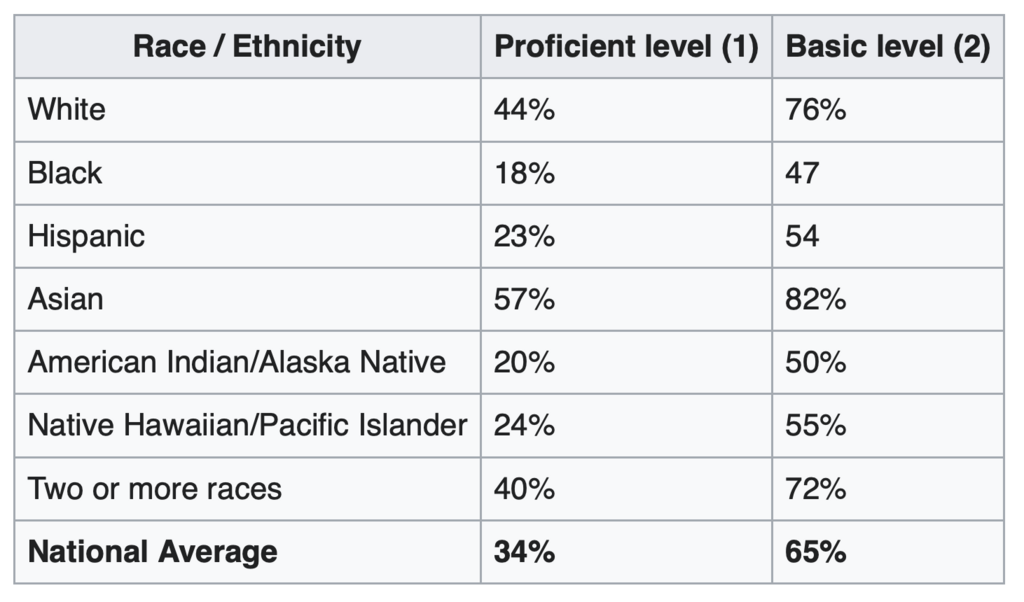
The assessments themselves contain a variety of real-world tasks. Participants might be asked to read a bus schedule, interpret a chart on a webpage, or understand the instructions on a medicine bottle. By analyzing the results from the representative sample, researchers can reliably estimate the literacy skills of the entire population without having to test every single person.
According to the provided text, what is the most accurate way to describe literacy?
An individual reads two different apartment leases to determine which one offers better terms regarding pets and utility payments. This task is a good example of which literacy level?