React.js Fundamentals
Introduction to React
What Is React?
React is a JavaScript library for building user interfaces. Think of it as a set of tools for creating interactive, dynamic web pages. Unlike some frameworks that provide a complete structure for an application, React focuses specifically on the view layer—what the user sees and interacts with.
React’s core philosophy revolves around creating reusable UI components that manage their own state and can be composed to build complex interfaces.
The key idea behind React is its component-based architecture. Imagine building a complex structure with LEGO bricks. Instead of creating the entire structure as one single piece, you build it from small, reusable bricks. In React, these bricks are called components. A webpage can be broken down into components like a navigation bar, a search box, a button, or a user profile card. Each component is a self-contained piece of code that handles its own logic and appearance.
This approach makes your code more organized, easier to debug, and highly reusable. You can build a button component once and use it all over your application.
Writing with JSX
When you look at React code, you'll see something that looks a lot like HTML mixed right in with JavaScript. This is called JSX, which stands for JavaScript XML. It's a syntax extension that lets you write HTML-like code inside your JavaScript files. While you don't have to use it, it makes writing components much more intuitive.
Here’s a simple example of what JSX looks like:
const element = <h1>Hello, world!</h1>;
Behind the scenes, this JSX is converted into regular JavaScript by a tool called a transpiler (like Babel). The code above becomes:
const element = React.createElement(
  'h1',
  null,
  'Hello, world!'
);
As you can see, JSX is much cleaner and easier to read. It allows you to describe what your UI should look like in a familiar, declarative way, while still having the full power of JavaScript available.
The Virtual DOM
One of React's most powerful features is the Virtual DOM. Directly manipulating the browser's Document Object Model (DOM) can be slow. To solve this, React creates a copy of the DOM in memory, called the Virtual DOM.
When the state of a component changes (for example, a user clicks a button), React first updates the Virtual DOM. Then, it compares this new Virtual DOM with the previous version to figure out exactly what changed. This process is called "diffing."
Finally, React takes only these changes and updates the real browser DOM in the most efficient way possible. This avoids unnecessary re-rendering of the entire page, making React applications fast and responsive.
Setting Up Your First App
Getting started with a new React project is straightforward, thanks to a tool called Create React App. It sets up a complete development environment for you with no configuration needed.
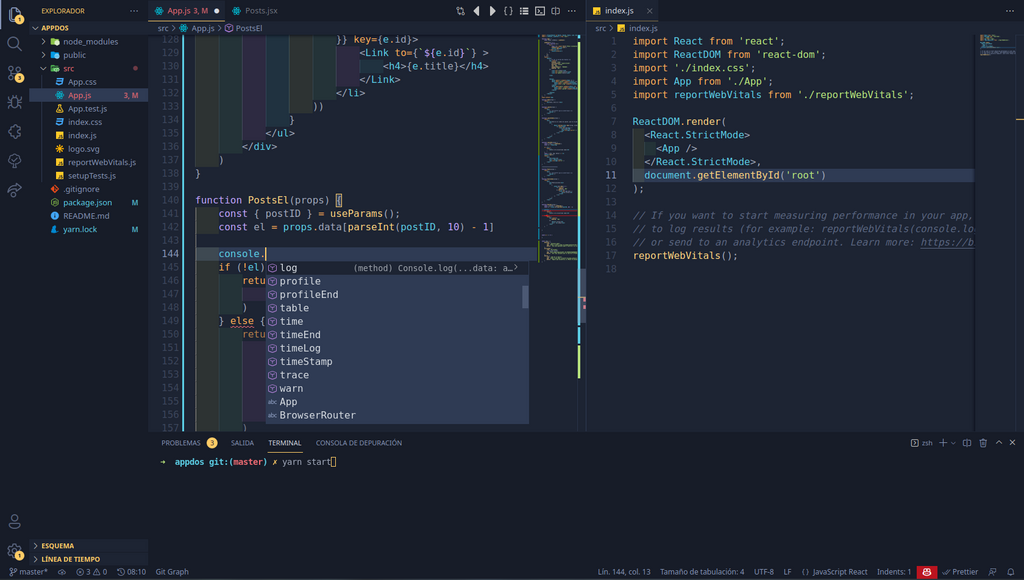
To create a new app, you'll need to have Node.js and npm (Node Package Manager) installed on your computer. Once you do, you can run a single command in your terminal to create a new project.
# Creates a new folder called 'my-first-app'
npx create-react-app my-first-app

# Navigate into your new project directory
cd my-first-app

# Start the development server
npm start
This command creates a new directory with all the necessary files and dependencies. Running npm start will open a new tab in your browser with your live-reloading React application. Now you're ready to start building!
Ready to test your knowledge? Let's see what you've learned.
What is the primary role of React in web development?
React's architecture encourages breaking down the user interface into small, reusable pieces. What are these pieces called?
That covers the absolute basics of what React is and how it works. By breaking down complex UIs into simple components and updating the DOM efficiently, React makes building modern web applications more manageable and performant.