React and TypeScript for Modern Web Apps
Introduction to React and TypeScript
Building with Precision
Imagine building with LEGO bricks. Each brick has a specific shape and purpose. You combine them to create complex structures. This is the core idea behind React, a JavaScript library for building user interfaces. It lets you break down your UI into small, reusable pieces called components.
Now, what if you had a blueprint that ensured every brick fit perfectly where it was supposed to? That's what TypeScript adds to the mix. TypeScript is a superset of JavaScript, which means it's just JavaScript with an added layer of static typing. This helps you catch errors early, making your code more robust and easier to manage, especially as projects grow larger.
Think of it this way: React provides the building blocks for your application, and TypeScript provides the blueprint to make sure they all fit together correctly.
Setting Up Your Workspace
Getting started with a React and TypeScript project is straightforward. The most common way is to use a tool called Create React App, which sets up a complete development environment for you. You'll need to have Node.js and npm (which comes with Node.js) installed on your computer first.
Once you have Node.js ready, open your terminal or command prompt and run the following command:
npx create-react-app my-app --template typescript
This command creates a new directory called my-app with a pre-configured React and TypeScript project inside. It handles all the complex setup, so you can start coding right away.
Next, navigate into your new project's folder and start the development server:
cd my-app
npm start
A new browser tab will open automatically, showing the default React welcome page. Your development environment is now up and running!
Anatomy of a Component
If you open the src folder in your new project, you'll find a file named App.tsx. The .tsx extension tells us this file contains both TypeScript and JSX (the syntax used to write React components).
Let's create our own simple component. Make a new file in the src folder called Greeting.tsx and add the following code:
import React from 'react';

interface GreetingProps {
  name: string;
}

const Greeting: React.FC<GreetingProps> = ({ name }) => {
  return <h1>Hello, {name}!</h1>;
};

export default Greeting;
This is a basic React functional component. Let's break it down:
- We define an
interfacecalledGreetingProps. This is a TypeScript feature that describes the 'shape' of the properties, orprops, our component expects. Here, we're saying it must receive anamethat is a string. const Greeting: React.FC<GreetingProps>declares a functional component namedGreeting. It uses ourGreetingPropsinterface to ensure type safety.- The component returns JSX, which looks like HTML but is actually JavaScript. The curly braces
{name}allow us to embed ournameprop directly into the output.
Now, let's use this component in our main App.tsx file. Replace its contents with this:
import React from 'react';
import logo from './logo.svg';
import './App.css';
import Greeting from './Greeting';

function App() {
  return (
    <div className="App">
      <header className="App-header">
        <img src={logo} className="App-logo" alt="logo" />
        <Greeting name="Developer" />
      </header>
    </div>
  );
}

export default App;
We import our new Greeting component and then use it like an HTML tag: <Greeting name="Developer" />. This is the power of React's component-based architecture. You build small, self-contained pieces and compose them to create a full application.
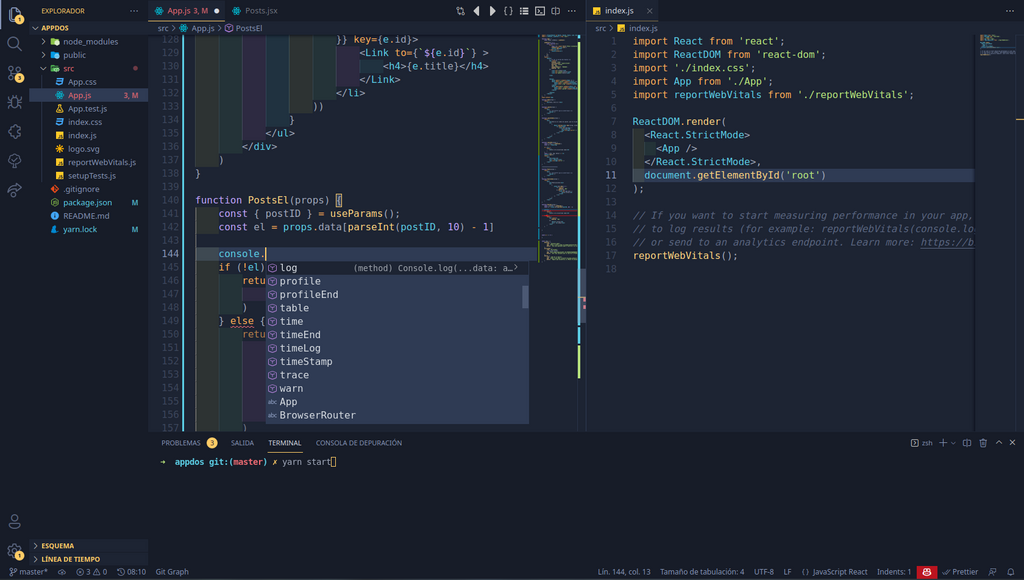
The real benefit of using TypeScript here becomes clear when you make a mistake. For example, if you tried to pass a number to our Greeting component instead of a string, TypeScript would immediately alert you to the error right in your code editor, long before you even save the file.
By catching type-related errors during development, TypeScript helps you write more reliable code and speeds up the debugging process.
Time to check what you've learned.
What is the primary role of TypeScript when used with React?
Which command correctly scaffolds a new React project named my-app with TypeScript?
You now have a solid foundation for building web applications with React and TypeScript. The key takeaways are understanding how React uses components to build UIs and how TypeScript adds a layer of safety and predictability.