ReAct Agents Explained
Introduction to ReAct
Beyond Just Talking
Large Language Models (LLMs) are great conversationalists. You can ask one to write a poem or explain a complex topic, and it will generate a plausible-sounding response based on the massive amount of text it was trained on. But there's a catch. A standard LLM is like a person in a library with no windows. It has access to all the books (its training data), but it has no idea what's happening outside right now.
Ask it for today's weather in Chicago, and it can't give you a real answer. It can't check a weather website or look out a window. It can only tell you what weather is typically like in Chicago based on the books it has read. To solve real-world problems, a model needs to do more than just talk; it needs to act.
Thinking and Doing
This is where the ReAct framework comes in. ReAct stands for Reasoning and Acting. It gives an LLM a simple but powerful loop to follow, allowing it to interact with the outside world through tools, like a search engine or a calculator.
The ReAct (Reasoning and Action) framework combines Chain-of-Thought reasoning with the ability to perform external actions (like searching the web, running code, or accessing a database).
Instead of just generating a final answer from a prompt, a ReAct agent breaks the problem down. It cycles through a sequence of steps: Thought, Action, and Observation.
Here’s how the cycle works:
-
Thought: The agent thinks about the user's request and decides on a plan. It figures out what it needs to know and what tool it should use. For example: "The user wants today's weather. I should use the search tool to find that information."
-
Action: The agent executes the plan by calling a tool. This might be performing a web search, running a calculation, or looking something up in a database. For our example, the action would be:
search("today's weather in Chicago"). -
Observation: The agent receives the result from the tool. This is its observation of the outside world. The observation might be a snippet of text from a website saying, "The weather in Chicago is 75°F and sunny."
The agent repeats this loop. After the first observation, its next thought might be, "I have the weather information. I can now answer the user's question." When it has enough information, it exits the loop and provides the final Answer.
Why ReAct is a Big Deal
This approach offers several key advantages over traditional LLMs.
Improved Accuracy: By accessing real-time, external information, ReAct agents avoid making things up. Their answers are grounded in current, factual data, not just old training material.
Think of a customer service bot. A traditional bot might give a generic answer about return policies. A ReAct-powered bot could access the company's database, check your specific order status, and tell you exactly when your package will arrive.
Greater Transparency: The Thought step is like showing your work in math class. You can see the agent's reasoning process, which makes it easier to trust its answers and debug any mistakes. If it gives a strange answer, you can look at its thoughts to understand why.
Real-World Usefulness: ReAct turns LLMs from simple text generators into dynamic problem-solvers. They can power personal assistants that book appointments, data analysis tools that query databases in natural language, or automated systems that monitor online information.
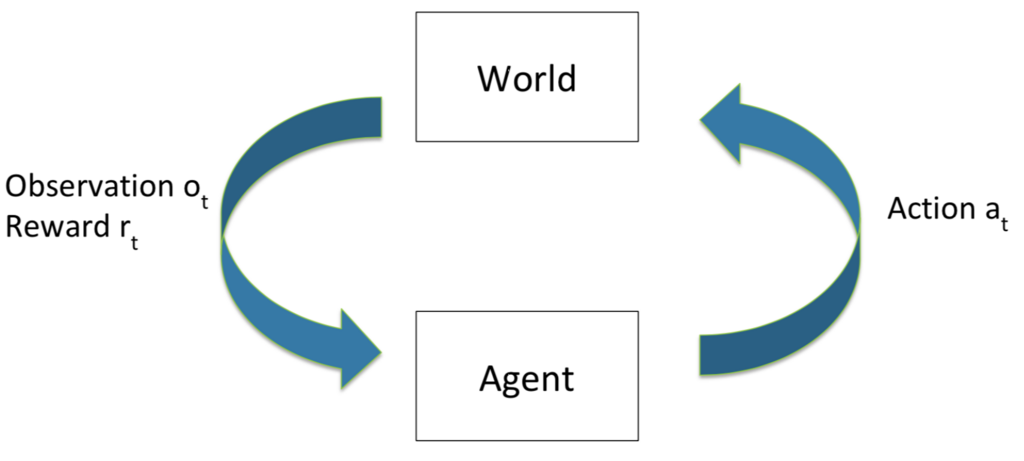
By combining reasoning and action, ReAct allows AI agents to tackle complex, multi-step tasks that require up-to-date information and interaction with external systems. It's a fundamental step toward building more capable and reliable AI.
What does the acronym ReAct stand for in the context of Large Language Models?
Why is a standard LLM often compared to 'a person in a library with no windows'?