Rattihalli Heritage and Architecture
Medieval Administrative Evolution
From Rashtrapalli to Rattihalli
In medieval Karnataka, a town's name often told a story. The town we know today as Rattihalli began its life as Rashtrapalli. The name itself is a clue, with 'palli' meaning town or settlement and 'Rashtra' linking it to the powerful Rashtrakuta dynasty that dominated the Deccan plateau from the 8th to the 10th century. During their reign, this town was more than just a settlement; it was an administrative hub.
Historians believe Rashtrapalli served as the headquarters for a local division. This wasn't just a simple village. It was a strategic center of governance for the surrounding region, a place where imperial authority was felt on a local level. The established a system of provinces and districts to manage their vast empire, and Rashtrapalli was a key node in that network.
The Rashtrakutas of Manyakheta flourished during a period of political expansion, architectural marvels, and renowned literary contributions.
As empires rise and fall, names and loyalties shift. After the decline of the Rashtrakutas, the town evolved into Rattihalli. It became the capital of an administrative unit known as 'Rattihalli-100', or Nurumbada in the local Kannada language. This designation indicates it was the chief town overseeing a territory of about one hundred villages. This system provided a clear and organized structure for tax collection, law enforcement, and local governance.
A Jewel Under Shifting Empires
For centuries, Rattihalli was governed by a local dynasty: the Kadamba chiefs. However, they were not independent kings. They operated under the suzerainty, or overlordship, of larger imperial powers. First, they were vassals to the Western Chalukyas, who succeeded the Rashtrakutas as the dominant force in the region.
This relationship is clearly documented in stone. A 12th-century inscription of the Western Chalukya king, Jagadekamalla II, found near Rattihalli, confirms the town's status. It refers to the local Kadamba chief as his subordinate and describes Rattihalli as the 'crest jewel' of the much larger province. This grand title highlights the town's importance, not just as a local hub but as a prized part of a major imperial province.
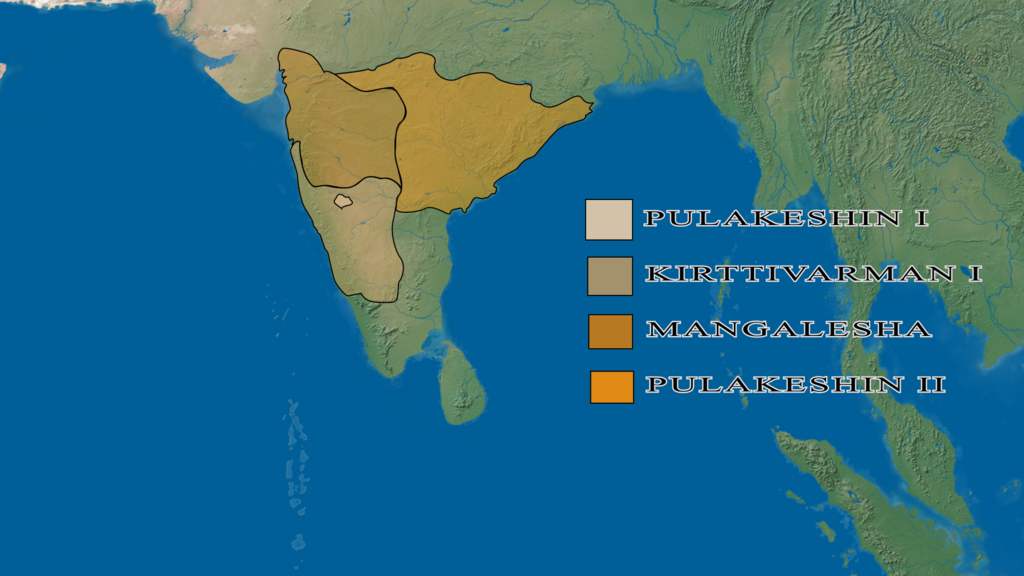
Power in the Deccan was never static. By the early 13th century, the Chalukyan empire had weakened, and a new power, the of Devagiri, rose to prominence. The Kadamba chiefs of Rattihalli, ever pragmatic, shifted their allegiance.
An inscription from the rule of Seuna king Singhana II confirms this change. It records a grant made by the Kadamba chief of Rattihalli, but this time, the chief acknowledges the authority of the Seuna king. This stone record is a perfect snapshot of a political transition, showing how a local power navigated the changing tides of imperial fortune to maintain its own position. Throughout these shifts, Rattihalli's strategic location on the banks of the Kumadvati River, likely fortified, ensured its continued relevance as an administrative center.
Let's review what we've learned about this medieval administrative center.
What was the original name of Rattihalli, reflecting its connection to the dynasty that first made it an administrative hub?
The designation 'Rattihalli-100' or 'Nurumbada' signifies that the town was...
The story of Rattihalli, recorded in its names and inscriptions, gives us a window into the complex and shifting world of medieval South Indian politics, where local powers and great empires were in a constant dance of allegiance and ambition.