Rapid Product Launch with Vibe Coding
Agile Fundamentals
A New Way to Build
Imagine spending a year building a product based on a detailed, perfect plan. Every feature is documented, every deadline is set. But when you finally launch, you discover that the market has changed, or that users don't actually want what you built. This was a common problem with traditional project management methods, where the entire plan was locked in from the start.
This old approach, often called the Waterfall model, is very rigid. You complete one phase entirely before moving to the next: finish all the design, then do all the building, then do all the testing. It's like building a car by manufacturing every single part before you even try to assemble the frame. If you make a mistake in an early phase, it's incredibly difficult and expensive to go back and fix it.
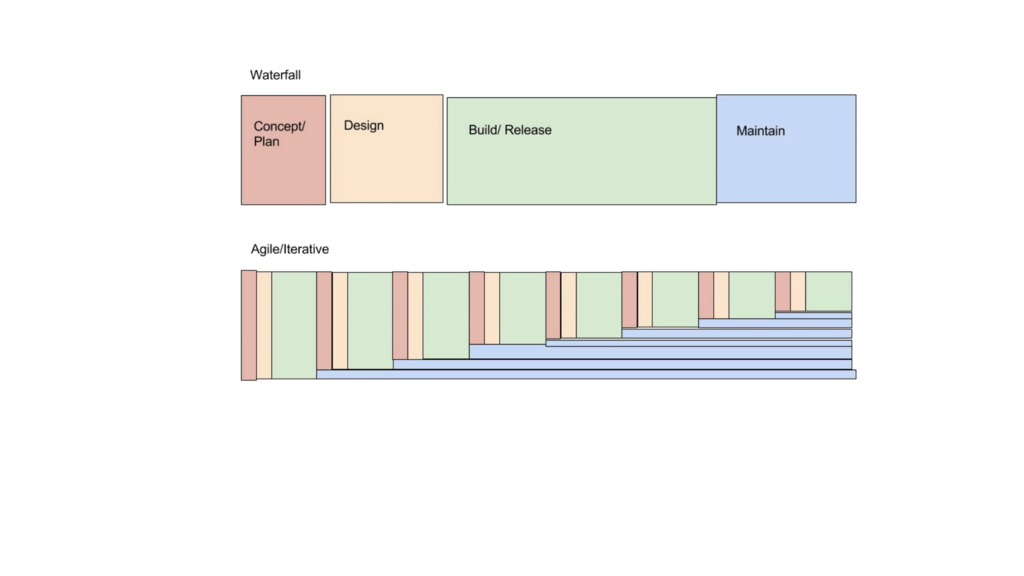
Agile was created as a response to this inflexibility. It’s not a strict set of rules, but a different mindset for building products, especially software. The core idea is to build things in small, manageable pieces. This is called iterative and incremental development.
Instead of one giant leap, Agile takes many small steps. You build a small, working version of the product, get feedback, and then build the next small piece. Each cycle, or iteration, adds more functionality, so the product grows incrementally.
This approach allows teams to learn and adapt as they go. They can respond to customer feedback, shifts in the market, or new technical challenges without having to scrap the entire plan. It’s about being flexible and delivering value to the customer quickly and consistently.
The Agile Manifesto
In 2001, a group of software developers came together to write down the core principles of this new way of working. The result was the Manifesto for Agile Software Development, a document that outlines four key values.
It’s important to note that the Manifesto doesn't say the items on the right have no value. It just says the items on the left are more valuable.
| We value... | Over... |
|---|---|
| Individuals and interactions | processes and tools |
| Working software | comprehensive documentation |
| Customer collaboration | contract negotiation |
| Responding to change | following a plan |
Let’s break down what these values mean in practice.
Individuals and interactions over processes and tools: Agile trusts people to solve problems together. A quick conversation between a developer and a designer is often more effective than filling out a form or waiting for a tool to update. It prioritizes communication and collaboration.
Working software over comprehensive documentation: The main goal is to deliver a product that works. While documentation is useful, spending months writing about software that doesn't exist yet is less valuable than creating a simple, functional version that people can actually use. In Agile, the working product is the best measure of progress.
Customer collaboration over contract negotiation: Instead of locking in every detail in a rigid contract at the start, Agile teams work closely with their customers throughout the project. This continuous feedback loop ensures that the final product is what the customer actually needs and wants, not just what was written down months ago.
Responding to change over following a plan: The world changes, and project requirements do too. A competitor might launch a new feature, or user testing might reveal a fatal flaw in your design. Agile embraces this reality. It expects change and has built-in flexibility to adapt, rather than stubbornly sticking to an outdated plan.
Why Does It Work?
By focusing on these values, Agile helps teams reduce risk and build better products. Because you’re building and releasing small pieces of functional software, you get feedback much earlier in the process. This means you can catch mistakes or misunderstandings when they're still small and easy to fix.
This approach also leads to higher customer satisfaction. Since the customer is involved throughout the process, there are no big surprises at the end. They see the product evolve and can steer it in the right direction.
Agile is an iterative approach to software development and project management that emphasizes incremental delivery, collaboration, and continuous improvement.
Ultimately, Agile is a mindset focused on flexibility, communication, and delivering value. It accepts that we don't know everything at the start of a project and that the best way to succeed is to learn and adapt as we go.
What is the primary weakness of the traditional Waterfall model that Agile methodologies were designed to address?
The Agile Manifesto value "Individuals and interactions over processes and tools" suggests that...