Railway Signaling Explained
Introduction to Railway Signaling
The Language of the Rails
Imagine a busy highway system with no traffic lights, stop signs, or lane markings. It would be chaos. Railway signaling is the system that prevents this chaos on the tracks. Its purpose is twofold: to keep trains from colliding and to manage the flow of traffic efficiently, ensuring trains run on time.
At its heart, signaling is a communication system. It gives train drivers permission to proceed and tells them the state of the track ahead. Without it, safely running more than one train on a line would be impossible.
From Flags to Fiber Optics
Early railways had very basic systems. Sometimes, a person known as a "policeman" would stand by the track and use hand signals or flags to tell drivers when it was safe to go. This worked, but it was slow and relied entirely on human sight over short distances.
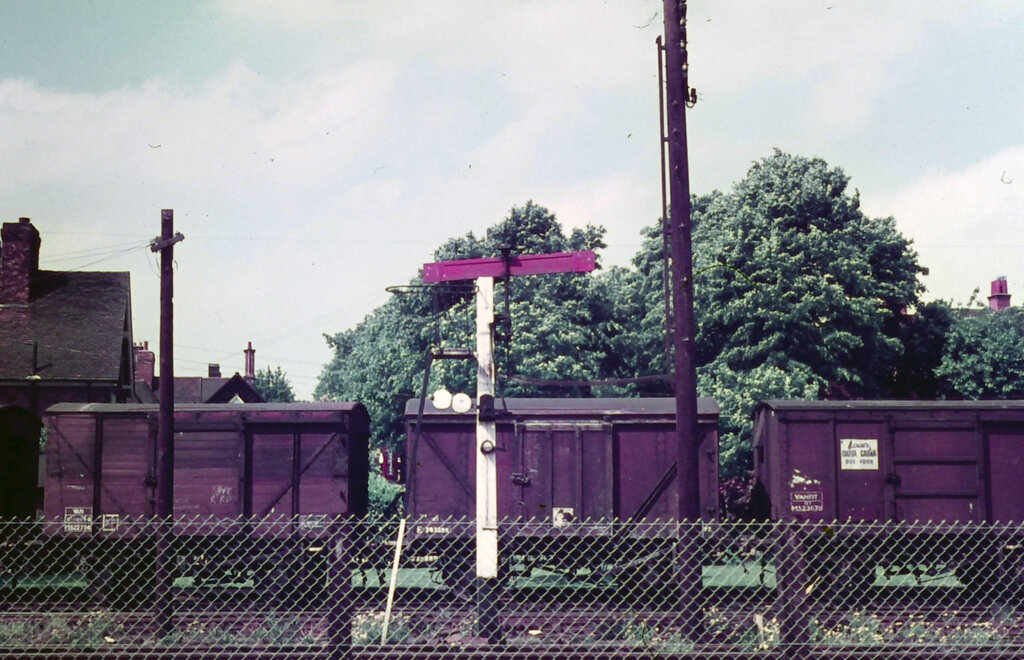
The first major innovation was the mechanical semaphore signal, introduced in the 1840s. These were large arms, or blades, mounted on posts. The position of the arm indicated the state of the track ahead. A horizontal arm meant stop; a raised or lowered arm meant proceed. These signals were operated remotely by human signalers using a system of levers and wires.
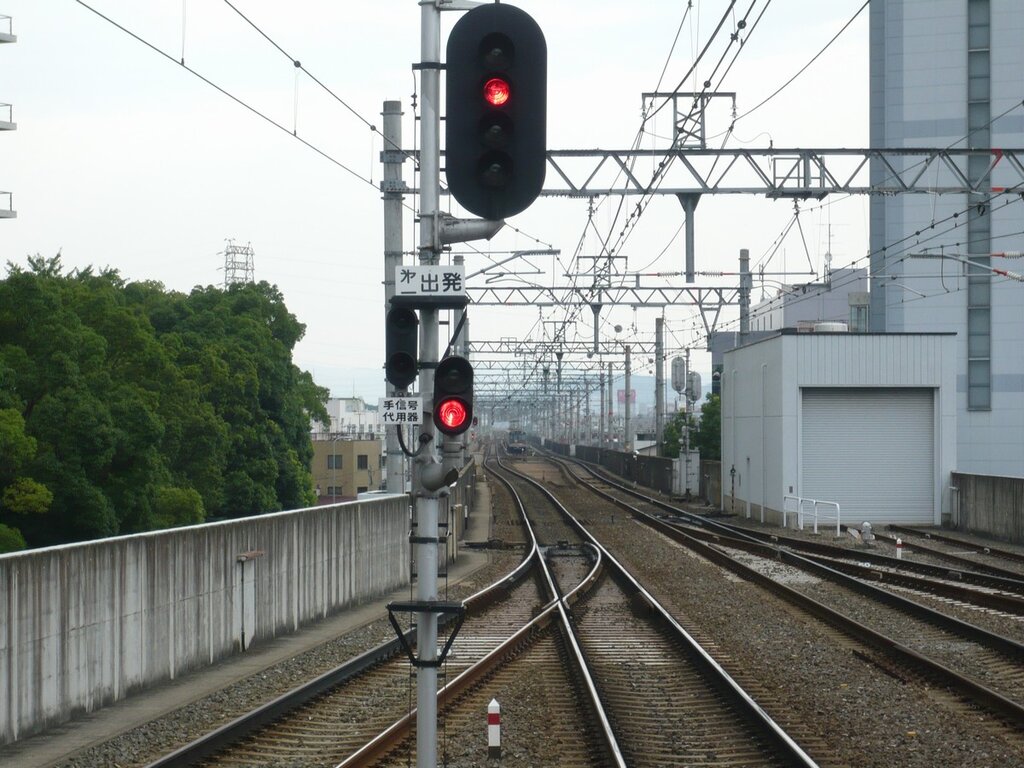
Next came the widespread use of electricity. Color light signals replaced mechanical semaphores, offering better visibility in fog, rain, or darkness. The familiar red, yellow, and green lights became the standard. This shift also paved the way for automation, gradually reducing the need for signalers to manually control every train's movement.
Core Components
Modern signaling systems, no matter how complex, are built on a few fundamental concepts. Understanding these is key to understanding how railways operate safely.
The three pillars of signaling are signals, track circuits, and interlockings.
Signals are the most visible part of the system. They are the direct instructions to the driver. While they can have many different forms and colors (aspects), the basic meanings are universal: red means stop, yellow means be prepared to stop at the next signal, and green means proceed.
But how does the system know where the trains are? This is the job of the track circuit. It's a simple but ingenious invention. A section of track, called a block, is electrically isolated from the next section. A low-voltage current is passed through one rail to the other. When a train's metal wheels and axle enter the block, they create a short circuit, known as a shunt. This drop in voltage is detected by the signaling system, which now knows the block is occupied.
Finally, the interlocking is the safety brain of the system. It's a set of rules and physical or logical locks that prevent impossible or dangerous situations. An interlocking ensures that a signal can't show green unless the route ahead is proven to be safe. For example, it will prevent a switch (or 'points') from moving under a train and will ensure that two trains are not given signals that would cause them to collide at a junction.
Automatic signaling drastically reduced the risk of collisions and improved the overall efficiency and safety of rail operations.
Together, these components create a robust system that can track the location of every train and ensure each one has a safe, clear path to its destination. This foundation of safety and efficiency is what allows modern railways to move millions of people and tons of freight every day.
Time to check your understanding of these core concepts.
What is the primary dual purpose of a railway signaling system?
How does a track circuit detect the presence of a train in a specific section of track, known as a 'block'?
These principles form the backbone of railway operations around the world, evolving over time but always focused on the primary goals of safety and efficiency.