RAG for Smarter LLMs
Introduction to Large Language Models
What Are Large Language Models?
A Large Language Model, or LLM, is a type of artificial intelligence designed to understand and generate human language. Think of it like a student who has read a massive library—so vast it includes nearly every book, article, and website ever published. After reading all that material, the student becomes incredibly good at recognizing patterns, understanding context, and predicting what word should come next in any given sentence.
The “large” in Large Language Model refers to two things: the enormous amount of text data it's trained on and the huge number of parameters it uses to learn.
Parameters are like the knobs and dials a model can tweak during training to improve its performance. The more parameters, the more nuanced and complex the patterns it can learn. The biggest LLMs have hundreds of billions or even trillions of parameters, allowing them to grasp grammar, facts, reasoning styles, and even artistic tones from their training data.

At its core, an LLM is a prediction engine. When you give it a prompt, like “The first person to walk on the moon was,” it calculates the most probable next word. After it picks “Neil,” it recalculates for the next word, and the most likely choice becomes “Armstrong.” It continues this process, word by word, to generate complete sentences, paragraphs, and even entire articles.
How They're Built
LLMs are built on a framework called a neural network, which is loosely inspired by the human brain. The specific architecture that enabled the recent explosion in AI capabilities is called the Transformer. Introduced in 2017, the Transformer was a game-changer because of a mechanism called attention.
The attention mechanism allows the model to weigh the importance of different words in the input text when it's producing an output. For example, in the sentence “The delivery truck blocked the driveway, so it had to be moved,” the attention mechanism helps the model understand that “it” refers to the “truck,” not the “driveway.” This ability to track relationships between words, even across long sentences, gives LLMs a much deeper sense of context.
Training an LLM
Training an LLM is a monumental task that happens in a few key stages. It starts with pre-training, where the model is fed a colossal amount of text from the internet and digital books. During this phase, the model's only goal is to predict the next word in a sentence. It does this over and over, billions of times, adjusting its internal parameters with each attempt to get better at predicting.
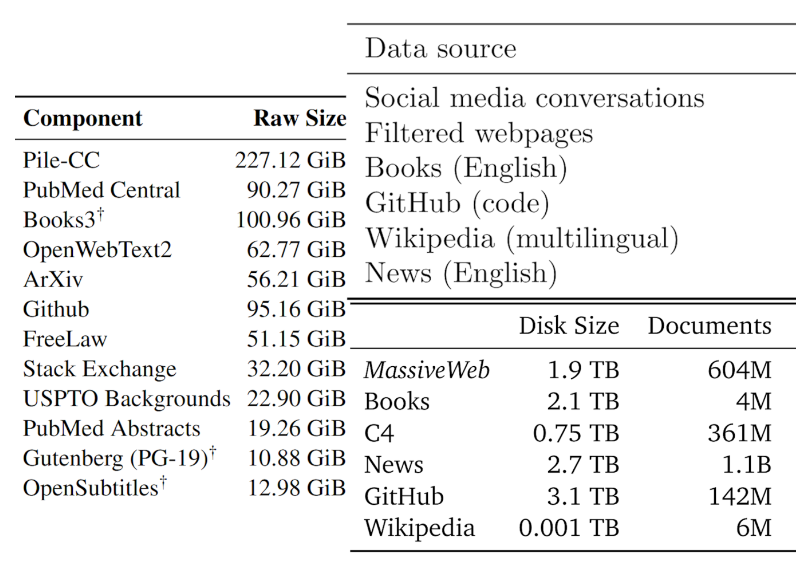
This unsupervised process is what gives the model its general understanding of language, facts, and reasoning. It learns grammar, absorbs information, and figures out how ideas connect.
After pre-training, most LLMs go through a fine-tuning phase. This is where humans get involved to steer the model toward being more helpful and safe. One common method is Reinforcement Learning from Human Feedback (RLHF). In this stage:
- Humans write high-quality answers to various prompts.
- The model is trained on these examples to mimic the desired style and tone.
- The model generates several different answers to a prompt, and a human ranks them from best to worst.
- This feedback is used to train a separate “reward model” that learns to score outputs based on human preferences.
- Finally, the LLM is fine-tuned using this reward model, essentially training it to generate responses that would receive a high score.
This fine-tuning process is crucial for aligning the model with human values, making it follow instructions, and reducing its tendency to generate harmful or nonsensical content.
What Can LLMs Do?
The capabilities of LLMs are broad and expanding quickly. Because their fundamental skill is language processing, they can be applied to almost any task involving text. Some common applications include:
| Application | Description |
|---|---|
| Text Generation | Writing emails, articles, marketing copy, and even creative fiction. |
| Summarization | Condensing long documents, articles, or conversations into key points. |
| Translation | Translating text between dozens of different languages. |
| Question Answering | Acting as a conversational search engine to answer questions on any topic. |
| Code Generation | Writing and debugging computer code in various programming languages. |
| Sentiment Analysis | Identifying the emotional tone of a piece of text (e.g., positive, negative, neutral). |
These models serve as a foundation for many of the AI tools we see today, from chatbots and virtual assistants to advanced data analysis software. Their ability to process and generate language in a human-like way has unlocked new possibilities across countless industries.
What is the core function of a Large Language Model (LLM) at its most fundamental level?
The initial, unsupervised phase of training an LLM on a massive dataset of text from the internet and books is called ______.
By understanding these core concepts, you've built a solid foundation for grasping more advanced topics in AI. The key takeaway is that LLMs are powerful pattern-matching systems trained on vast amounts of text, and their architecture allows them to understand the context and relationships within language.