Radar Aircraft Detection
Radar Basics
Shouting into the Void
Imagine standing at the edge of a canyon and shouting. A moment later, your voice comes back to you as an echo. By timing how long it takes for the echo to return, you can get a rough idea of how far away the other side is. Radar works on a very similar principle, but instead of sound, it uses radio waves.
The name RADAR is an acronym for RAdio Detection And Ranging. It's a system that sends out a pulse of radio-frequency energy, listens for that energy to bounce off an object, and then analyzes the returning signal, or "echo."
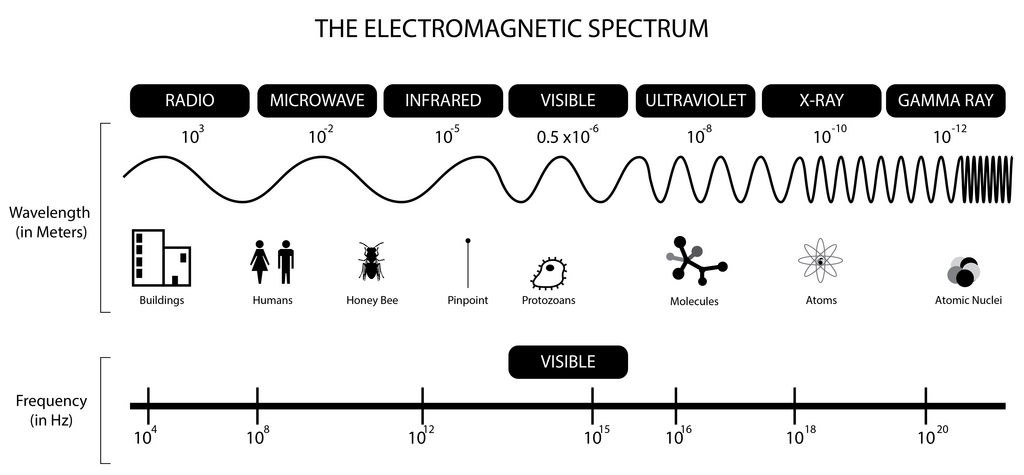
The process is straightforward:
- A transmitter generates a radio wave.
- An antenna broadcasts this wave into the environment.
- The wave travels at the speed of light until it hits something, like an airplane or a raindrop.
- Some of the wave's energy reflects off the object and travels back toward the antenna.
- The antenna captures this faint echo.
- A receiver processes the echo, and a computer calculates the object's location.
The most basic piece of information radar gives us is range—how far away the object is. Since radio waves travel at a constant speed (the speed of light), we can find the distance by measuring the time it took for the wave to make the round trip. The formula is simply:
Distance = (Speed of Light × Time) / 2
We divide by two because the time measured includes the trip to the object and back.
Measuring the Echo's Strength
Of course, not all echoes are created equal. A nearby mountain creates a much stronger echo than a distant bird. The relationship between the power sent out, the target's characteristics, and the power received back is described by the radar equation.
Let's break that down without getting lost in the math:
- is the received power. It's the strength of the echo that makes it back to the antenna.
- is the transmitted power. This is how much energy the radar blasts out initially.
- is the antenna gain. It measures how well the antenna focuses energy in a specific direction.
- is the wavelength of the radio wave used.
- (sigma) is the radar cross-section. This is a measure of how much of the radar's energy an object reflects. A large cargo plane has a much bigger than a small drone.
- is the range, or distance to the object.
The most important part of this equation for understanding radar is the in the denominator. This means the strength of the received echo decreases by the fourth power of the range. If you double the distance to a target, the echo you get back is 16 times weaker. This is why radar systems need extremely powerful transmitters and incredibly sensitive receivers to detect objects far away.
Two Flavors of Radar
Not all radar systems work by sending out short bursts. There are two primary types: Pulse Radar and Continuous Wave Radar.
Pulse Radar
noun
A radar system that transmits short, powerful bursts of radio waves and then listens for the echoes in the silent period between pulses. This is the classic "shout and listen" method and is excellent for determining an object's range.
Most radars you encounter, from weather systems to military tracking, are pulse radars. They are fantastic for figuring out where something is.
Continuous Wave Radar
noun
A radar system that transmits a continuous, uninterrupted radio wave. Instead of timing an echo, it measures the frequency shift in the returning signal caused by the Doppler effect to determine an object's speed.
Continuous Wave (CW) radar is the specialist for measuring velocity. Because it's always transmitting, it can't easily measure range like a pulse radar. But by comparing the frequency of the wave it sent out with the frequency of the wave that comes back, it can instantly tell if an object is moving toward or away from it, and exactly how fast.
The Anatomy of a Radar System
While radar systems can be incredibly complex, they all share four fundamental components that work together to make detection possible.
1. Transmitter: This component creates the high-power radio wave pulse. Think of it as the radar's mouth, producing the initial "shout."
2. Antenna: The antenna has two jobs. First, it takes the pulse from the transmitter and broadcasts it in a focused beam. Then, it acts as the system's ear, collecting the faint returning echo. The same antenna often does both jobs.
3. Receiver: The receiver's job is to detect and amplify the incredibly weak echo signal collected by the antenna. It has to be sensitive enough to pick the echo out from all the other background radio noise.
4. Display: Once the signal is processed, the information has to be shown to a human operator. Early displays were simple oscilloscopes showing blips on a line. Modern displays are sophisticated computer screens that show targets on a map with their speed, altitude, and direction.
These four parts, working in concert, allow radar to paint a picture of a world far beyond the reach of our eyes.