Quantum-Safe Telecom Crypto-Agility with CBOM
Quantum Computing Basics
Beyond Bits and Bytes
Classical computers, from your smartphone to the most powerful supercomputers, think in a very straightforward way. They use bits, which are like tiny light switches that can be either on or off, represented by a 1 or a 0. All the amazing things they do boil down to manipulating these ones and zeros at incredible speeds.
Quantum computers operate on a completely different set of rules, borrowed from the strange world of quantum mechanics. Instead of bits, they use qubits. This single change opens up a universe of computational power that classical computers can only dream of.
The Power of Superposition
A qubit can be a 0, a 1, or, thanks to a principle called superposition, it can be both at the same time. Think of it like a spinning coin. While it's in the air, it's neither heads nor tails; it's a blend of both possibilities. Only when you catch it (or measure it) does it land on one definite state.
A qubit exists in a similar state of limbo. It's a combination of 0 and 1 until a measurement forces it to "choose." This allows quantum computers to explore a vast number of possibilities simultaneously. A computer with just two qubits can test four states ($00, 01, 10, 11$) all at once. With 300 qubits, a quantum computer could represent more states than there are atoms in the observable universe.
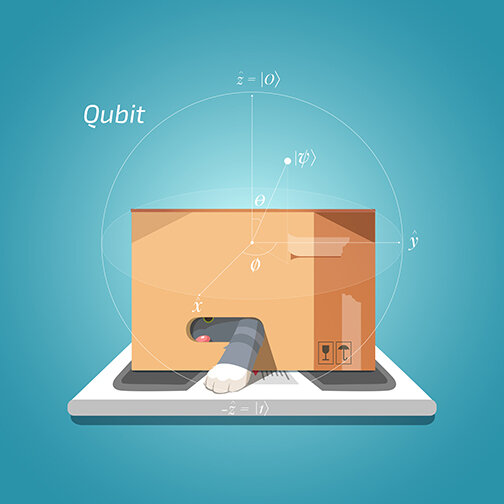
We can describe the state of a qubit, which we call |\[psi\]\rangle (pronounced "ket psi"), with a simple linear equation:
Here, and are probability amplitudes. When we measure the qubit, the probability of it collapsing to is , and the probability of it collapsing to is . Because these are the only two outcomes, the probabilities must add up to one.
Entanglement's Spooky Link
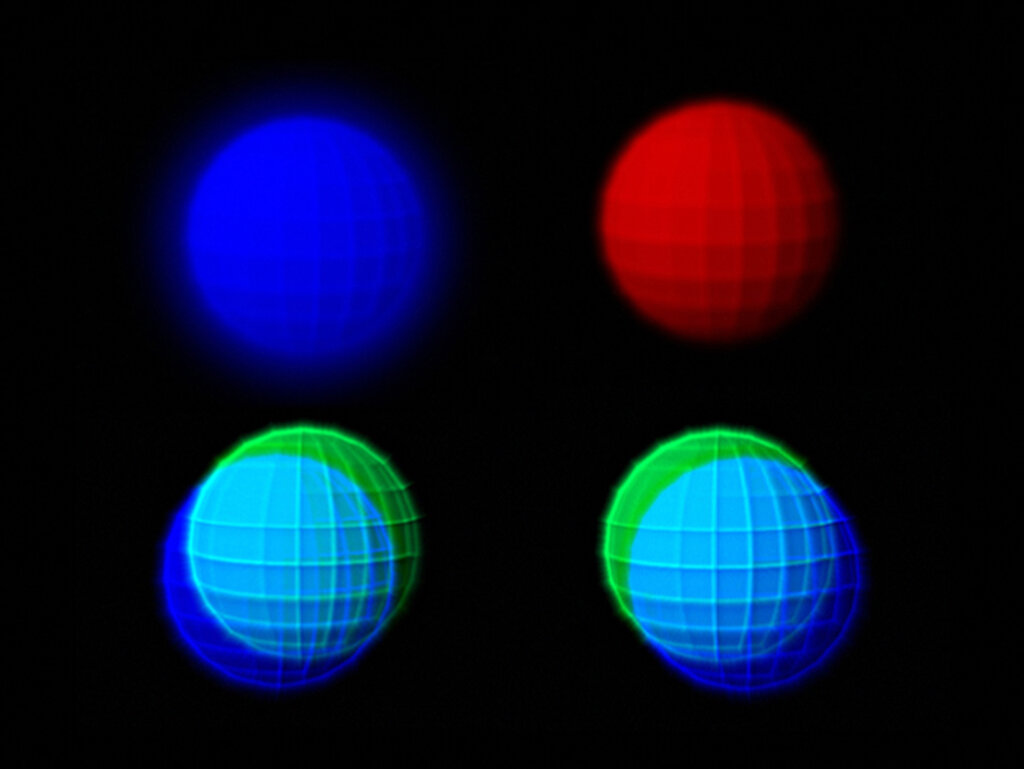
If superposition is strange, entanglement is downright bizarre. It's a special connection that can link two or more qubits together. When qubits are entangled, their fates are intertwined, no matter how far apart they are.
Imagine you have two "magic coins." You know one will land heads and the other tails, but you don't know which is which. You give one to a friend who travels to the other side of the world. The moment you look at your coin and see it's heads, you instantly know your friend's coin is tails. This is the essence of entanglement. Before the measurement, each qubit's state is uncertain. But the moment you measure one, the state of the other is instantly known.
Albert Einstein famously called this phenomenon "spooky action at a distance."
This property doesn't allow for faster-than-light communication, but it is a critical resource in quantum algorithms. It creates complex correlations between qubits that classical computers cannot efficiently simulate, allowing quantum computers to solve problems in a fundamentally new way.
Quantum Gates and Circuits
Just as classical computers use logic gates like AND, OR, and NOT to manipulate bits, quantum computers use quantum gates to manipulate qubits. These gates are the building blocks of quantum algorithms.
Quantum gates are operations that rotate the qubit's state. For example, a common gate is the Hadamard gate, often represented by an H. It takes a qubit that is in a definite state of or and puts it into a perfect superposition, where it has an equal chance of being measured as either 0 or 1.
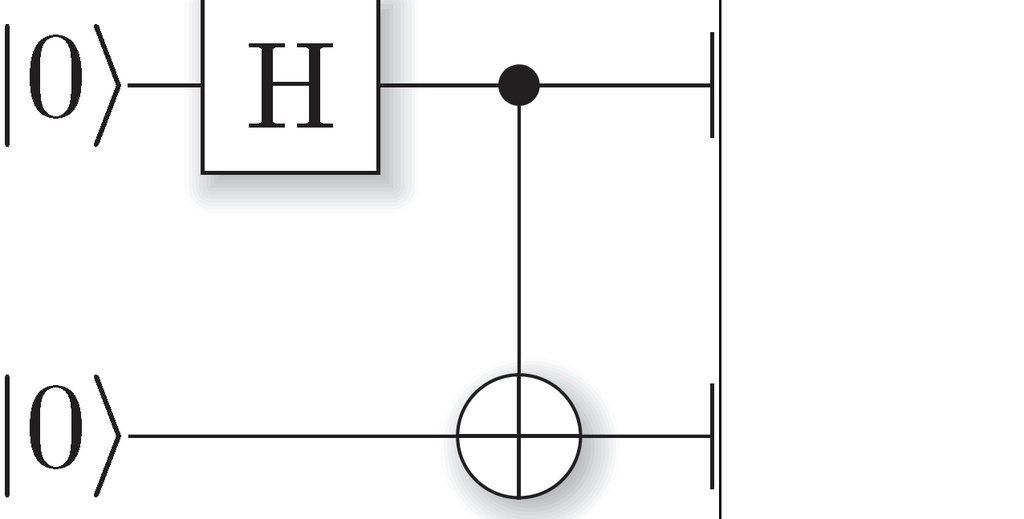
Another crucial gate is the Controlled-NOT (CNOT) gate. It operates on two qubits, a control qubit and a target qubit. If the control qubit is , the CNOT gate flips the state of the target qubit (from to or vice versa). If the control qubit is , it does nothing to the target.
The CNOT gate is essential because it's how we create entanglement between qubits. By stringing together these gates and others, we can build quantum circuits that perform complex calculations.
A quantum circuit is a sequence of quantum gates applied to a set of qubits. The circuit guides the qubits through a series of superpositions and entanglements to arrive at a solution.
These core concepts—qubits, superposition, and entanglement, all manipulated by quantum gates—are the foundation of quantum computing. They allow these machines to tackle problems in fields like materials science, drug discovery, and finance that are far too complex for even the most powerful classical computers.