Quantum-Resistant Cryptography
Introduction to Cryptography
What is Cryptography?
At its heart, cryptography is the art of secret writing. It’s a way to send information so that only the intended recipient can read it. Think of it as a digital lockbox for your messages and data. The goal is to protect information from anyone who isn't supposed to see it.
Cryptography
noun
The practice and study of techniques for secure communication in the presence of third parties called adversaries. It involves creating and analyzing protocols that prevent malicious third parties from reading private messages.
Cryptography is built on a few core principles that work together to create a secure system.
| Principle | Description |
|---|---|
| Confidentiality | Ensures that information is accessible only to those authorized to have access. It's about keeping secrets. |
| Integrity | Guarantees that the information has not been altered in transit. The message you receive is the exact message that was sent. |
| Authentication | Verifies the identity of the sender and receiver. You can be sure you're talking to the right person. |
| Non-repudiation | Prevents the sender of a message from denying that they sent it. It provides proof of origin. |
These principles form the foundation of trust in the digital world, from online shopping to private messaging.
A Quick Trip Through Time
Cryptography isn't new. For thousands of years, people have used codes and ciphers to protect secrets. Early methods were simple but effective for their time. These are often called classical ciphers.
The two main types of classical ciphers are substitution and transposition.
A substitution cipher replaces each letter or symbol with another. One of the most famous examples is the Caesar cipher, supposedly used by Julius Caesar. He would shift each letter of the alphabet by a certain number of places. For example, with a shift of 3, 'A' becomes 'D', 'B' becomes 'E', and so on.
Plaintext: HELLO Ciphertext: KHOOR
A transposition cipher doesn't change the letters themselves, but it scrambles their order. For instance, you could write a message in a grid and then read it out in a different pattern. The letters are the same, but they're all mixed up.
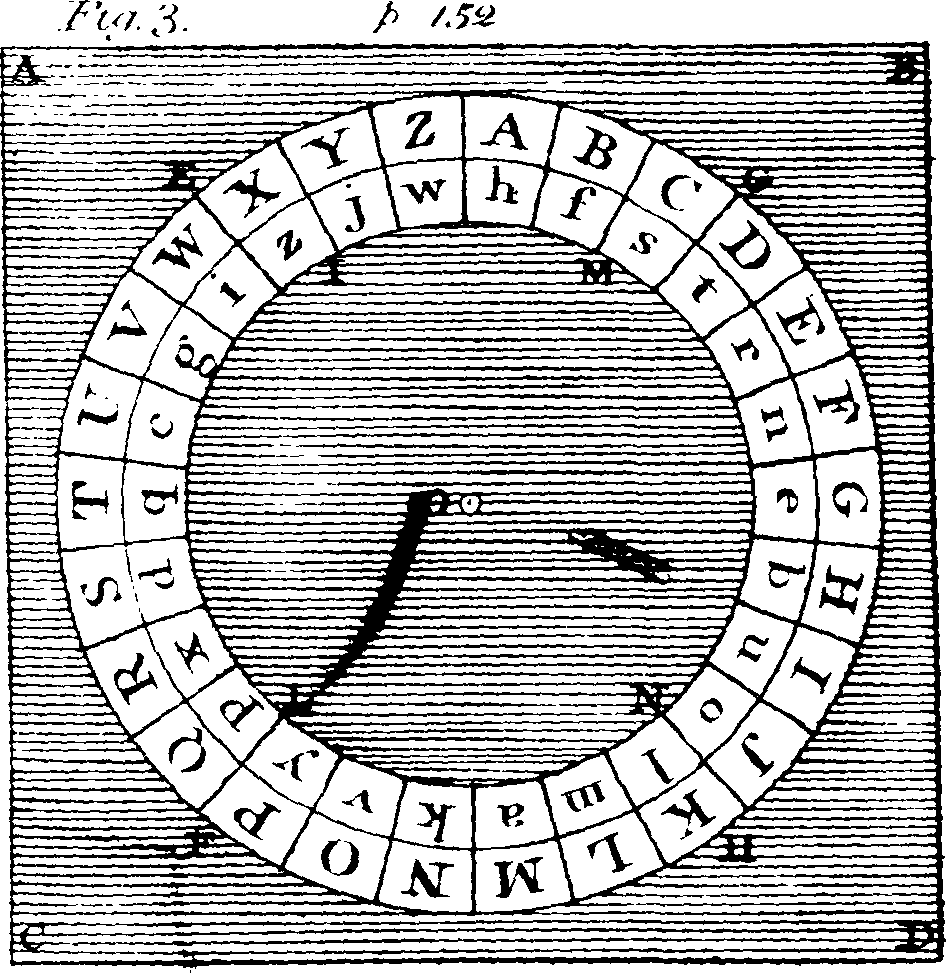
While these methods are easy to break with modern computers, they laid the groundwork for the complex mathematical systems we use today.
Modern Encryption Methods
Today's cryptography relies on computers and complex math, moving far beyond simple letter-swapping. Modern encryption is generally divided into two categories: symmetric and asymmetric.
Symmetric encryption uses a single, shared key to both encrypt and decrypt information. Think of it like a physical key to a house. Anyone who has a copy of the key can lock and unlock the door. For this to work, both the sender and the receiver must have the same secret key.
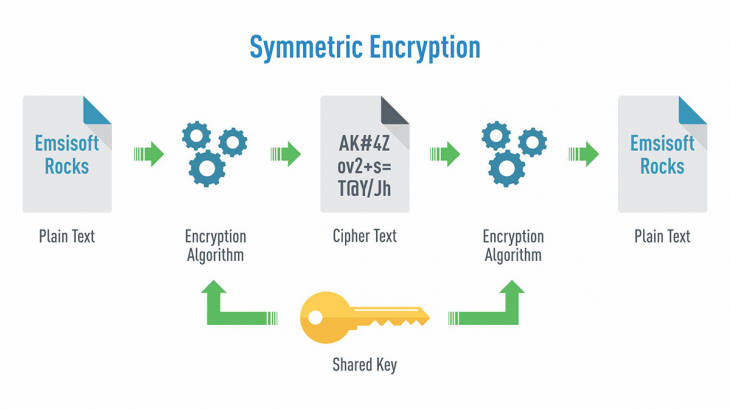
Symmetric encryption is fast and efficient, making it great for encrypting large amounts of data. Ciphers in this category can be either block ciphers, which encrypt data in fixed-size chunks, or stream ciphers, which encrypt data one bit or byte at a time.
The main challenge with symmetric encryption is securely sharing the key. If you need to send the key over an insecure channel, how do you prevent someone from intercepting it? This is where asymmetric encryption comes in.
Asymmetric encryption, also known as public-key cryptography, solves the key-sharing problem by using a pair of keys for each person: a public key and a private key. The two keys are mathematically linked.
Your public key can be shared with anyone. Your private key must be kept secret.
Here's how it works: to send you a secure message, someone uses your public key to encrypt it. Once the message is encrypted with your public key, the only thing that can decrypt it is your corresponding private key. It's like having a mailbox with a slot. Anyone can drop a letter in (using the public key), but only you have the key to open the mailbox and read the letters (the private key).
This method is slower than symmetric encryption but elegantly handles key exchange. In practice, many systems like HTTPS (the lock icon in your browser) use a hybrid approach. They use asymmetric encryption to securely share a temporary symmetric key, and then use that fast symmetric key to encrypt the rest of the communication.
Ready to check your understanding of these core concepts?
What is the primary goal of cryptography?
Using a Caesar cipher with a shift of 4, what is the ciphertext for the plaintext "SECRET"?
Understanding these fundamental building blocks is the first step into the fascinating world of modern cryptography and digital security.