Quantum Physics Fundamentals
Introduction to Quantum Physics
A Whole New Set of Rules
For centuries, classical physics seemed to have all the answers. With a few elegant laws, like those from Isaac Newton, we could predict the path of a cannonball or the orbit of a planet. It was a clockwork universe, orderly and predictable. If you knew where something was and how fast it was moving, you could, in principle, know its entire future and past.
But as the 19th century turned into the 20th, strange cracks appeared in this perfect picture. Scientists began to explore the world of the very small—the realm of atoms and the particles within them. Here, the familiar rules didn't just bend; they shattered.
One major puzzle was the light given off by hot objects, known as black-body radiation. Classical theories predicted that these objects should release an infinite amount of energy at high frequencies, an outcome so wrong it was nicknamed the "ultraviolet catastrophe." Another problem was the atom itself. According to classical physics, an electron orbiting a nucleus should spiral inward, causing the atom to collapse in a fraction of a second. Yet, atoms are stable.
It became clear that a new kind of physics was needed to describe this strange, subatomic world. This new framework became known as quantum mechanics.
Energy Comes in Packets
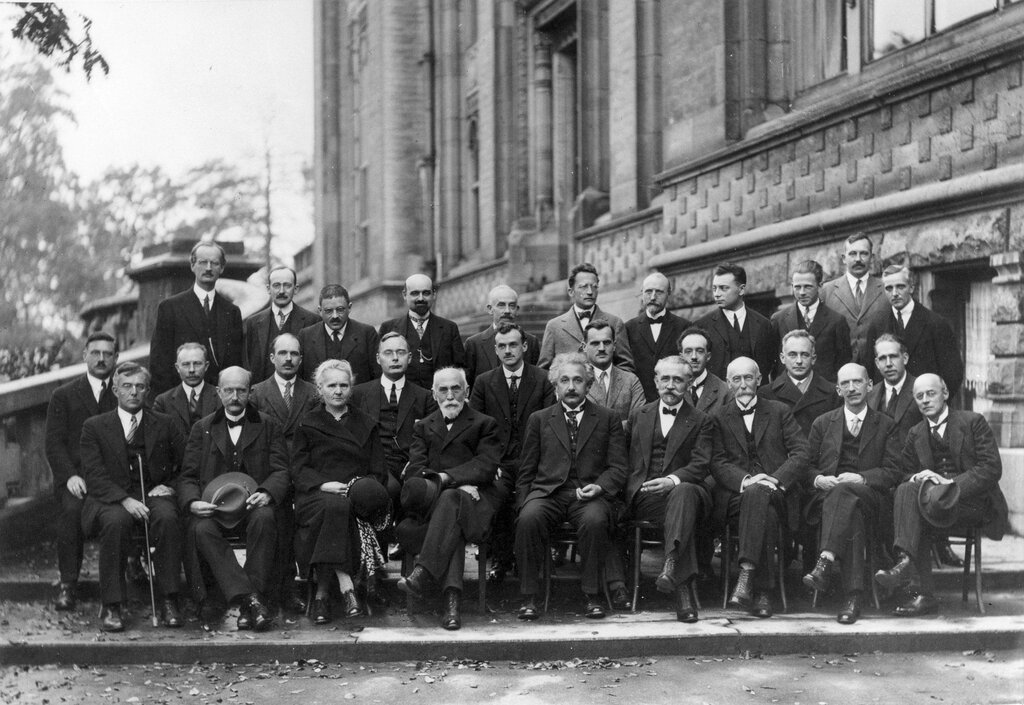
The first major breakthrough came in 1900 from physicist Max Planck. To solve the black-body problem, he made a radical suggestion: what if energy isn't continuous? What if, instead, it comes in discrete, bite-sized chunks? He called these chunks "quanta."
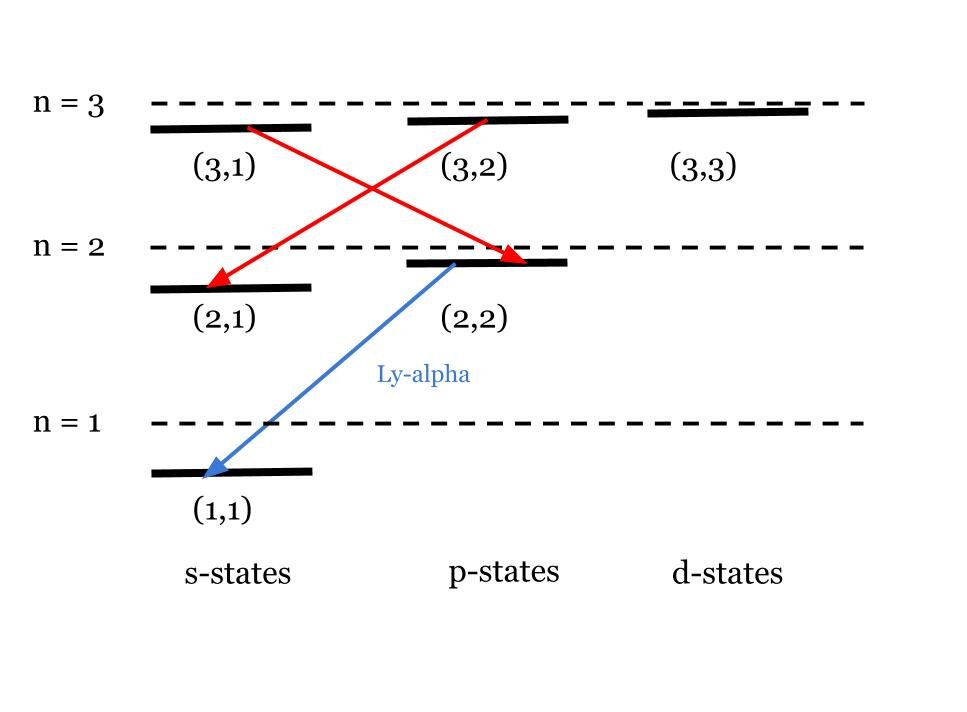
Think of it like the difference between a ramp and a staircase. In classical physics, an object can have any amount of energy, like moving smoothly up a ramp. In quantum mechanics, energy is like a staircase—you can be on one step or the next, but never in between. Energy is quantized.
quantum
noun
The minimum amount of any physical entity (physical property) involved in an interaction.
A few years later, Albert Einstein took this idea a step further. He proposed that light itself is made of these energy packets, which we now call photons. This perfectly explained the photoelectric effect, where light shining on a metal can knock electrons loose. Only light with photons of a certain minimum energy could do the job, no matter how bright the light was. It was another win for the idea of quantization.
The Wave-Particle Puzzle
For a long time, physicists had debated whether light was a wave or a stream of particles. Evidence pointed in both directions. It spreads out and interferes like a wave, but it also hits a target in discrete packets (photons) like a particle.
In 1924, a young physicist named Louis de Broglie proposed an even bolder idea: what if this dual nature applied to everything? What if matter, like electrons, also behaved like waves? This concept is now known as wave-particle duality.
Everything, from a tiny electron to a thrown baseball, has both particle-like and wave-like properties. You just don't notice the wavelike nature of a baseball because its wavelength is incredibly small.
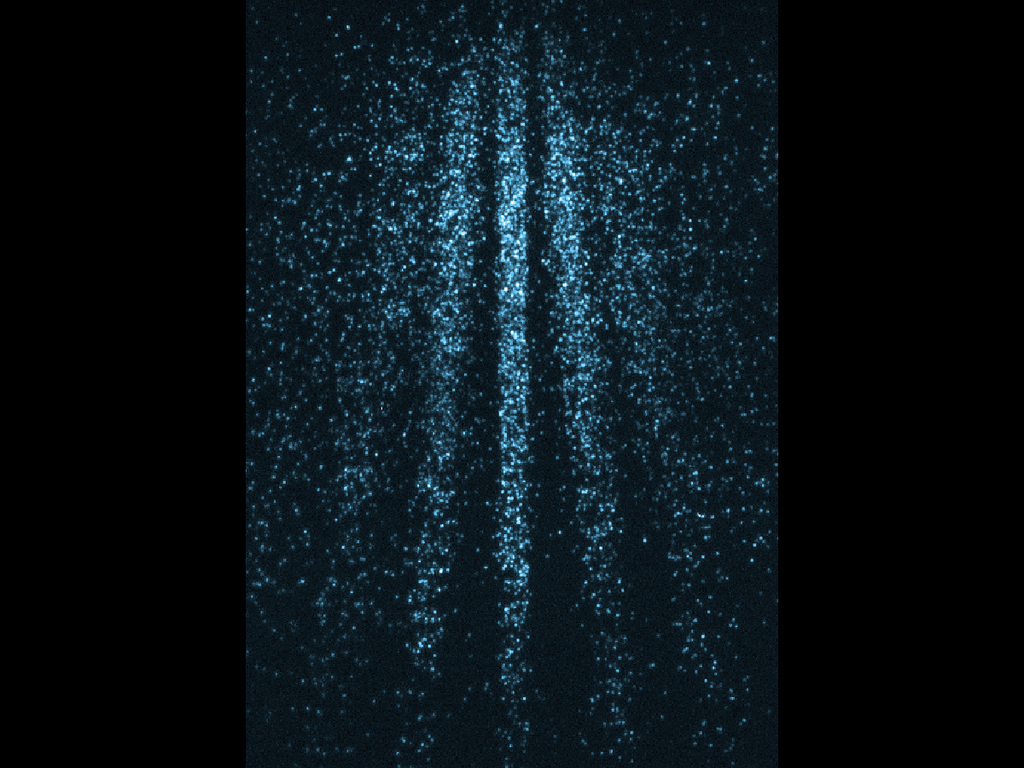
Experiments soon proved de Broglie right. When a beam of electrons was fired through two narrow slits, they created an interference pattern on a screen behind them—a hallmark of wave behavior. It was as if each single electron passed through both slits at once, interfering with itself. The subatomic world was getting stranger.
The Limit of Knowing
This wave nature of particles leads to one of the most famous and profound ideas in quantum mechanics: the Heisenberg Uncertainty Principle.
Werner Heisenberg realized that there's a fundamental limit to how precisely we can know certain pairs of properties of a particle at the same time. The most famous pair is position and momentum (which is mass times velocity). The more precisely you measure a particle's position, the less precisely you can know its momentum, and vice versa.
This isn't a limitation of our measuring instruments. It's a fundamental property of nature. The very act of observing a quantum system changes it.
Imagine trying to find the position of an electron. To "see" it, you have to bounce something off it, like a photon of light. But this act of measurement gives the electron a kick, changing its momentum in an unpredictable way. The uncertainty isn't just about our ignorance; it's built into the fabric of reality. At the quantum level, particles don't have definite properties until we measure them. Instead, they exist in a cloud of probabilities.
What major problem with the classical model of the atom led physicists to develop quantum mechanics?
Max Planck's groundbreaking idea to solve the black-body radiation problem was that energy is ________.
These concepts—quantization, wave-particle duality, and uncertainty—form the bedrock of quantum mechanics. They paint a picture of the universe that is fundamentally probabilistic, not deterministic, challenging our everyday intuition about how the world works.