Quantum Physics Essentials
Introduction to Quantum Mechanics
The Old Physics Hits a Wall
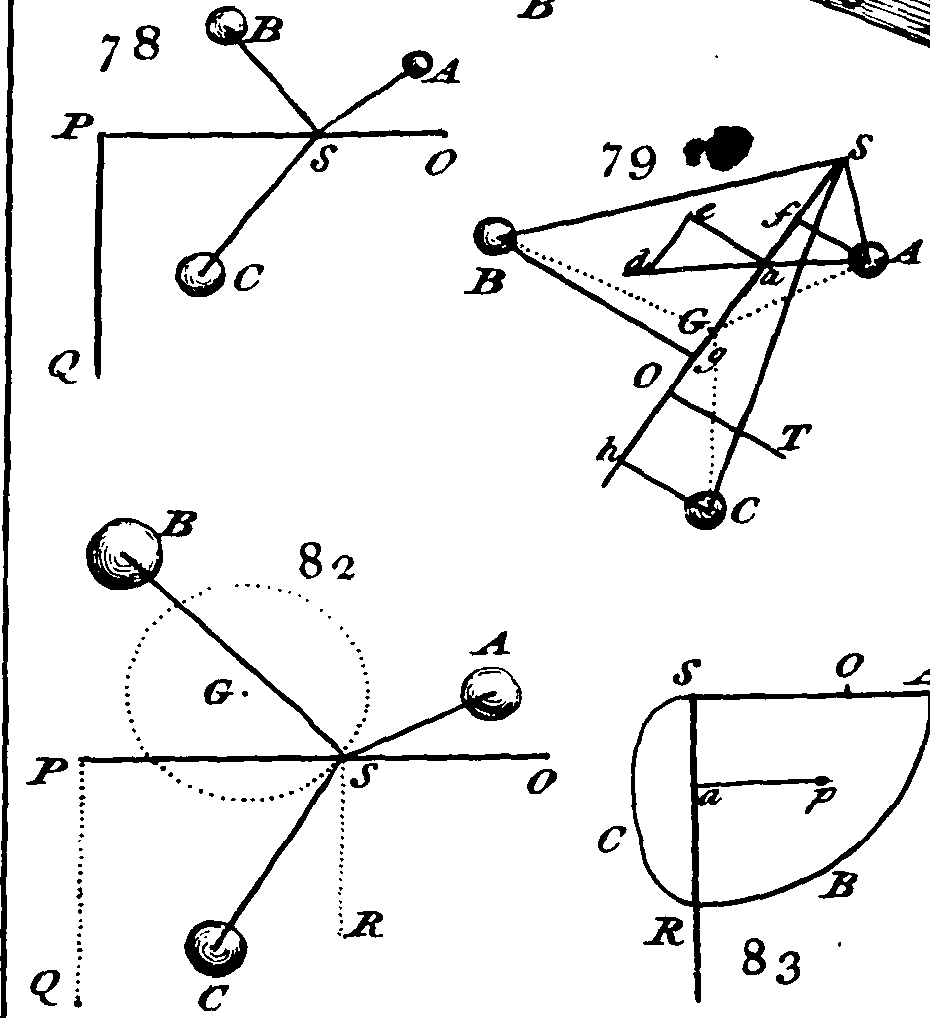
For centuries, the rules of physics seemed straightforward. Classical mechanics, pioneered by Isaac Newton, could predict the motion of everything from a thrown ball to the planets orbiting the sun. This was a clockwork universe, deterministic and predictable. If you knew the starting conditions, you could calculate the future with perfect accuracy.
But as the 19th century ended, cracks began to show. Scientists started exploring the world of the very small—atoms and the particles within them—and the familiar rules stopped working. Several nagging problems emerged that classical physics just couldn't solve.
One was the "black-body radiation" problem. A black body is an idealized object that absorbs all radiation that hits it. When heated, it should glow. Classical theories predicted that as it got hotter, it should emit an infinite amount of energy at high frequencies, like ultraviolet light. This was clearly wrong and became known as the "ultraviolet catastrophe." Another puzzle was the photoelectric effect, where light hitting a metal surface could knock electrons loose. But weirdly, the energy of the ejected electrons depended on the light's color (its frequency), not its brightness (its intensity).
Everything is Lumpy
In 1900, German physicist Max Planck took a radical step to solve the black-body problem. He proposed that energy wasn't a continuous flow, like water from a tap. Instead, it could only be emitted or absorbed in discrete, bite-sized packets, which he called "quanta." It was a desperate guess, but it worked perfectly.
Think of it like a staircase versus a ramp. On a ramp, you can be at any height. On a staircase, you can only be on one step or another, never in between. Planck suggested energy was like a staircase.
quantum
noun
The minimum amount of any physical entity, such as energy or matter, involved in an interaction.
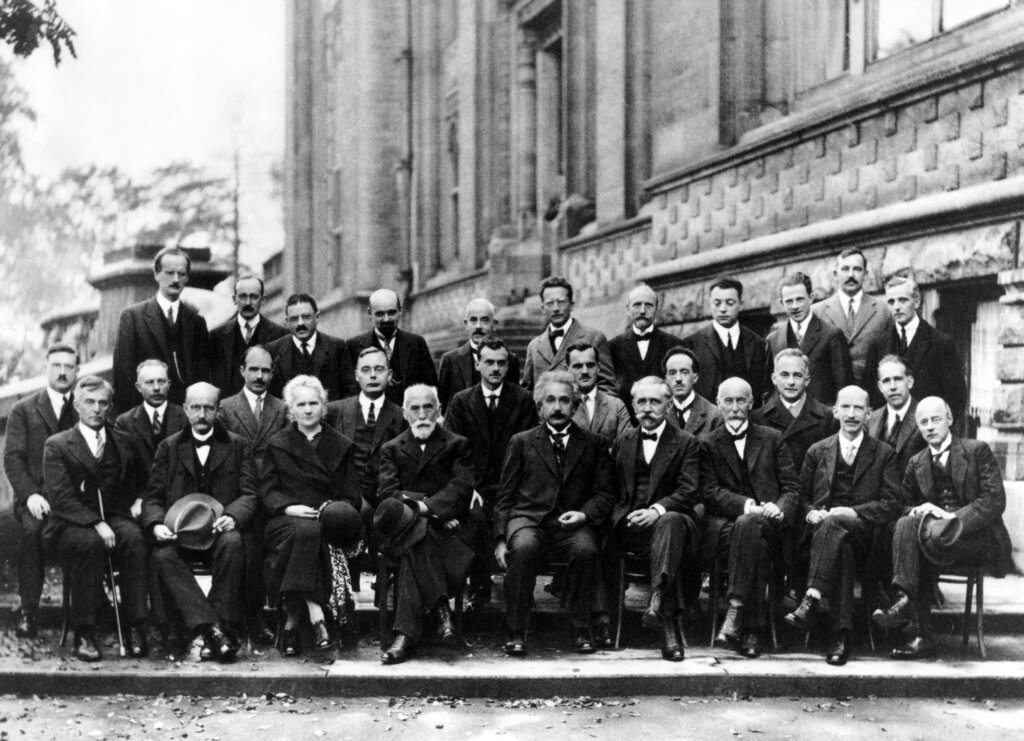
This idea of quantization—that things come in lumps—is the central pillar of quantum mechanics. It marked the birth of a new kind of physics. A few years later, Albert Einstein applied this idea to the photoelectric effect, suggesting that light itself is made of these energy packets, later named photons. This explained why the light's color, not its brightness, determined the energy of the freed electrons. A single blue-light photon had more energy than a red-light photon, and it was a one-to-one interaction.
Embracing Uncertainty
The weirdness didn't stop with lumpy energy. The new quantum theory also threw out the certainty of classical mechanics. In the quantum world, you can't predict exactly what will happen. You can only calculate the odds.
Instead of definite positions and velocities, quantum mechanics uses a mathematical tool called a probability amplitude. This is a complex number that describes the likelihood of a particle being in a certain state. To get the actual probability, you take the square of the magnitude of this amplitude.
Here, is the probability, and (the Greek letter psi) represents the probability amplitude. This means that for any quantum event, there's a range of possible outcomes, each with a specific probability of happening. The universe, at its most fundamental level, seems to play dice.
This leads to one of the most mind-bending aspects of quantum theory: the role of the observer. Before a measurement is made, a particle can be described as a combination of all its possible outcomes. The act of measuring forces the system to "choose" one of these outcomes. The observer isn't a passive bystander; their interaction is part of the system and fundamentally alters the result. It's not that we don't know the particle's state before we look—it's that the state itself is indefinite until the moment of measurement.
In the quantum realm, the act of observation isn't just about seeing what's there; it's an integral part of what becomes real.
These initial ideas—quantization, probability, and the observer effect—shattered the classical view of a predictable, clockwork universe. They laid the foundation for a new, strange, and incredibly powerful understanding of reality.
Let's check your understanding of these foundational ideas.
What problem in classical physics, known as the "ultraviolet catastrophe", predicted that a heated ideal object would emit infinite energy at high frequencies?
To solve the black-body radiation problem, Max Planck proposed that energy is not continuous, but is instead emitted or absorbed in discrete packets. What are these packets called?
Quantum mechanics forced a complete rethinking of physics. While it can seem counterintuitive, its principles have been confirmed by countless experiments and form the basis of modern technologies like lasers and computers.