Quantum Physics and Reiki Contrasted
Introduction to Quantum Physics
A World of Packets and Waves
At our scale, the world seems smooth and continuous. You can pour a continuous stream of water or slide your hand smoothly across a table. But when you zoom way, way down to the level of atoms and the particles inside them, things get strange. The rules of everyday physics break down, and a new set, called quantum mechanics, takes over. The most fundamental difference is that in the quantum world, many things aren't continuous at all. They come in tiny, distinct packets.
This idea of discrete packets is called quantization, and it's the core concept behind the name 'quantum' physics.
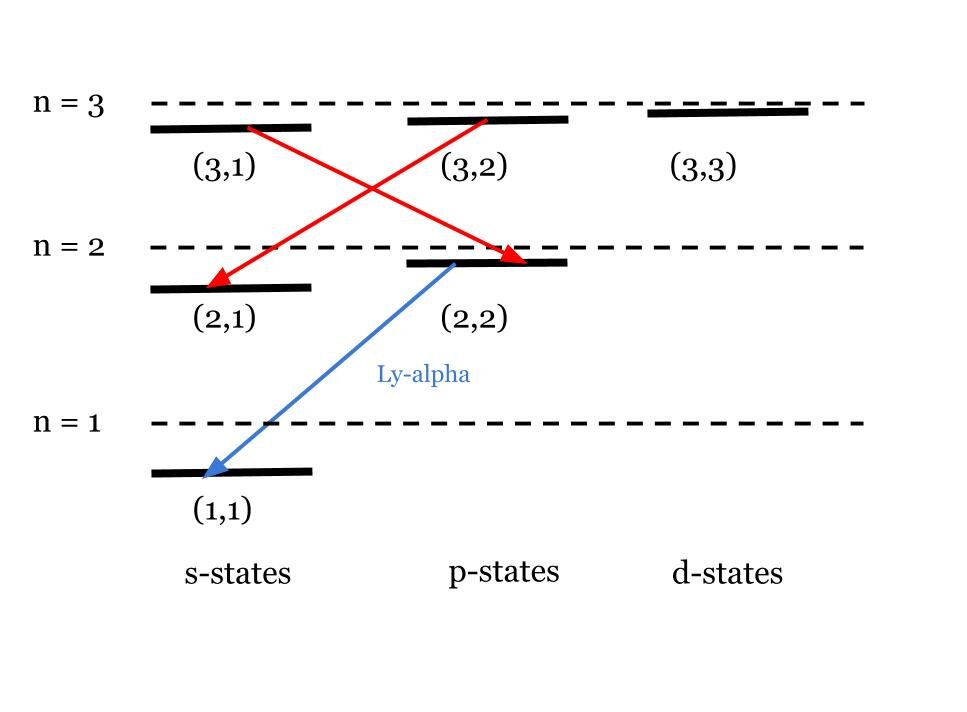
Imagine a ramp versus a staircase. On a ramp, you can stand at any possible height. Your elevation is continuous. A staircase is different. You can only stand on the first step, the second step, or the third. You can't hover in between steps. Your elevation is quantized, limited to specific values.
At the turn of the 20th century, physicists were stumped by a problem involving how hot objects radiate heat and light. Their existing theories predicted that these objects should release an infinite amount of energy, which was obviously wrong. It was a physicist named Max Planck who solved the puzzle in 1900. He proposed a radical idea: energy, like the steps on a staircase, could only be emitted or absorbed in specific, discrete amounts. He called these packets of energy 'quanta'.
quantum
noun
The minimum amount of any physical entity, like energy or matter, involved in an interaction.
Planck's idea was revolutionary and marked the birth of quantum mechanics. It explained that electrons in an atom can't just orbit the nucleus at any distance they want. They are restricted to specific energy levels, much like the steps on a staircase. To jump from a lower level to a higher one, an electron must absorb the exact right amount of energy. To fall to a lower level, it must release a specific packet of energy, often as light.
The Double Life of Particles
Another strange quantum rule is that the line between particles and waves gets incredibly blurry. For centuries, scientists argued about the nature of light. Some thought it was a stream of particles, while others were convinced it was a wave. Experiments seemed to support both sides.
The famous double-slit experiment showed that when you shine a beam of light through two tiny slits, it creates an interference pattern on a screen behind it, a pattern of bright and dark bands. This is classic wave behavior, like ripples in a pond interfering with each other.
But then, in 1905, Albert Einstein explained a phenomenon called the photoelectric effect, where light hitting a metal surface could knock electrons loose. This only worked if light was acting as a particle, a little packet of energy he called a photon. So, which is it? Is light a wave or a particle?
Quantum mechanics answers: it’s both. This is called wave-particle duality.
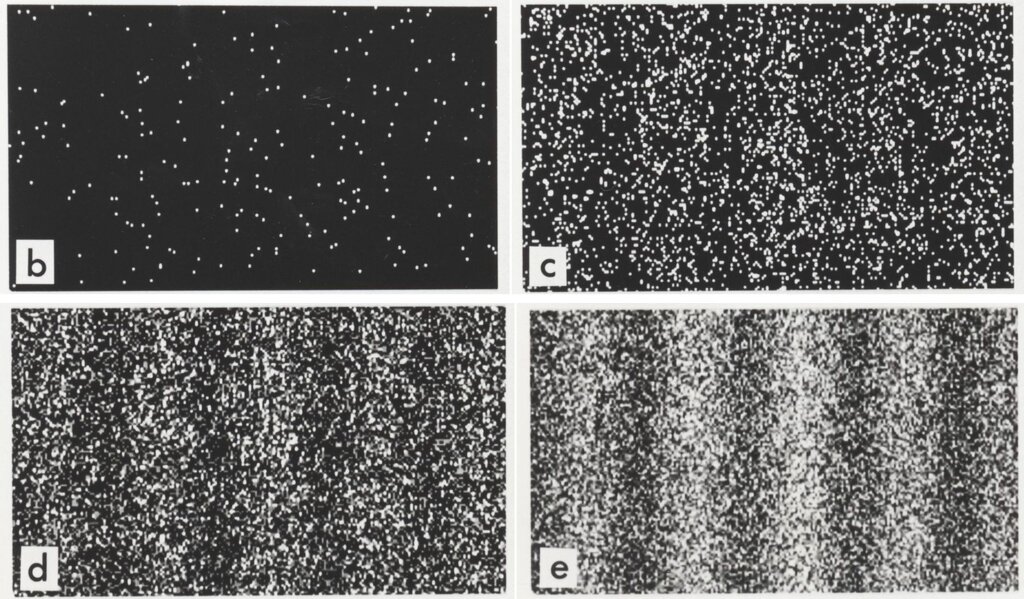
The weirdness doesn't stop with light. In the 1920s, a physicist named Louis de Broglie proposed that if waves could act like particles, maybe particles could act like waves. He suggested that all matter, including tiny particles like electrons, has a wave-like nature. This bizarre idea was later proven by experiments that showed beams of electrons could create interference patterns, just like light waves.
This duality is a cornerstone of quantum physics. At the subatomic level, entities don't behave strictly as particles or as waves; they exhibit properties of both, depending on how you measure them.
A New Physics is Born
The development of quantum mechanics was a collaborative effort by some of the greatest minds in science. After Planck's initial breakthrough, the field exploded with new ideas.
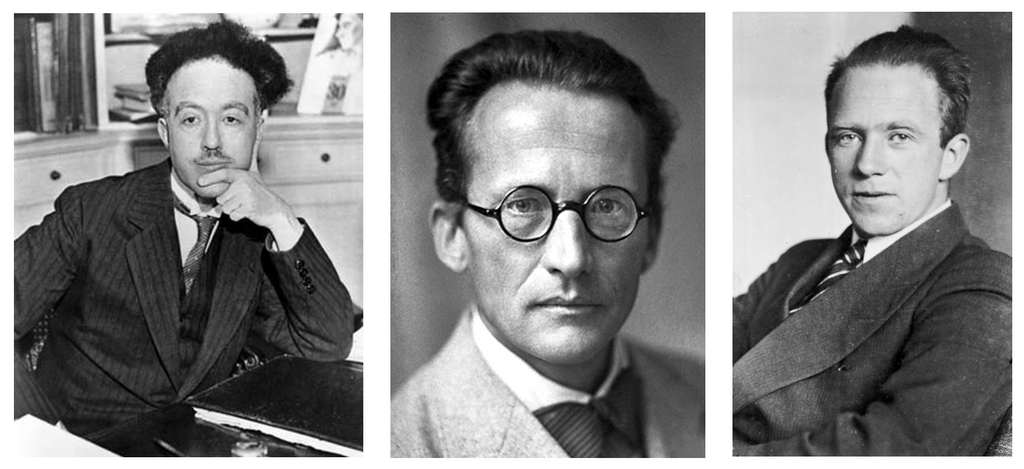
Niels Bohr applied the concept of quantization to the structure of the atom in 1913, creating a model that put electrons into specific energy orbits. Albert Einstein's work on the photoelectric effect solidified the particle nature of light. Louis de Broglie introduced the idea of matter waves.
By the mid-1920s, physicists like Werner Heisenberg and Erwin Schrödinger developed the complex mathematical frameworks that form the foundation of modern quantum mechanics. They created equations that described the behavior of these quantum systems, not with certainty, but in terms of probabilities. This new physics was a radical departure from the clockwork, predictable universe described by Isaac Newton.
These early discoveries shattered classical physics and provided a new, strange, but incredibly accurate way to understand the universe at its most fundamental level.
Which analogy best describes the concept of "quantization" in quantum mechanics?
What problem led Max Planck to propose that energy is emitted in discrete packets called 'quanta'?