Quantum Numbers Explained
Atomic Structure
The Building Blocks of Matter
Everything around you is made of atoms. From the air you breathe to the chair you're sitting on, it's all atoms. But what are atoms made of? At their core, atoms consist of three tiny particles: protons, neutrons, and electrons.
At the center of every atom is a dense core called the nucleus. The nucleus contains the protons, which have a positive electrical charge, and the neutrons, which have no charge at all. Swirling around the nucleus are the electrons, which carry a negative charge. The attraction between the positive protons and negative electrons is what holds the atom together.
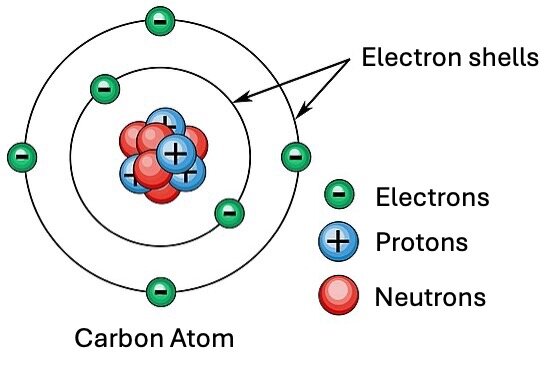
The number of protons determines what element an atom is. An atom with one proton is always hydrogen. An atom with six protons is always carbon. The number of neutrons can vary, creating different versions of an element called isotopes. In a neutral atom, the number of electrons is equal to the number of protons, balancing the overall charge.
| Particle | Charge | Location |
|---|---|---|
| Proton | Positive (+) | Nucleus |
| Neutron | Neutral (0) | Nucleus |
| Electron | Negative (-) | Outside Nucleus |
Where Electrons Live
Electrons don't just float randomly around the nucleus. They are organized into specific energy levels called electron shells. You can think of these shells like layers of an onion or planets orbiting a star. Each shell can only hold a certain number of electrons.
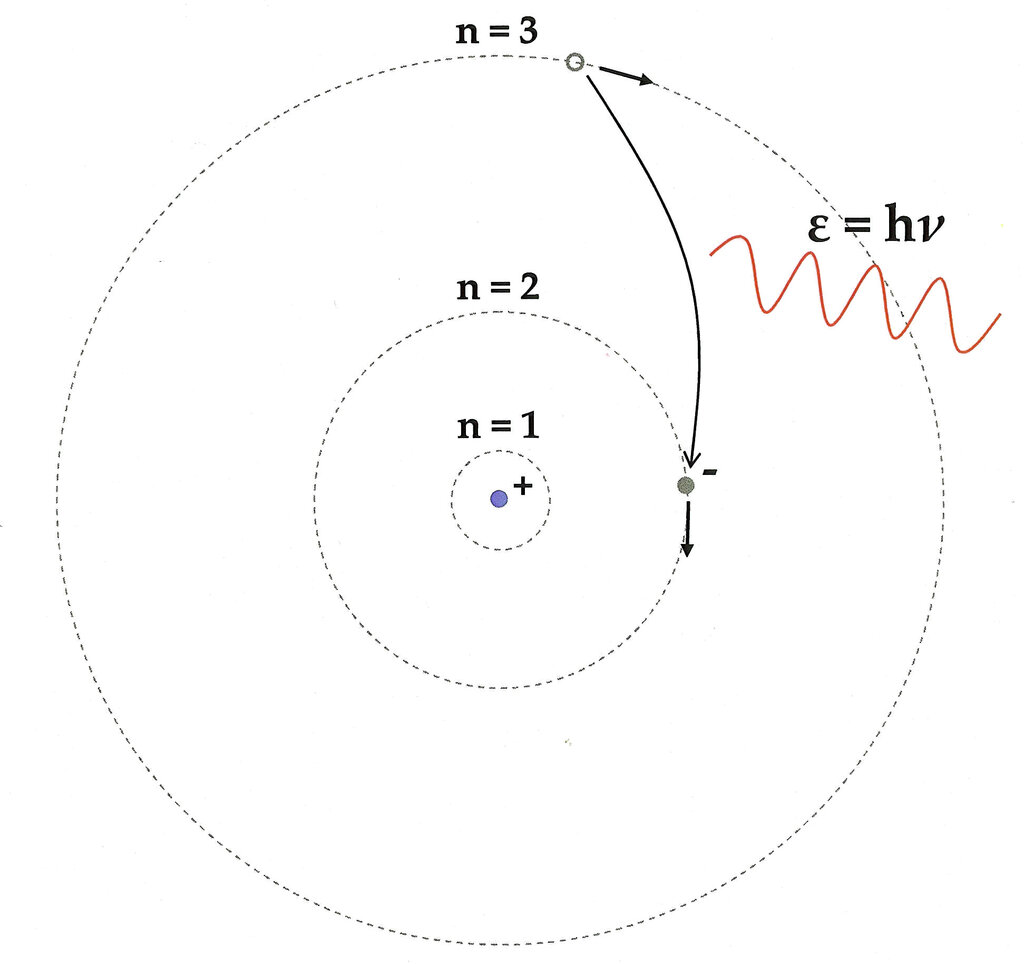
Shells closer to the nucleus have lower energy and are filled first. The first shell, closest to the center, can hold a maximum of 2 electrons. The second shell can hold up to 8, the third can hold up to 18, and so on. The further a shell is from the nucleus, the higher its energy level.
Subdividing the Shells
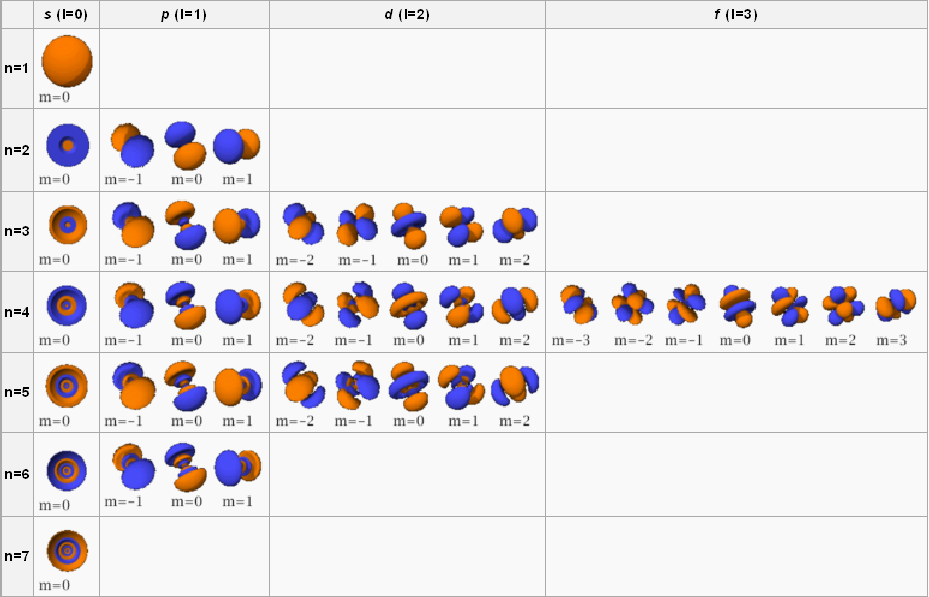
To get a more detailed picture, we need to look inside the shells. Each electron shell (except the very first one) is made up of one or more subshells. These are designated by the letters s, p, d, and f. Each type of subshell has a unique shape and can hold a specific number of electrons.
An s subshell can hold 2 electrons. A p subshell can hold 6 electrons. A d subshell can hold 10 electrons. An f subshell can hold 14 electrons.
The energy levels of the subshells increase in the order s < p < d < f. So, within any given shell, electrons in the s subshell have the lowest energy, and those in the f subshell have the highest. The first shell only has an s subshell. The second shell has s and p subshells. The third shell has s, p, and d subshells, and so on.
The Shapes of Orbitals
Finally, we arrive at orbitals. An orbital is a specific region within a subshell where an electron is most likely to be found. It's not a fixed path, but rather a three-dimensional area of probability. Each orbital can hold a maximum of two electrons.
Since an s subshell holds 2 electrons, it contains just one spherical orbital. A p subshell holds 6 electrons, so it's made of three dumbbell-shaped orbitals, each oriented along a different axis (x, y, and z). The d and f subshells have more orbitals with even more complex shapes.
Understanding these energy levels, shells, subshells, and orbital shapes is the foundation for figuring out how atoms interact. It dictates how they bond with other atoms to form the molecules that make up the world.