Quantum Mechanics Fundamentals
Introduction to Quantum Mechanics
When the Old Rules Break
For centuries, classical physics seemed to have all the answers. With Newton's laws, we could predict the path of a planet or the arc of a cannonball. These rules worked beautifully for the big, visible world. But as scientists in the late 19th century started looking at the very small, things got strange. The old rules just didn't fit.
One major puzzle was something called "black-body radiation." Imagine a perfect oven that absorbs all light. When you heat it, it glows. Classical physics predicted that as it got hotter, it should emit an infinite amount of high-frequency light, like ultraviolet rays. This was a disaster, because it's obviously not what happens. The theory was brilliant for large objects, but it broke down completely at the atomic scale.
The failure of classical physics to explain observations at the atomic level created a crisis that paved the way for a new, revolutionary theory.
In 1900, physicist Max Planck proposed a radical idea. He suggested that energy wasn't a continuous flow, like water from a tap. Instead, he argued, it could only be emitted or absorbed in tiny, discrete packets. He called these packets "quanta."
quantum
noun
The minimum amount of any physical entity (physical property) involved in an interaction.
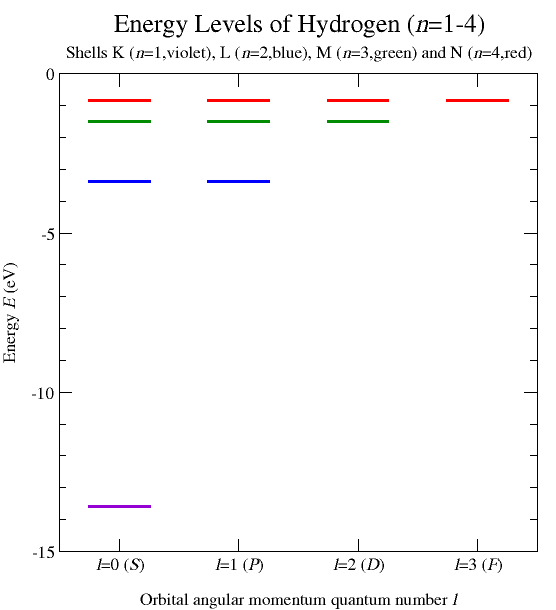
This idea of quantization was the birth of quantum mechanics. Think of it like a staircase versus a ramp. On a ramp, you can be at any height. On a staircase, you can only be on specific steps. Planck was saying that energy in the universe is like a staircase; it exists in discrete levels.
Describing the Quantum World
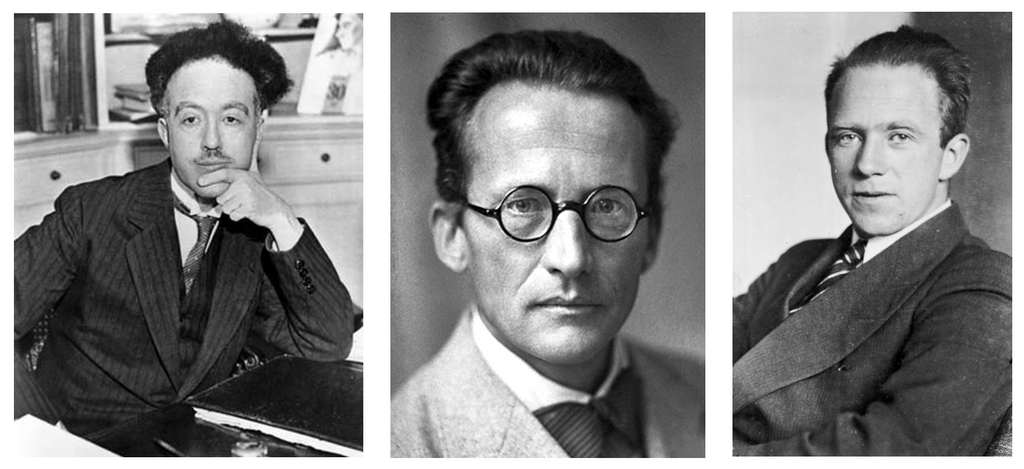
If energy is quantized, how do we describe the particles themselves? In the 1920s, physicist Erwin Schrödinger developed a groundbreaking equation. Its solution is an object called the wave function, often represented by the Greek letter psi ().
The wave function contains all the information we can possibly know about a quantum system, like an electron in an atom. But it's not a simple description of where the particle is. Instead, it describes all the places the particle could be.
This leads to one of the most profound and unsettling ideas in all of science. Quantum mechanics doesn't deal in certainties; it deals in probabilities. Physicist Max Born realized that if you take the wave function and square its magnitude, you get the probability of finding the particle at a specific location.
This means that before we measure it, a quantum particle doesn't have a definite position. It exists in a haze of possibilities, described by its wave function. The act of measuring forces the particle to "choose" a location, and the probability of it choosing any given spot is determined by the wave function.
This probabilistic nature is a core feature of the quantum world. Unlike a thrown baseball, where we can know its exact path, we can only know the likelihood of an electron's behavior. This shift from certainty to probability is one of the biggest leaps in the history of physics.
What major problem in classical physics led to the development of quantum mechanics?
Max Planck's revolutionary idea was that energy is not continuous, but is instead emitted and absorbed in discrete packets. He called these packets: