Quantum Mechanics Fundamentals
Introduction to Quantum Mechanics
A Different Kind of Universe
For centuries, the laws of classical physics, laid down by giants like Isaac Newton, seemed to explain everything. From the orbit of a planet to the trajectory of a cannonball, these rules worked flawlessly for the big, visible world around us. They painted a picture of a predictable, clockwork universe where if you knew the starting conditions, you could calculate the future with perfect certainty.
But as scientists in the late 19th and early 20th centuries began to probe the world of the very small—the realm of atoms and the particles within them—they found that the old rules no longer applied. Classical physics predicted things that simply didn't match reality at this tiny scale. It was like trying to use a map of a city to navigate the rooms of a house. A new map was needed.
Energy in Packets
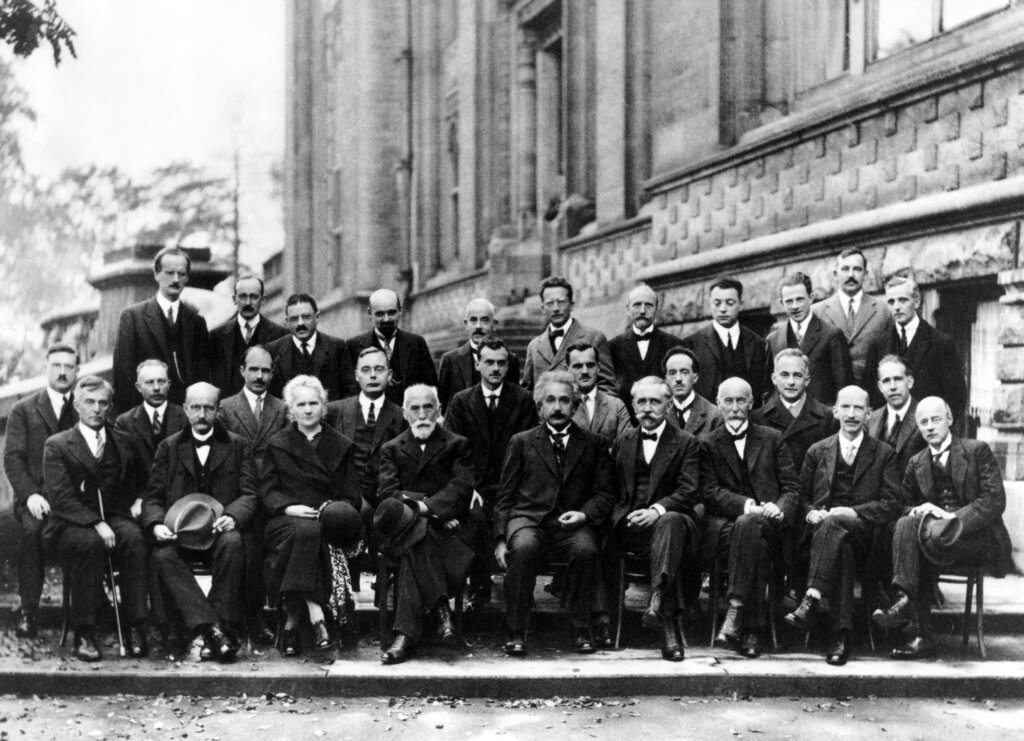
One of the first major cracks in classical physics appeared when trying to explain the light given off by hot objects. The old theories predicted a bizarre outcome called the "ultraviolet catastrophe," suggesting that such objects should release an infinite amount of energy, which they obviously don't. In 1900, physicist Max Planck proposed a radical solution. He suggested that energy wasn't a continuous flow, like water from a tap. Instead, it came in tiny, discrete packets he called "quanta."
Quantum
noun
The minimum amount of any physical entity, like energy or matter, involved in an interaction.
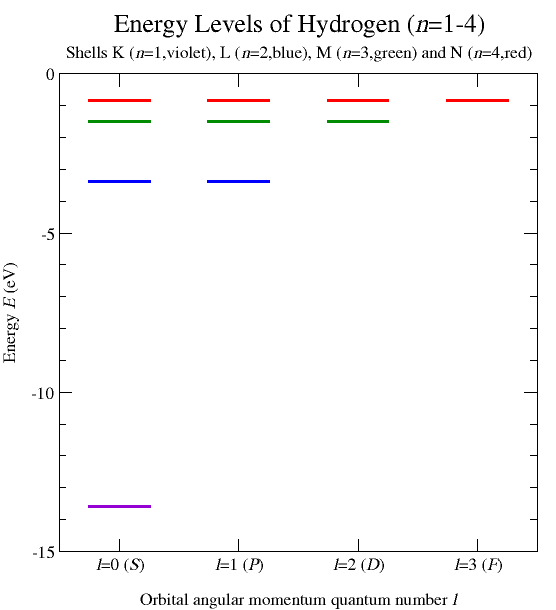
This idea of quantization is a cornerstone of quantum mechanics. Think of it like the difference between a ramp and a staircase. In the classical view, an object could have any amount of energy, just as you can stand anywhere on a ramp. In the quantum view, energy is like a staircase. You can stand on the first step or the second step, but you can never be in between steps. For an electron in an atom, this means it can only exist at specific, quantized energy levels.
A Game of Chance
Another strange departure from the classical world is how we describe a particle's location. We can't say an electron is right here at a specific point in space. Instead, quantum mechanics gives us a mathematical tool called a wave function to describe the particle.
Wave Function
noun
A mathematical description of the quantum state of a system. The square of its magnitude represents the probability of finding a particle at a particular location.
The wave function doesn't give us a definite position. It gives us probabilities. It might tell us there's a 40% chance of finding the electron here, a 10% chance of finding it over there, and a tiny chance of finding it much farther away. The particle exists in a cloud of possibilities.
This leads to one of the most puzzling aspects of quantum theory: the role of the observer. As long as the particle is unobserved, it exists in this state of probability. But the moment we make a measurement—the moment we look to see where it is—the cloud of possibilities collapses, and the particle appears in one single, definite location. The very act of looking changes the outcome. It's as if the universe doesn't decide where something is until we force its hand by measuring it.
In the quantum world, observation is not a passive act. Measuring a system fundamentally alters it.
Let's check your understanding of these foundational ideas.
At what scale did the laws of classical physics begin to fail, leading to the development of quantum mechanics?
The "ultraviolet catastrophe" was a prediction from classical physics that failed to match reality. What did it incorrectly predict?
These concepts—quantization, probability, and the observer effect—form the bedrock of quantum mechanics. They challenge our everyday intuition but provide an incredibly accurate description of the universe at its most fundamental level.