Quantum Mechanics Fundamentals
Introduction to Quantum Mechanics
A Crack in the Foundation
For centuries, classical physics seemed to have it all figured out. Using the laws laid down by Isaac Newton, scientists could predict the path of a planet, the arc of a cannonball, and the ripple of a wave. These rules were elegant, deterministic, and worked beautifully for the large-scale world we see every day. Everything had a definite position and a definite path.
But as the 19th century gave way to the 20th, strange new experimental results started to appear. Physicists studying heat and light found that classical theories couldn't explain their observations. One famous puzzle was the “black-body radiation” problem. When an object is heated, it glows, emitting light. Classical physics predicted that these objects should radiate an infinite amount of energy at high frequencies, which made no sense. The theory was breaking down.
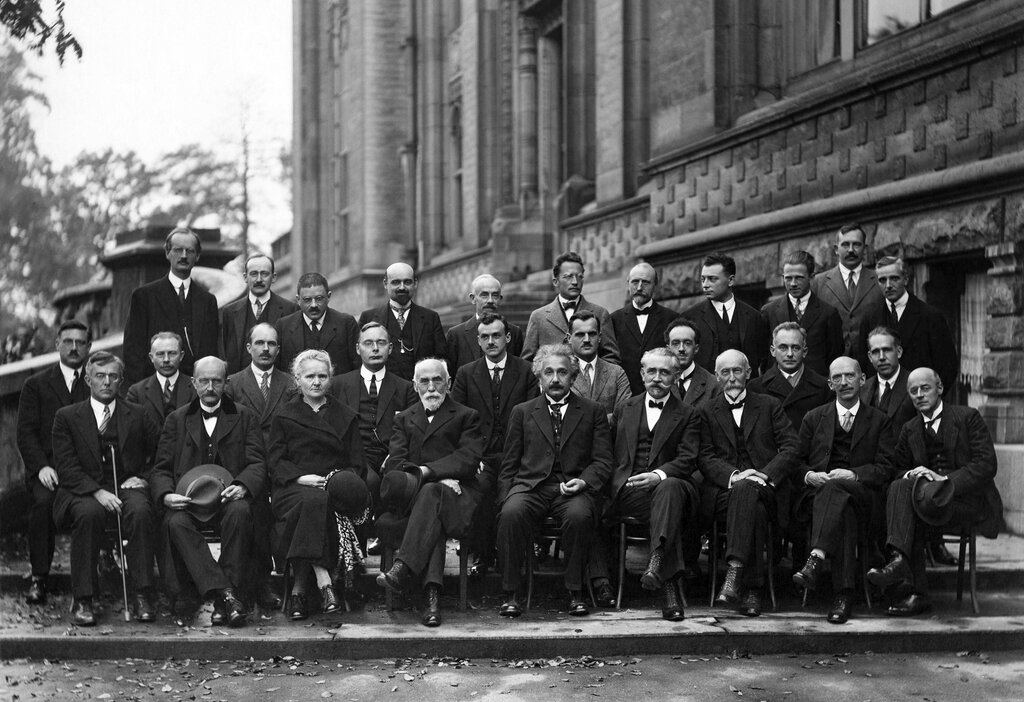
These cracks in the foundation of physics suggested that the rules governing the tiny world of atoms and particles were fundamentally different from the rules governing our everyday world. A new theory was needed.
Energy in Packets
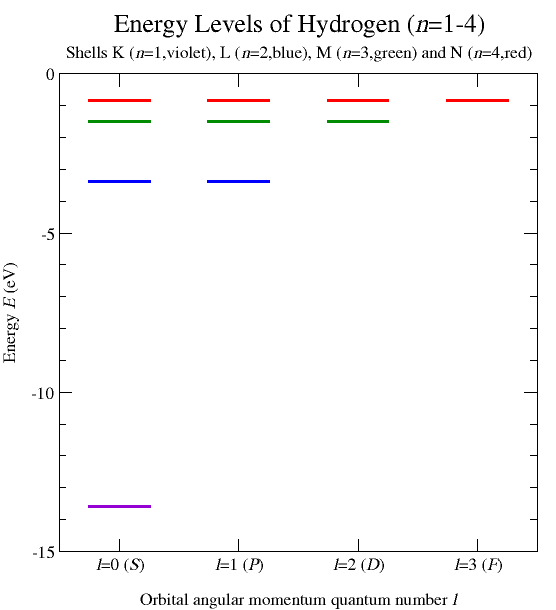
In 1900, the physicist Max Planck proposed a radical idea to solve the black-body problem. He suggested that energy wasn't continuous. Instead, it could only be emitted or absorbed in discrete little packets, which he called “quanta.”
Think of it like a staircase versus a ramp. In classical physics, energy could be any value, like walking up a smooth ramp. Planck's idea was that energy is like a staircase; you can be on one step or the next, but never in between.
This concept is called quantization. It means that physical properties like energy can only take on specific, distinct values. The energy of a light quantum, now called a photon, is directly proportional to its frequency, a relationship captured in a simple but revolutionary equation.
Here, is energy, is frequency, and is a new fundamental constant of nature known as Planck's constant. This was the first major step into the quantum realm, showing that at the atomic scale, things are chunky, not smooth.
The Uncertainty Principle
Another pillar of this new physics came from Werner Heisenberg. He realized that there's a fundamental limit to how precisely we can know certain pairs of properties of a particle at the same time. This is the famous Heisenberg Uncertainty Principle.
The most common example is position and momentum. The more precisely you measure a particle's position, the less precisely you can know its momentum (which is its mass times its velocity), and vice versa.
This isn't a limitation of our measuring instruments. It's an inherent property of the universe. The very act of measuring a particle's position, say by bouncing a photon off it, inevitably changes its momentum. It’s a trade-off baked into the fabric of reality.
This formula states that the uncertainty in position () multiplied by the uncertainty in momentum () must be greater than or equal to a very small constant (, where is the reduced Planck constant). If you shrink one, the other must grow to keep the product above this minimum value.
A World of Probabilities
The uncertainty principle leads to the final core concept: quantum mechanics is probabilistic, not deterministic. In classical physics, if you know the position and momentum of a ball, you can predict its exact trajectory forever. In the quantum world, this is impossible.
Instead of predicting exact outcomes, quantum mechanics predicts the probability of different outcomes. We can't say for sure where an electron will be, but we can describe a “wave function” that tells us the probability of finding it in any given location. The particle's state is a cloud of possibilities, not a single, definite point.
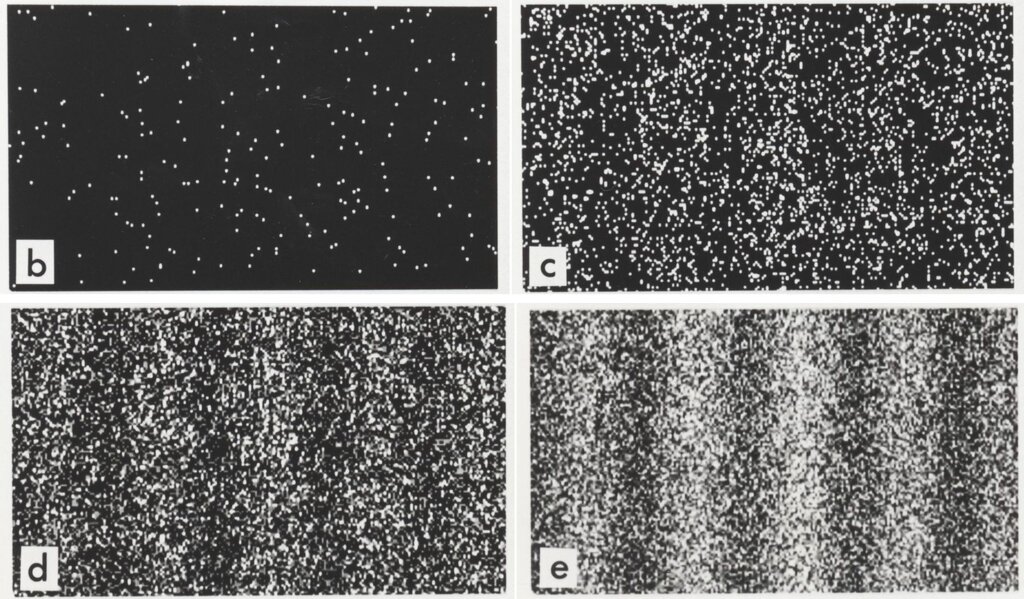
This shift from certainty to probability was a massive conceptual leap. It meant that at its most fundamental level, the universe has an element of randomness. We can only know the odds, not the final result of a single event. These core ideas—quantization, uncertainty, and probability—form the foundation of quantum mechanics, a theory that has revolutionized our understanding of the universe.
Now, let's test your understanding of these foundational ideas.
What was the “black-body radiation” problem that classical physics failed to explain?
According to the Heisenberg Uncertainty Principle, if you measure the position of a quantum particle with extremely high precision, what happens to the precision of its momentum measurement?